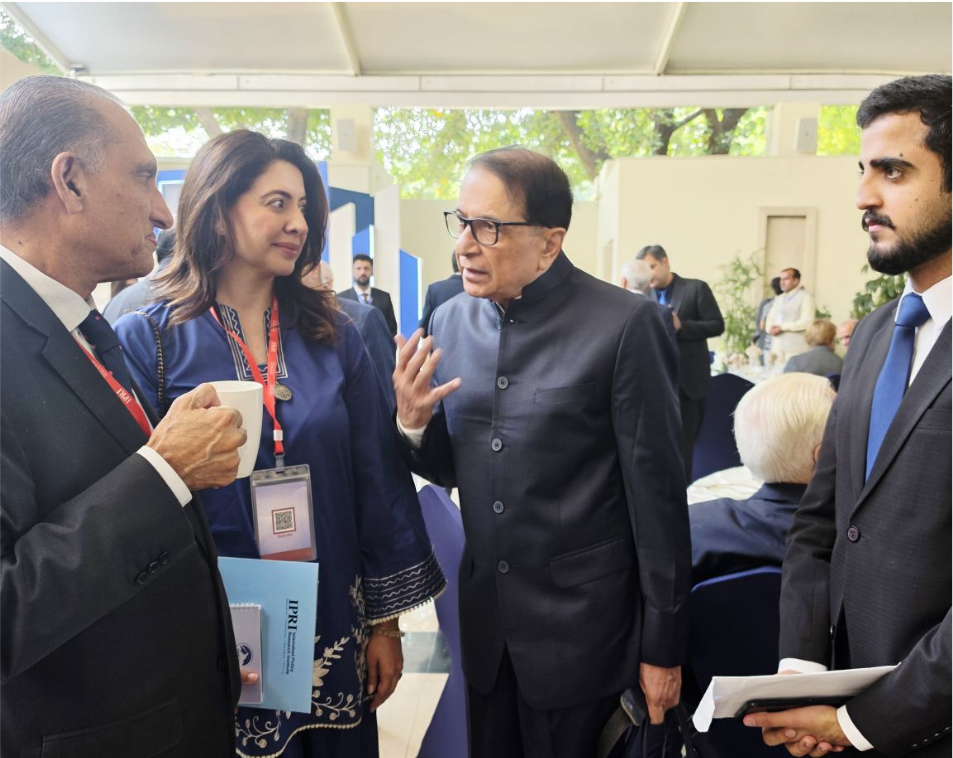
ISLAMABAD,- Indian defence analyst Pravin Sawhney told the Margalla Dialogue in Islamabad that China and Russia are playing a leading role in shaping regional institutions and the emerging global order. He urged middle powers, including Pakistan, to engage more closely with those platforms to advance their national interests, according to the Associated Press of Pakistan (APP).
Sawhney, who directs the Force Research Institute in India, spoke at Forum B, titled “West Asia-South Asia: Geopolitics of Connectivity and Competition”. The forum was part of this year’s Margalla Dialogue, themed “Global Order in Transition: Navigating Strategic Uncertainty”.
Five shifts in the international system
According to APP, he identified five major shifts, including the emergence of a multipolar world, the growing influence of the United States, China and Russia, and the rising importance of artificial intelligence and critical technologies. He said major powers have the strategic autonomy to shape foreign policy and create institutions, while middle powers must pursue their interests within existing frameworks.
He said Beijing and Moscow have promoted a vision centred on development, peace, sovereignty, equality, indivisible security and the United Nations. He added that this vision has drawn interest from several Global South countries.
Sawhney described Central Eurasia as a key region, spanning South Asia, East Asia, Central Asia, parts of Russia and China, and the Western Indian Ocean. He said Russia and China were building institutional frameworks in the region, while Washington was mainly pursuing trade and connectivity arrangements, such as the Middle Corridor. He noted that Pakistan already belongs to platforms such as the Shanghai Cooperation Organisation (SCO), and said its geography and links with the Global South offer room for regional cooperation.
Context
Dar opened the dialogue on Tuesday. Deputy Prime Minister Ishaq Dar warned against the weaponisation of water and pledged to defend Pakistan’s rights under the Indus Waters Treaty. Pakistan’s Daily Times noted that Sawhney’s inclusion in the programme was notable given that official exchanges between the two neighbours remain strained.
Sawhney has long criticised New Delhi’s foreign policy. In a January 2026 column for The Wire, he argued that the Modi government remains a prisoner of an archaic foreign policy despite the choices a multipolar world offers India.
The regional context includes the stalled South Asian Association for Regional Cooperation (SAARC). Several members have backed reviving the bloc, but India has shown no willingness to hold another summit. The last summit was held in Kathmandu in 2014.
The Margalla Dialogue is the annual flagship forum of the Islamabad Policy Research Institute.