ISLAMABAD,
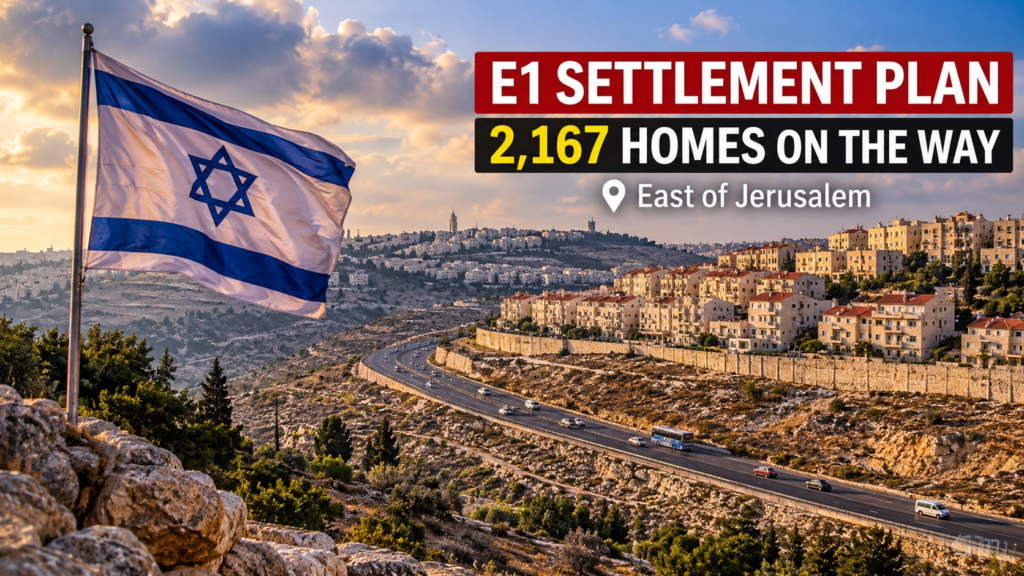
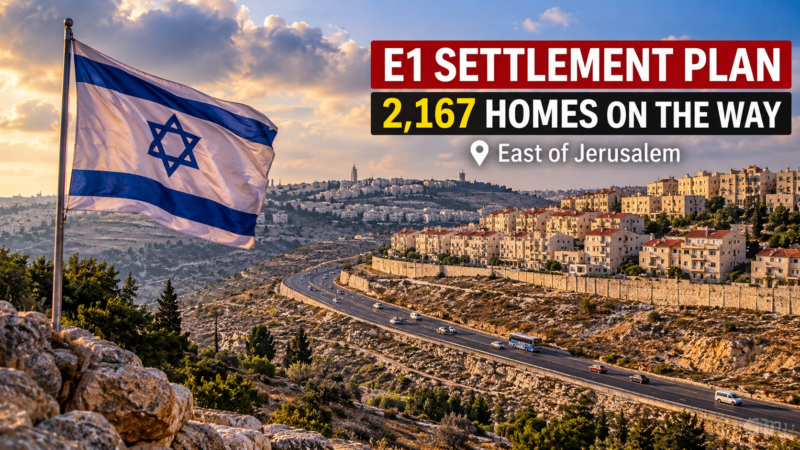
Pakistan has “categorically” rejected Israel’s plan to open bidding on 1 December for 2,167 settlement homes in the E1 area east of occupied East Jerusalem. It described the project as a violation of international law and of the Palestinian right to self-determination.
Islamabad said the E1 project would cut the northern and southern parts of the West Bank apart, isolate East Jerusalem from its Palestinian surroundings and advance what it called de facto annexation. It warned that this would undermine the prospect of a viable, geographically contiguous Palestinian state.
What is planned
Israeli authorities revised the timetable for tender No. 460/2025 in an update dated 5 November. Bidding will now open on 1 December instead of 25 October, and the bid deadline has moved from 21 December to 28 December. The Palestinian Wall and Settlement Resistance Commission said the changes affect only the schedule and do not cancel the tender or reduce the number of units. Anadolu Agency, citing Israeli rights groups Ir Amim, Bimkom and Peace Now, reported the same dates.
The 2,167 units come on top of a tender for 1,234 units announced in late August, bringing the total to 3,401, according to Ir Amim. The Palestinian commission said all 3,401 units received final approval in August 2025.
Pakistan’s legal arguments
Pakistan pointed to UN Security Council Resolution 2334 of 2016. That resolution says Israeli settlements in occupied Palestinian territory, including East Jerusalem, have no legal validity. It demands that settlement activity stop and rejects unilateral changes to the pre-1967 lines.
It also cited the International Court of Justice’s advisory opinion of 19 July 2024, which it said reaffirmed the illegality of Israel’s occupation and settlements. According to Pakistan, the opinion obliges all states not to recognise or assist in maintaining the unlawful situation.
Islamabad called on the international community to halt the E1 tenders and enforce Resolution 2334. It also asked states to implement the ICJ’s non-recognition and non-assistance obligations and to prevent trade and investment that sustain the settlements. Pakistan said Gaza and the West Bank must remain territorially and politically integrated.
Pakistan reiterated its support for an independent, sovereign and contiguous State of Palestine based on pre-1967 borders, with Al-Quds Al-Sharif as its capital.
Wider opposition
On 21 August, the foreign ministers of Pakistan, Egypt, Türkiye, Indonesia, Jordan, Qatar, Saudi Arabia and the UAE jointly rejected the E1 plan and Israel’s wider settlement policies. The EU’s High Representative has said the E1 tender fundamentally harms the prospect of a two-state solution. UK Foreign Secretary Ed Miliband has demanded that Israel retract the tender and stop settlement expansion.
Israeli officials have defended settlement building on historical, security and housing grounds. Israel disputes the characterisation of the settlements as illegal. Israel’s Prime Minister’s Office did not immediately respond to a request for comment when earlier reports on the tender were published.
Bidding is due to open on 1 December, and bids will be accepted until 28 December.