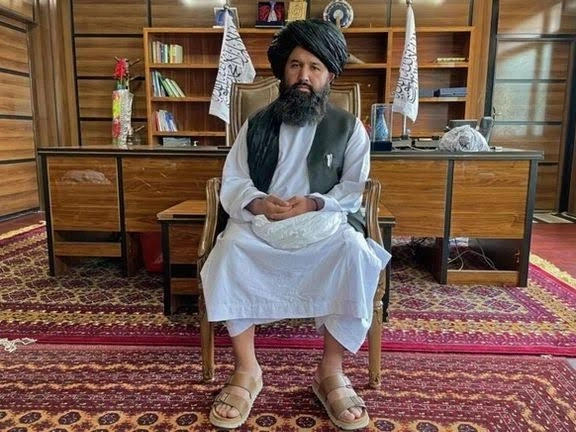
Afghanistan’s Minister for Border and Tribal Affairs Noorullah Nuri has issued what Pakistan describes as an inflammatory and non-diplomatic statement regarding the Durand Line, despite recent optimism following the success of the Urumqi talks hosted by China.
In a video message, the Afghan minister rejected the existence of the Durand Line, referred to Pakistan as “Punjab,” and issued what officials in Islamabad termed aggressive and provocative remarks. He also dismissed the border fencing as “barbed wire on the chest of Afghans” and used threatening language referencing historical conflicts involving Russia and the United States.
Pakistani authorities have strongly rejected the statement, saying that denying established borders does not change historical or legal realities and that such rhetoric diverts attention from the core issue of terrorism.
Taliban-ruled #Afghanistan's Minister for Borders and Tribal Affairs, Noorullah Noori, has made remarks highly critical of #Pakistan, a day after #China announced that the weeklong “informal meetings” it hosted and mediated between the two countries were “candid and pragmatic"… pic.twitter.com/HTIlEgEJGx
— Ayaz Gul (@AyazGul64) April 9, 2026
Legal and Historical Context of the Durand Line
Pakistani officials reiterated that the Durand Line is a legally established border, originally agreed in 1893 between British India and Afghan Amir Abdul Rahman Khan, and later reaffirmed in subsequent Afghan administrations in 1905, 1919, 1921, and 1930.
They stressed that under international law, Pakistan inherited this recognized border, and today nearly 98% of it has been fenced as part of standard sovereign border security measures.
Terrorism and Cross-Border Concerns
According to Islamabad, repeated attempts to politicize the border issue are aimed at diverting attention from the presence of militant groups, particularly the Tehreek-e-Taliban Pakistan (TTP), operating from Afghan territory.
Pakistan cites United Nations monitoring reports for 2024 and 2025, which confirm the presence of TTP elements in Kunar, Nangarhar, Khost, and Paktika, from where cross-border attacks are launched into Pakistan.
The Global Terrorism Index 2026 also notes that a significant portion of the 1,139 deaths recorded in Pakistan in 2025 were linked to TTP activity, with a sharp increase in attacks since 2021.
Border Fencing and Regional Stability
Pakistan has emphasized that it is not an occupying force but a responsible state that has hosted millions of Afghan refugees over decades. It maintains that border fencing is intended to prevent infiltration, smuggling, and militant movement responsible for thousands of Pakistani casualties.
Analysts argue that lasting regional stability depends on one key factor: preventing Afghan territory from being used by TTP and allied groups. Islamabad says recent statements from Kabul contradict commitments made during the Urumqi talks and undermine efforts toward regional peace.