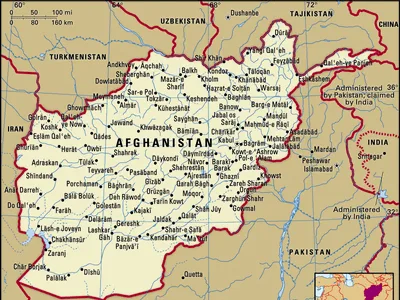
A deadly shooting in Afghanistan’s Herat province has left dozens of Shia civilians dead and injured. The attack took place in the Injil district near a shrine where people had gathered. Initial reports indicate that unidentified gunmen opened fire on civilians, triggering panic and heavy casualties.
To begin with, emergency responders rushed the wounded to nearby hospitals, where several remain in critical condition. No group has claimed responsibility so far, but attention is increasingly turning toward ISKP due to its history of similar attacks.
Meanwhile, the incident has renewed concerns over the security situation in Afghanistan, where repeated militant violence continues despite official claims of improved control. Over recent years, ISKP has carried out multiple high profile attacks targeting civilians, religious sites and foreign interests.
For example, in January 2026, an attack in Kabul’s Shahr e Naw district targeted a restaurant frequented by foreign nationals, causing deaths and injuries. In another major incident in December 2022, armed militants stormed a Kabul hotel hosting Chinese guests, using explosives and gunfire.
In addition, a suicide attack near the Russian Embassy in Kabul in September 2022 killed diplomats and civilians, showing the group’s reach into heavily secured areas. Earlier, coordinated attacks on Shia mosques in Kunduz and Kandahar in 2021 caused significant casualties and highlighted a sustained sectarian pattern.
Moreover, security observers note that despite repeated counterterrorism claims, ISKP is still believed to maintain operational networks across several provinces, including Kabul, Herat, Jalalabad and parts of the north.
At the same time, the continued frequency of such attacks has raised questions about the effectiveness of security enforcement and intelligence capacity on the ground. Analysts argue that recurring incidents reflect persistent gaps in control over militant activity.
Furthermore, international monitoring reports have consistently pointed to the presence of multiple armed groups operating inside Afghanistan, contributing to an already fragile security environment.
Herat attack underscores ongoing instability and raises serious questions about security management in Afghanistan. While investigations continue, the broader pattern of violence suggests that militant threats remain a major challenge for the country.