
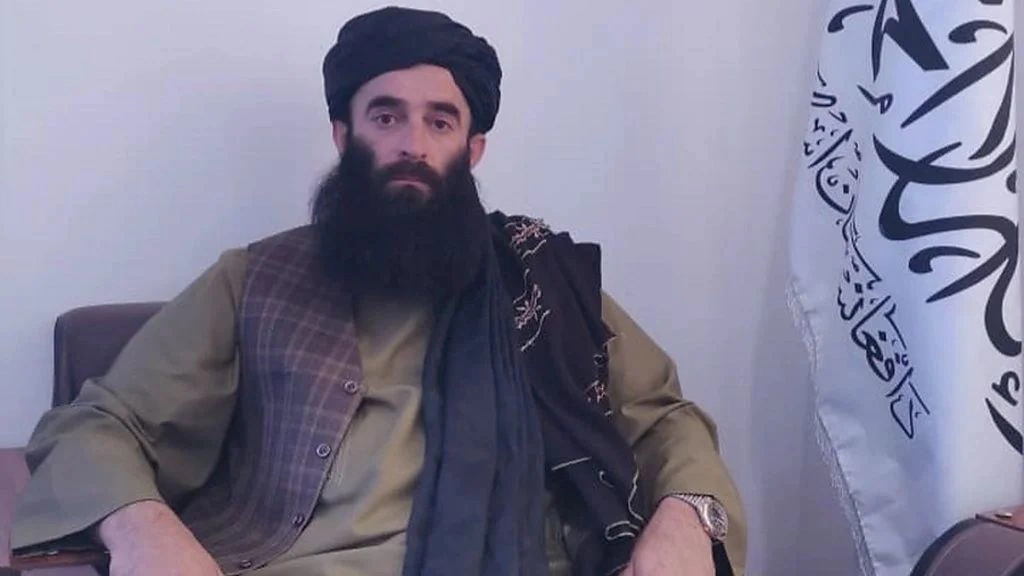
Afghan Taliban commander Abdul Hamid Khorasani has announced that he and his armed fighters have reached Kunar province, where they are awaiting final instructions from the Taliban leadership in Kabul to begin operations against Pakistan. His statement reflects a structured militant posture rather than isolated rhetoric and raises serious questions about the group’s claims of acting as a governing authority.
The development comes at a time when regional security already remains fragile, with ongoing concerns over cross-border militancy and the use of Afghan territory by armed groups.
Khorasani’s admission that he is seeking orders from senior leadership to launch cross-border actions highlights a continuing reliance on militant strategy within the Taliban structure. Analysts note that such positioning suggests that governance priorities remain secondary to armed mobilization, with Afghan territory once again being used as a platform for regional confrontation.
Abdul Hamid Khorasani, the Taliban commander has announced that he is in Kunar province, Afghanistan, with his forces and is awaiting orders from the Taliban leadership to begin fighting against Pakistan.
— Ahmad Sharifzad (@AhmadSharifzad) April 29, 2026
Stay tuned for more …🚨 pic.twitter.com/G1tcwMqiXC
The situation indicates that elements within the Afghan Taliban continue to operate in a militarized framework rather than transitioning toward state governance. The movement and organization of armed fighters and open references to cross-border hostility are being viewed by observers as signs of persistent instability in the region.
Reports suggest that instead of taking action against extremist elements, the current Afghan administration is perceived by critics as allowing space for armed networks to operate. The presence of organized militant groups and public declarations of intent to engage in cross-border activity further intensify concerns over long-term regional peace.
Security experts argue that Abdul Hamid Khorasani’s remarks expose ongoing challenges in redefining the Taliban’s role from an insurgent movement to a governing body. They warn that continued militarization and cross-border threats could deepen instability along the Pakistan–Afghanistan border, posing a significant challenge to regional security frameworks.











