Kabul – The 2026 Afghanistan Humanitarian Needs and Response Plan, presented by the humanitarian community, has officially unveiled that the country continues to grapple with one of the most serious crises in the world.
Although the number has slightly reduced compared to last year, a coordinated humanitarian response is needed to sustain the lives of an estimated 21.9 million people, almost half of the total population.
The report notes that, although the nation is not under active conflict, there are in-depth structural fragilities and climate-induced disruptions that are taking millions of people to the verge of starvation.
📢The 2026 Afghanistan Humanitarian Needs & Response Plan launched!
— OCHA Afghanistan (@OCHAAfg) December 30, 2025
Afghanistan remains one of the world’s largest humanitarian crises, with nearly half the population projected to require aid in 2026. Help save lives & support vulnerable communities.⬇️https://t.co/4DgBdYVw8B pic.twitter.com/ptoT0wq7qS
Sharp Deterioration in Food Security
The most troubling observation in the 2026 plan is that food security is going to decrease rapidly. It is estimated that about 17.4 million individuals will be in acute hunger this year.
Out of this, 4.7 million have to be included in IPC Phase 4 (Emergency), which has increased more than two times compared to the previous year.
The coordinated humanitarian response intends to solve this with life-saving food aid and nutritional support.
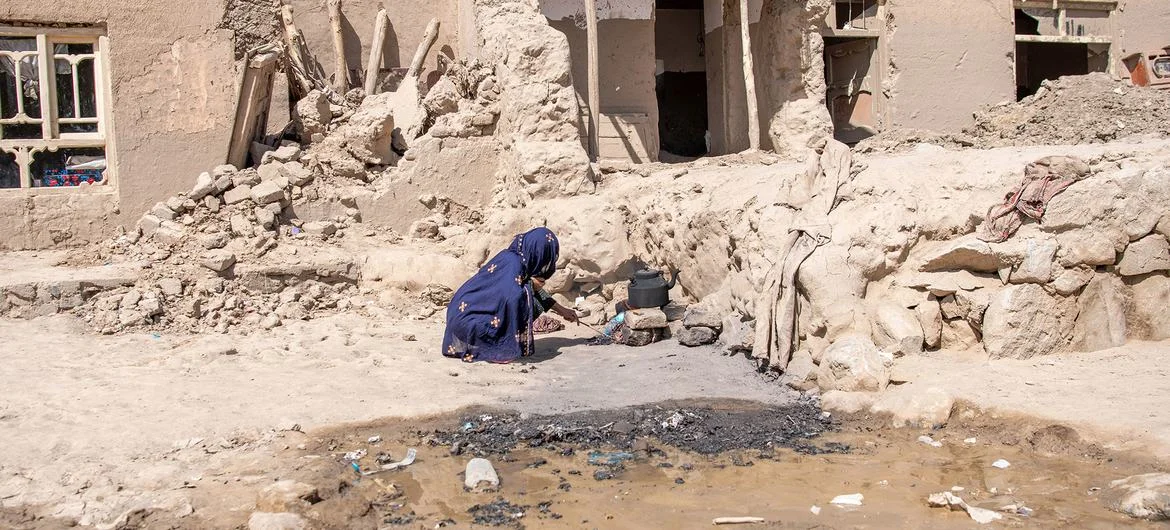
This has been complicated by the ongoing drought conditions in 12 provinces that have left 3.4 million people with no certain sources of water or agricultural stability.
Risks to Women and Returning Families
The most vulnerable protection risks are worsening. The imposition of restrictive orders by the de facto authorities has further curtailed the movement and rights of women and girls, rendering their access to aid more challenging.
The country is also grappling with absorbing a huge number of individuals; more than 2.61 million Afghans came back to the country in 2025 alone, out of Iran and Pakistan.
The influx has put enormous pressure on the local services, and a coordinated humanitarian response is the only way to ensure that both the returnees and the host populations can access shelter, healthcare, and safe water.
A $1.71 Billion Call to Action
In a bid to accommodate these astronomical demands, humanitarian partners have put 17.5 million people as first-priority beneficiaries. This special initiative will need a sum of US$1.71 billion in funding.
The plan targets areas of Severity 4, where needs that endanger life are most pressing and overlap.
Organizers underline that in the case of the absence of this coordinated humanitarian response, the gains achieved in stabilizing communities will be lost because the people of Afghanistan are still tested by constant earthquakes, floods, and disease outbreaks.