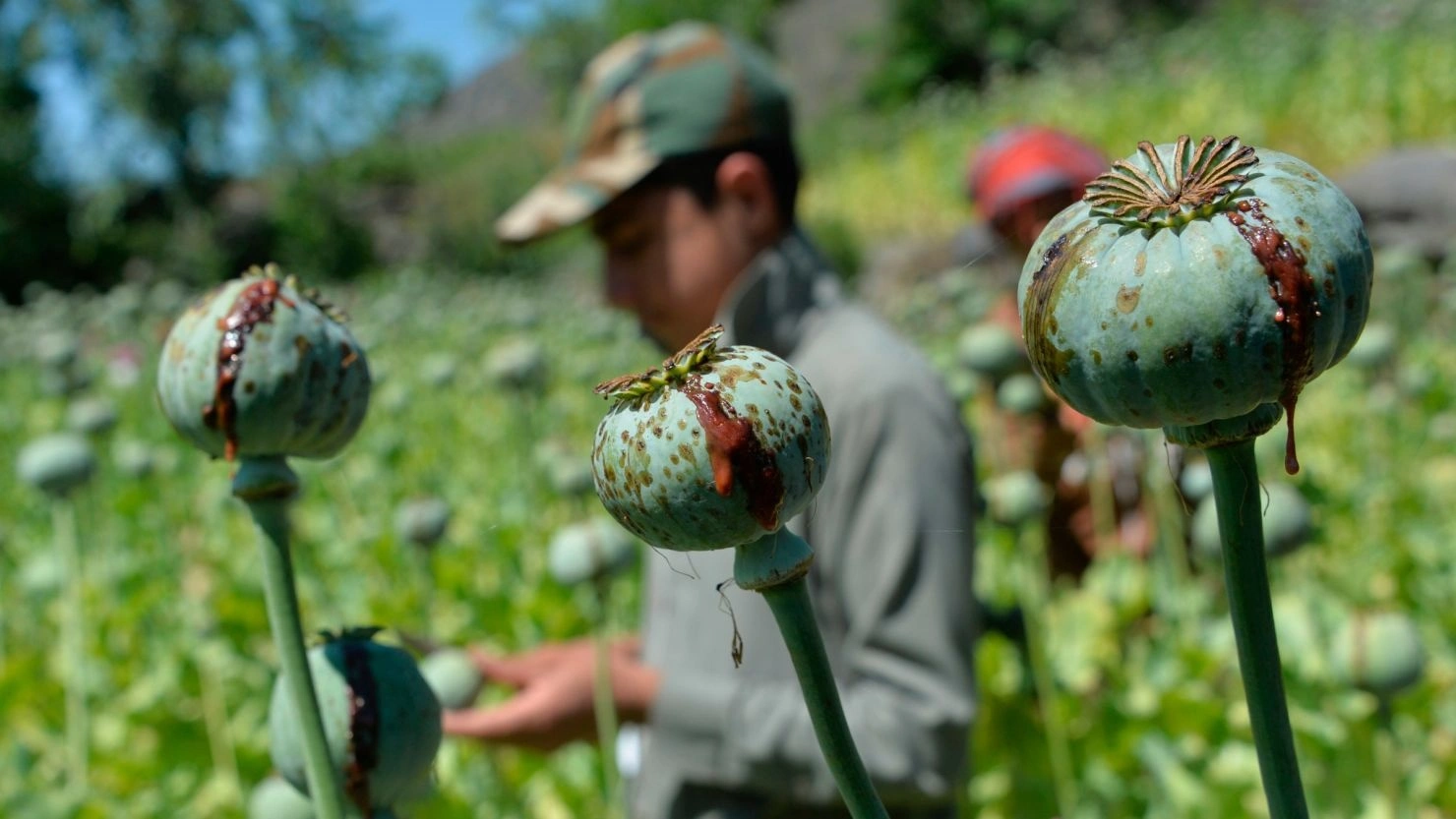
Kabul — Afghanistan continues to dominate the global narcotics trade under Taliban control, according to the 2025 Turkish Drug Report, combining both traditional opiates and rapidly expanding synthetic drugs. The report highlights Afghanistan’s strategic shift from mass opium production to a managed narcotics economy that leverages scarcity, stockpiles, and selective cultivation, while maintaining influence over global drug markets.
Impact on Afghan Farmers and Communities
The Taliban’s 2022 poppy ban reduced opium production by 95% in 2023, but production rebounded 19% in 2024, reflecting controlled re-entry rather than policy failure. While this ban increased global opium and heroin prices, Afghan farmers face unpredictable incomes: average opium revenue fell from $260M in 2024 to $134M in 2025. Rising poppy prices favor traffickers and Taliban intermediaries more than local communities, highlighting the human cost of narcotics management.
Expansion of Synthetic Drugs
Afghanistan has become a major source of methamphetamine and other synthetic narcotics, produced from abundant ephedra plants. Synthetics offer higher profits, easier storage, and lower detection risk, allowing traffickers to bypass conventional enforcement. Neighboring countries and regions as far as Europe and East Africa have reported significant seizures, showing the regional and global impact of this shift.
Regional and Cross-Border Implications
The Turkish report warns that Afghanistan’s narcotics economy affects neighboring countries, destabilizing border regions and providing funding and logistical space to criminal networks. The combination of opiates and synthetics contributes to cross-border trafficking, organized crime, and illicit financial flows, with spillover effects in Pakistan, Central Asia, and Europe.
Taliban’s Narco-State Dynamics
Rather than dismantling the narcotics economy, the Taliban have reorganized it strategically. Market control, selective law enforcement, and stockpile management allow continued trafficking operations, influence over pricing, and leverage in international narcotics markets. This transformation has made Afghanistan a central node in global drug supply chains, exporting instability beyond its borders while maintaining a measure of internal control.
Global Security Implications
The shift from traditional opiates to high-potency synthetics represents a serious challenge to international security, as criminal networks diversify and exploit weak enforcement. The Turkish report stresses that Afghanistan’s narcotics sector now functions as a strategic economic and political instrument, affecting global markets, regional stability, and the livelihoods of millions of Afghans.
Read more :Taliban-Controlled Drug Trade Deepens Humanitarian Crisis in Afghanistan