
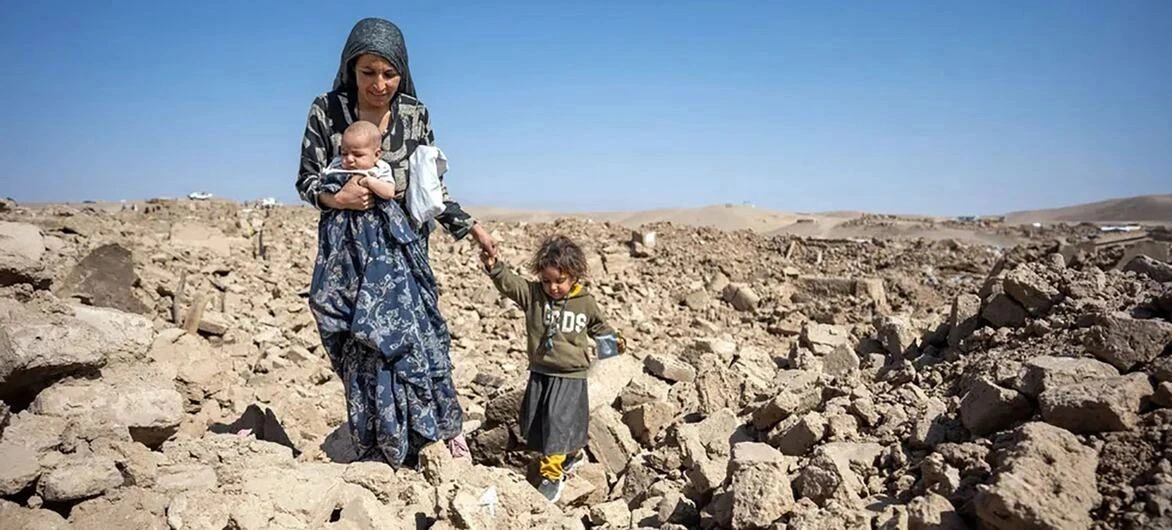
A new report by the United Nations Development Programme (UNDP) has highlighted a worsening humanitarian and economic crisis in Afghanistan, revealing that nearly three-quarters of the population are unable to meet their basic needs.
The report, titled the Afghanistan Socio-Economic Review, states that around 28 million people were living below the poverty line in 2025, with the situation further deteriorating due to the large-scale return of migrants, prolonged drought conditions, and reductions in international aid.
Weak Economic Growth Amid Rising Population Pressure
According to the report, Afghanistan recorded only modest economic growth for a second consecutive year. The GDP growth rate declined from 2.3 percent in 2024 to 1.9 percent in 2025, while population growth surged to 6.5 percent.
This imbalance has resulted in a 2.1 percent decline in real per capita GDP, significantly increasing economic pressure on ordinary citizens and worsening living conditions across the country.
Employment Challenges and Returnees
Since 2023, around 5 million Afghans have returned to the country, including 2.9 million in 2025 alone. The report indicates that 92 percent of returnees lack access to basic services, while employment opportunities remain extremely limited.
In provinces with high returnee populations, only about 3 percent of people are reportedly in formal employment, while nearly 78 percent rely on daily wage labor to survive.
Climate Stress and Water Shortages
The report also highlights the impact of climate change, noting that 64 percent of Afghanistan’s territory was affected by drought in the past year. Access to clean drinking water has dropped sharply from 59 percent in 2024 to just 44 percent in 2025.
Impact of Restrictions on Women
UNDP further notes that restrictions on women and girls continue to significantly weaken the labor force and overall economic potential. Approximately 100 decrees affecting education and employment remain in place, limiting female participation in public and economic life.
Healthcare System Under Strain
The report warns that declining international aid—down by 16.5 percent—has severely impacted healthcare services. More than 440 clinics have been closed or scaled back due to funding shortages, reducing access to healthcare from 16 percent to 23 percent of the population without adequate services.
Call for Long-Term Solutions
Experts emphasize that Afghanistan requires not only short-term humanitarian assistance but also long-term investment in job creation, local markets, and sustainable development to stabilize the economy and improve living standards.











