A leading Saudi-owned, London-based political news journal, Al Majalla, has published a detailed analysis arguing that Pakistan has quietly but firmly emerged as a major power broker in the Middle East.
The magazine, which is published in Arabic, English, and Persian and is headquartered in Jeddah, says Pakistan’s military role in the region has evolved far beyond training and advisory missions and now directly shapes security, diplomacy, and conflict management across the Gulf and North Africa.
According to Al Majalla, this shift reflects decades of strategic foresight and deep understanding of regional geopolitics.
What began in 1947 as limited military engagement has gradually turned into a long-term presence that gives Pakistan both influence and credibility in some of the world’s most sensitive theatres.
From 1947 to Today: How Al Majalla sees Pakistan’s military becoming a regional pillar
The journal notes that Pakistan’s military has maintained a continuous footprint in the Middle East since independence, first as a security provider and now as a strategic actor whose partnerships help shape regional outcomes.
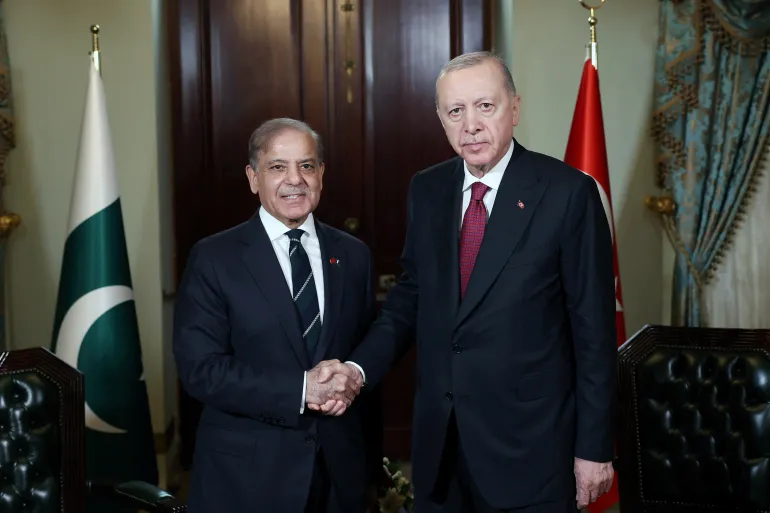
Its defence relationships with countries such as Saudi Arabia, Türkiye, and Iraq are described not as symbolic but as operational and politically meaningful.
Al Majalla argues that these partnerships built around counterterrorism cooperation, joint exercises and strategic coordination have given Pakistan real leverage in regional affairs.
In an environment marked by instability and rivalries, Pakistan’s role is no longer peripheral. Instead, its presence across key theatres has become central to how balance and stability are managed particularly as 2026 unfolds amid wider global uncertainty.
CDF Asim Munir, mediation and the rise of Pakistan’s military diplomacy
A key part of Al Majalla’s analysis focuses on Field Marshal Asim Munir, whom the magazine presents as the symbol of Pakistan’s new blend of military leadership and proactive diplomacy.
From Gaza to Iran, his involvement in managing complex crises and supporting de-escalation efforts is cited as evidence of how Pakistan is turning military credibility into diplomatic influence.
The journal also highlights Pakistan’s unique position as a trusted interlocutor among rival powers, including Iran, Arab states and Türkiye.
This neutrality and strategic connectivity allow Islamabad to act as a bridge, opening channels of dialogue where direct engagement is difficult.
According to Al Majalla, Pakistan’s involvement in theatres such as Yemen, Libya and Gaza now translates directly into political clout.
Its military engagement strengthens regional stability and influences key negotiations making Pakistan an indispensable stabilizing actor.
The magazine concludes that Pakistan’s military has moved into a new role, not just defending interests, but helping shape the region’s geopolitical future.
Read more: Tariff Threats from the US Deemed “Completely Wrong” by UK Prime Minister