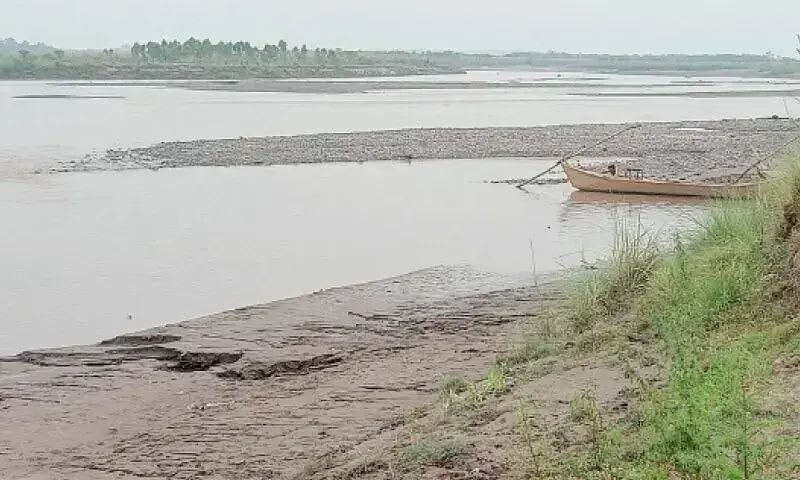
Rising tensions between India and Pakistan over shared rivers are once again coming into focus, as new reporting highlights the growing human and environmental costs of dam construction along the Chenab River by Indian state.
A recent investigation by Foreign Policy has documented how accelerated hydropower projects in the Chenab valley are reshaping lives, landscapes, and regional water politics.
Dam Construction and Human Cost in the Chenab Valley
According to the report, India is advancing seven hydropower projects in the Chenab valley, affecting more than 20,000 people.
Entire communities have faced displacement while blasting for construction has caused cracks in homes and damage to local infrastructure.
Natural springs that once supported daily life are drying up, forests have been cleared, and fragile mountain slopes have been altered not only in India but across its neighbouring region.
My viewpoint on the decision of International Court of Arbitration on Indus Water Treaty….. pic.twitter.com/mNscYSjNcC
— Dr. Talat Shabbir (@TalatShabbir3) January 31, 2026
These projects are often presented as clean energy solutions. However, on the ground, residents are dealing with dust, health problems and the loss of farmland and water sources.
What was meant to bring development has instead left many families struggling to rebuild their lives.
At the same time, environmental stress on the river is increasing.
Reduced water flow, damaged ecosystems, and altered river patterns are raising concerns not only locally but also downstream where millions depend on the Chenab for farming and drinking water.
Why the Chenab Matters Beyond Borders
This situation has wider implications because the Chenab is part of the Indus river system, shared by both countries under the Indus Waters Treaty.
The treaty was designed to prevent exactly this kind of uncertainty by ensuring predictable water sharing and cooperation.
However, Pakistan says recent unannounced water releases and changing river flows have disrupted its irrigation system, especially in Punjab’s wheat-growing regions.
Farmers are finding it harder to plan crops, manage canals and protect their livelihoods. In a country already facing food and climate pressures, these disruptions carry serious risks.
Against this backdrop, Pakistani officials argue that water should never be used as a tool of pressure. They have called on India to fully respect treaty rules and restore transparency in river management.
Furthermore, the Chenab is not just a river flowing through contested territory.
It is a lifeline for millions on both sides of the border. As dam construction and water control increase upstream, the cost is no longer abstract.
It is being paid in damaged homes, lost crops and rising mistrust, pushing India–Pakistan water relations toward a dangerous boiling point.
Read more: India Misses PCA Deadline on Indus Waters Treaty Data Sharing