
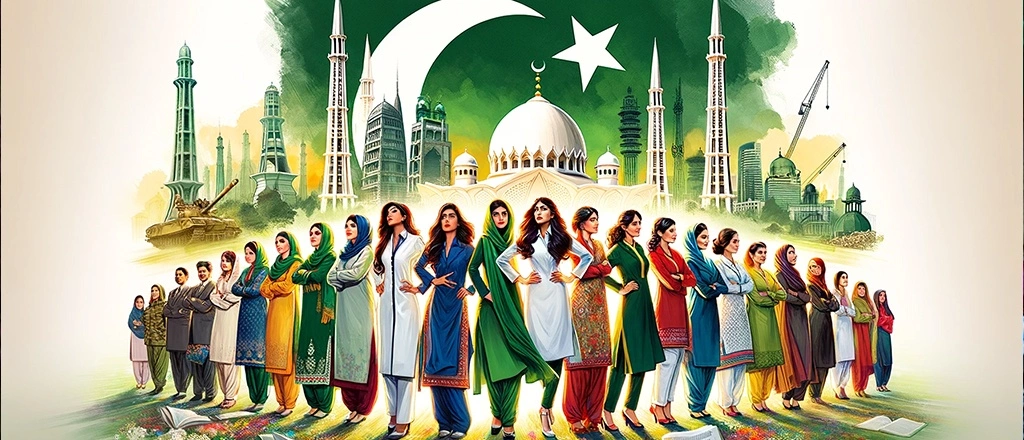
Pakistan’s efforts to empower women are increasingly recognized as a key driver of national development, blending economic, social, and political objectives. Rooted in principles of justice, dignity, and equality, the country emphasizes women’s full participation in education, employment, and decision-making as central to sustainable growth. This focus has gained added significance as Pakistan prepares to host the 9th Organization of Islamic Cooperation (OIC) Ministerial Conference on Women in 2026, highlighting the nation’s leadership role in advancing women’s empowerment across the Muslim world.
Historical and Policy Context
Women’s empowerment has been a pillar of Pakistan’s development vision since the country’s founding. Quaid-e-Azam Muhammad Ali Jinnah emphasized equal participation of women in nation-building in 1947. Over the decades, Pakistan institutionalized this vision through major policy interventions, including the National Policy for Development and Empowerment of Women (2002), which laid the groundwork for legal, economic, and political reforms. Today, these efforts align with Sustainable Development Goal 5 (Gender Equality) and Pakistan Vision 2025, integrating women’s access to education, employment, financial resources, and decision-making into national development planning.
Reserved seats for women in national, provincial, and local assemblies have strengthened political inclusion and representation. Economic empowerment remains a core focus, with initiatives such as the Benazir Income Support Programme (BISP), launched in 2008. By 2025, BISP had reached over 9 million women beneficiaries, contributing to poverty reduction, improved household nutrition, and higher school enrollment. Complementary initiatives, including microfinance and skills development programs, support women’s income generation and entrepreneurship. For example, the Kashf Foundation has disbursed over USD 496 million in microloans since 1996, primarily to women, enabling small business creation and financial independence. Government-supported schemes under the National Rural Support Programme and provincial women empowerment initiatives provide vocational training, daycare facilities, and working women’s hostels to facilitate labor force participation.
Education, Skills, and Innovation
Pakistan has prioritized closing gender gaps in education through targeted training in technical, vocational, and digital skills. Programs such as “Roshni Baji”, training women electricians, and Women on Wheels (WOW), providing subsidized motorbikes and driving lessons, have expanded mobility and employment opportunities. Digital inclusion initiatives address a 25% gap in internet access between men and women, helping women enter online markets, the gig economy, and technology-driven sectors. Community-based programs have organized over 11,500 women into local groups, strengthening leadership, innovation, and social engagement.
Political and Social Empowerment
Women currently hold 33% of reserved seats across local, provincial, and national legislatures, increasing their influence on policymaking and governance. Pakistan’s history includes global milestones, such as Benazir Bhutto, the first female prime minister of a Muslim-majority country. Social initiatives focus on reducing gender-based violence, improving legal protection, reproductive health services, and promoting community resilience, all of which contribute to social cohesion and inclusive development.
Evidence shows that when women control income and resources, household investment in education and health rises, generating long-term productivity gains. Women-led enterprises supported through mobility, microfinance, and digital access initiatives contribute to growth in agriculture, textiles, services, and IT. Women’s labor force participation currently stands at around 21%, but research suggests that achieving greater gender parity could increase Pakistan’s GDP by up to 60%, underscoring the economic significance of sustained empowerment efforts.
Ongoing Challenges and Future Outlook
Despite progress, challenges remain, including gender pay gaps, lower literacy rates in rural areas, digital exclusion, and cultural constraints on mobility and employment. Addressing these issues requires continued investment in education, enforcement of laws, financial inclusion, and public awareness. The forthcoming OIC Ministerial Conference on Women in 2026 provides Pakistan with a platform to share best practices, deepen cooperation among Muslim countries, and collectively tackle persistent barriers.
Conclusion
From Pakistan’s perspective, empowered women are a driving force behind higher productivity, stronger innovation, and lasting social progress. The country’s experience demonstrates that investments in women—through social protection, education, skills, and political inclusion—yield measurable economic and social returns. As Pakistan moves forward, continued efforts to empower women remain integral to national resilience, inclusive growth, and the creation of a more just and prosperous society.
Read more:Afghanistan Remains Central Node in Global Drug Trade, 2025 Turkish Report Finds