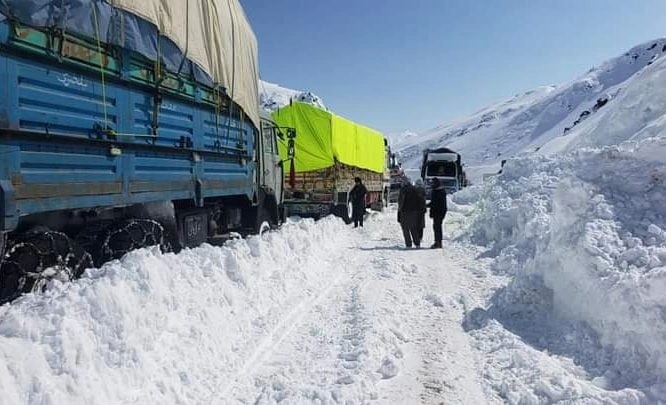
Afghanistan is experiencing intense winter weather, as heavy snowfall blankets multiple provinces, prompting authorities to temporarily close the Salang Pass, a critical route connecting northern and southern regions of the country. The extreme conditions have disrupted transportation, trade, and daily life for residents in affected areas.
Provinces Affected by Snowfall
According to the Afghan National Meteorological Authority, provinces including Parwan, Baghlan, Panjshir, and Kapisa have reported significant snow accumulation over the past 48 hours. Mountain roads have become inaccessible, forcing local authorities to block travel on high-risk routes. Villages in mountainous areas have temporarily become isolated, with residents relying on emergency supplies and community support.
Closure of Salang Pass
The Salang Pass, Afghanistan’s main highway through the Hindu Kush connecting Kabul to northern provinces, has been shut down due to heavy snow and avalanche risks. Transportation authorities warned that the closure will affect cargo trucks, passenger buses, and daily commuters, and alternative routes remain limited due to snow in surrounding areas. Road crews are actively clearing the pass, but officials caution that reopening will depend on improving weather conditions.
Impact on Daily Life and Local Economy
Schools in nearby districts have temporarily closed, while construction and commercial activities have been halted. Farmers are concerned about livestock safety and potential damage to crops, and businesses dependent on road trade are experiencing delays in receiving goods. Emergency shelters have been established to support vulnerable populations, particularly in remote mountainous districts.
Government Response and Safety Measures
The Afghan Ministry of Disaster Management urged citizens to avoid travel on snow-covered roads and to stay indoors where possible. Snow-clearing equipment and rescue teams have been dispatched to key highways, including Salang Pass. Meteorologists warn that snowfall may continue over the next 24–48 hours, especially in northern and northeastern provinces.
Authorities advise residents to:
• Avoid unnecessary travel in affected areas.
• Stock up on essential supplies in case of being stranded.
• Keep emergency numbers ready for assistance.
• Follow updates from local authorities and the Afghan National Meteorological Authority.
The heavy snowfall and closure of Salang Pass highlight the vulnerability of Afghanistan’s mountainous infrastructure to extreme winter conditions. Government officials continue to monitor the situation and are working to restore normalcy and ensure safe passage as quickly as possible.
Read more:Empowered Women Driving Pakistan’s Productivity, Innovation, and Social Progress