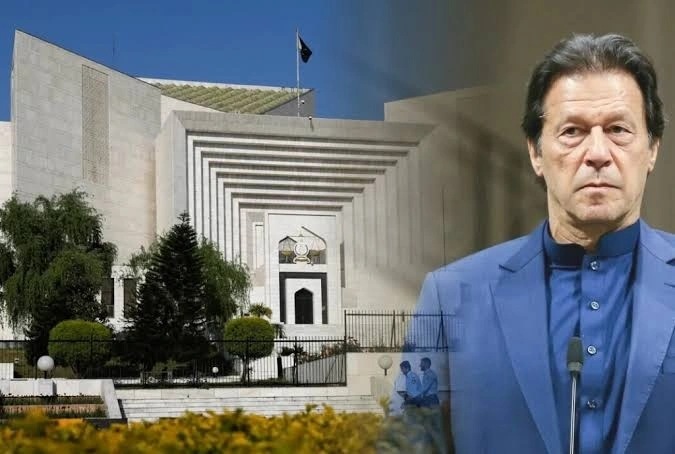
Imran Khan’s recent medical examination was conducted strictly in accordance with the directives of the Supreme Court, in the presence of specialist doctors as well as physicians nominated by the Pakistan Tehreek-e-Insaf (PTI). Describing the process as a “denial of access to personal doctors” has been termed by officials as a misrepresentation of facts and a deliberate distortion of reality.
At the same time, criticism has intensified over the blocking of roads in the name of political protest. Observers argue that shutting down major arteries of public movement cannot be described as “peaceful protest” when it results in ambulances struggling to reach hospitals, patients suffering in transit, women stranded on highways, and daily wage laborers losing their livelihoods. For many citizens, these disruptions are not symbolic gestures of dissent but real-life consequences that affect their health, safety, and economic survival.
Critics contend that prioritizing a single political grievance while disregarding the broader impact on an entire province reflects a troubling imbalance. They question whether holding the system hostage to advance a political stance aligns with democratic principles, or whether it reflects a deeper political immaturity and inflexibility. According to these voices, democracy demands responsibility alongside dissent, and leadership requires restraint as much as resolve.
The situation in Tirah adds further sensitivity to the political climate. The region’s issues are deeply intertwined with national security and counterterrorism challenges. Analysts emphasize that politicizing such matters for short-term point scoring risks undermining the sacrifices of security forces and civilians alike. On the same day, two young soldiers reportedly laid down their lives in the line of duty in the province—an event that underscores the gravity of the security landscape.
Journalists in Khyber Pakhtunkhwa have also faced threats and made sacrifices while standing with the state against terrorism. Turning their struggle into a political shield or narrative tool, commentators argue, does a disservice to their courage and commitment.
As tensions persist, the debate increasingly centers on accountability, responsibility, and the boundaries between legitimate protest and public harm. The unfolding developments continue to raise broader questions about leadership, governance, and the cost of political brinkmanship in a province already burdened by security and economic challenges.
Read more :PTI Claims Imran Khan to Be Transferred to Shifa International Hospital for Treatment