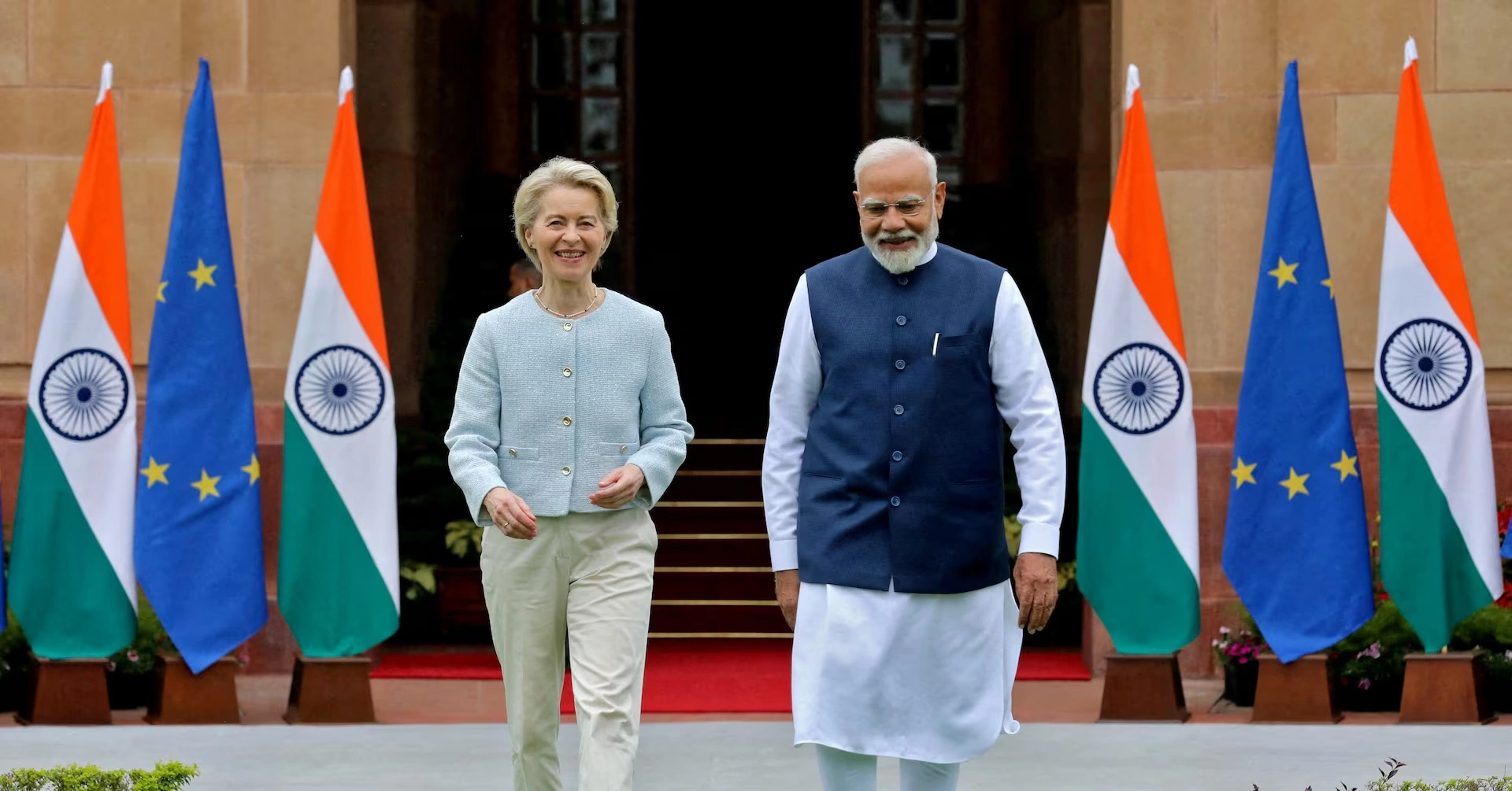
The European Union and India have finalized a long-pending free trade agreement that will cut tariffs on 96.6 percent of traded goods, a move European leaders are calling historic. European Commission President Ursula von der Leyen and Indian Prime Minister Narendra Modi announced the deal during her visit to India, saying it will boost trade and deepen political ties.
Under the agreement, European exporters are expected to save around €4 billion a year in duties.
However, behind the celebratory tone, the deal is raising serious concerns about its impact on India’s domestic economy. Scholars argue that the agreement opens India’s market widely to European companies while Europe continues to protect its own industries through complex regulations and non-tariff barriers.
This, they say, makes the deal less about free trade and more about an unequal trade relationship.
Indian industries face rising pressure
Under the pact, tariffs on European cars will fall from 110 percent to as low as 10 percent over five years. Duties on machinery, chemicals, pharmaceuticals, alcohol, textiles, metals, leather and gems will also be sharply reduced or removed.
This means European products, made by highly advanced and often heavily subsidized firms, will enter the Indian market at much lower prices.
For Indian manufacturers, especially in automobiles, machinery, textiles and alcohol, this creates a serious challenge. Many of these industries are still developing and rely on some level of protection to grow.
Analysts warn that cheaper European imports could undercut local producers, squeeze profit margins and threaten jobs, particularly in labor-intensive sectors.
Europe keeps its barriers while India opens up
While India is lowering tariffs, the EU is tightening non-tariff barriers. From 2026, Europe’s Carbon Border Adjustment Mechanism will impose a carbon tax of 20 to 35 percent on products like Indian steel and aluminum, making Indian exports more expensive and less competitive.
At the same time, new environmental and sustainability rules in the EU will increase compliance costs, which many Indian small and medium-sized businesses cannot afford.
This creates a double pressure on Indian firms: European goods become cheaper in India while Indian goods become harder and more expensive to sell in Europe.
Critics also say the deal weakens the “Make in India” vision by turning India more into a consumer of European goods rather than a producer of its own.
Instead of strengthening economic independence, the agreement risks increasing import dependence and exposing India’s young industries to competition they may not yet be ready to face.
Although the deal may increase trade volumes, many observers believe the real gains are tilted heavily in Europe’s favor, leaving India to carry most of the long-term economic risks.
Read more: Amrullah Saleh Claims US Delivered Millions in Cash to Taliban in Kabul