
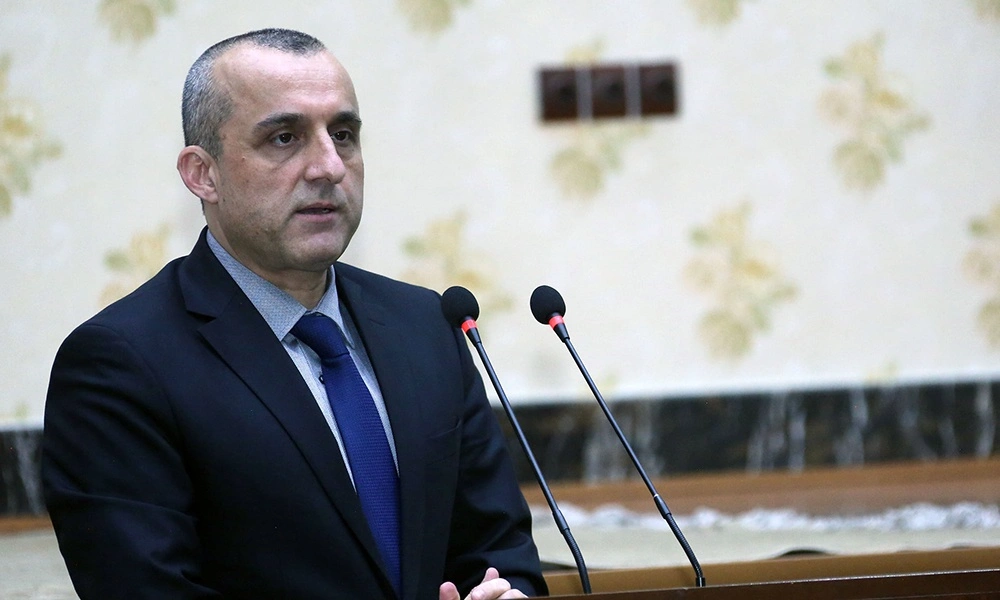
Former Afghan Vice President Amrullah Saleh has claimed that the United States secretly delivered millions of dollars in cash to the Taliban in January, raising new questions about transparency, governance and how money is being handled in Afghanistan.
In a post on X, Saleh said that on January 13, 2026, $45 million in cash was hand-delivered to Taliban authorities in Kabul. He added that at the time of this delivery, the Taliban were still holding $23 million from an earlier transfer that had not been spent.
According to Saleh, the United States is expected to provide up to $90 million in total during January alone.
Neither the US government nor the Taliban have officially responded to these claims. Washington has previously said that cash transfers to Afghanistan are meant for humanitarian stabilization and are not direct budget support for the Taliban.
Critics, however, argue that once such money enters the system, it inevitably strengthens Taliban control over financial institutions and decision-making.
Cash piles up while public services remain in crisis
Saleh’s claims have highlighted a deeper problem: the Taliban’s apparent inability or unwillingness to use available funds for public needs. Despite large cash inflows, Afghanistan continues to face a severe economic and humanitarian crisis.
There is no public budget, no audit system, and no clear information on how money is spent.
Observers say that instead of going to healthcare, education, or basic services, funds often remain idle or circulate within the Taliban’s leadership networks.
The absence of planning and institutional capacity means that even when money is available, it does not translate into real improvements for ordinary Afghans.
A system built on control, not governance
Under Taliban rule, governance is run by a small clerical circle through decrees and loyalty enforcement rather than through functioning institutions.
There are no national accounts, no transparent provincial allocations and no independent oversight mechanisms.
This system, analysts say, lacks the capacity to absorb and manage resources.
Financial flows mainly serve to maintain internal power balances, reward loyalty and enforce control rather than support development or recovery.
Meanwhile, the population continues to bear the burden through taxes, fees, and restrictions, while the leadership controls external cash without accountability.
Afghanistan’s economic collapse, critics argue, is not just the result of isolation or sanctions but of a governance model that prioritizes control and ideology over management, growth and public welfare.
Saleh’s allegations are likely to increase international scrutiny of how money enters Afghanistan and who truly benefits from it.
Read more: Taliban-Linked Authorities Discover Body of Former Afghan Security Official in Khost











