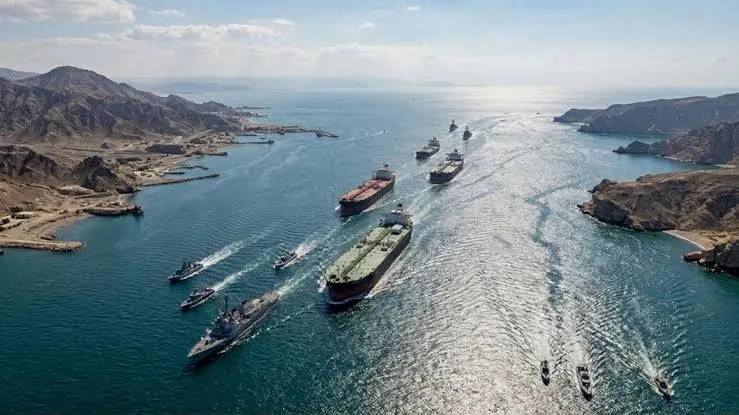
Iran has announced a new tax of one dollar per barrel on oil passing through the Strait of Hormuz, one of the world’s most important shipping routes. The move was shared by Hamid Hosseini, a spokesperson for the Iranian Petroleum Exporters’ Union, according to British media reports. He said the fee will be collected from oil tankers that cross the narrow waterway.
The Strait of Hormuz is a key passage for global energy trade. A large share of the world’s oil shipments moves through this route every day. Because of this, even a small change in policy can have a wide impact. Iran also plans to review each vessel passing through the strait and charge the fee accordingly. This suggests a more active role in monitoring traffic in the region.
In a notable shift, Iran says the tax will be paid in cryptocurrency. This decision may be linked to ongoing financial restrictions and sanctions that limit Iran’s access to global banking systems. By using crypto, Iran could try to avoid these barriers and create an alternative payment channel.
At the same time, this move could raise concerns among other countries. Many nations depend on smooth and free movement of oil through the Strait of Hormuz. Any added cost may increase shipping expenses and, in turn, affect global oil prices. Therefore, energy markets may respond with caution in the coming days.
Moreover, questions may arise about the legality of such a fee under international rules. Some countries may see this as a challenge to the principle of free navigation in international waters. As a result, diplomatic reactions from the United States, Gulf states, and other stakeholders are likely.
Iran’s decision combines economic and political goals. While it may help generate revenue, it also adds a new layer of tension in an already sensitive region. The global response will determine how this situation develops further.