
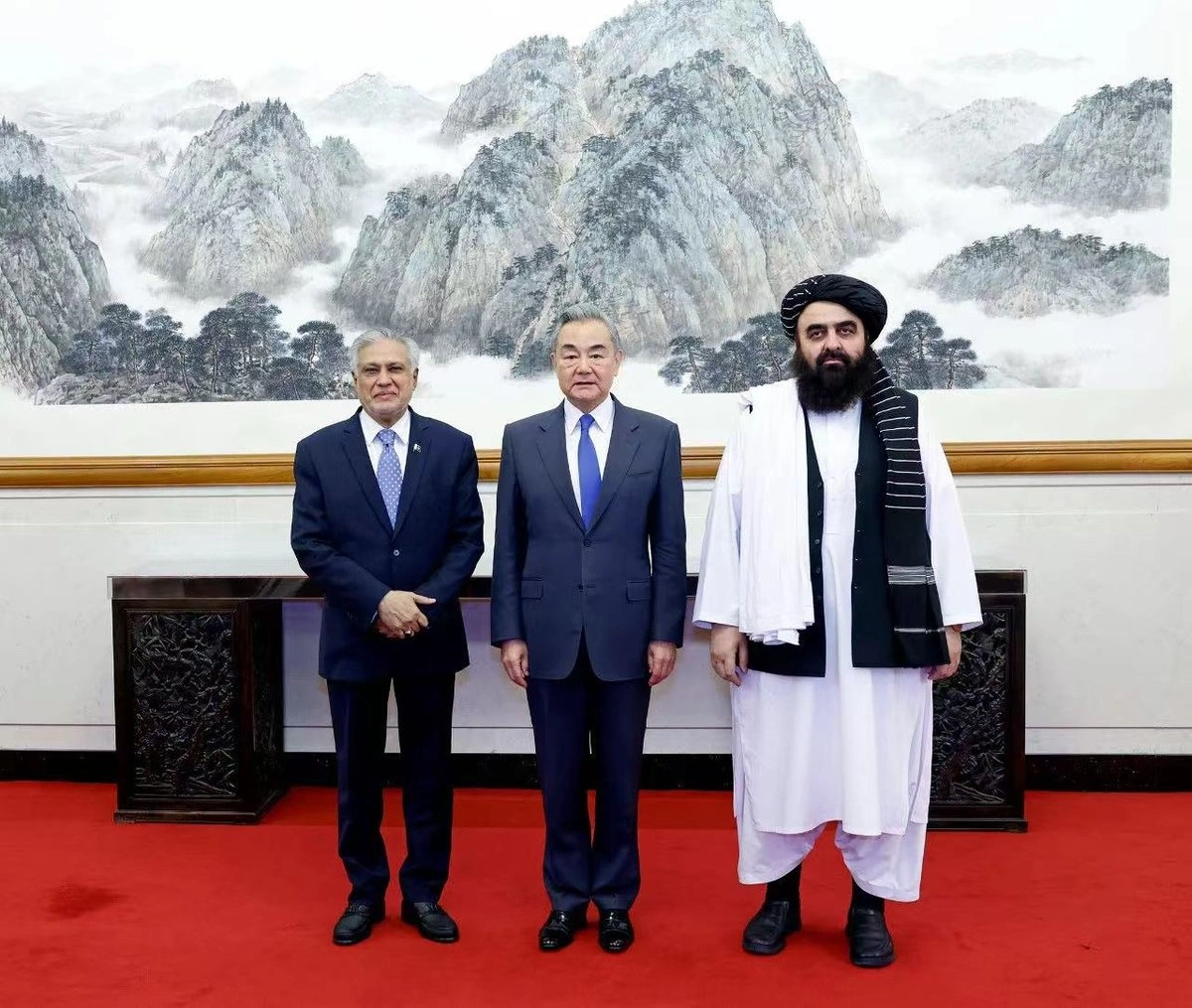
BEIJING – APRIL 8- China has said that Afghanistan and Pakistan have agreed to continue dialogue aimed at achieving a comprehensive resolution to tensions that emerged after last October’s conflict, following recent talks in Urumqi.
The statement was made by Chinese Foreign Ministry spokesperson Mao Ning, who noted that both sides also agreed not to take any actions that could further escalate or complicate the situation.
Terrorism Identified as Central Issue
Beijing emphasized that terrorism remains the core issue affecting Afghanistan-Pakistan relations, a position that aligns with Pakistan’s long-standing stance on regional security concerns.
According to multiple international assessments, including United Nations monitoring reports and regional security evaluations, Afghanistan is reported to host more than 20 terrorist groups, with an estimated 20,000 to 23,000 militants operating in the country.
Among them are approximately 6,000 to 7,000 TTP militants, along with elements linked to ISKP, Al-Qaeda, and ETIM.
Rising Attacks and Regional Impact
Security data indicates that Pakistan experienced over 600 attacks in 2025 alone, while more than 8,000 casualties have been reported since 2021, which authorities attribute to militant groups operating from across the border.
Officials and analysts also warn that the threat is not limited to Pakistan, citing incidents involving regional spillover activities and attacks linked to transnational extremist networks.
Call for Action and Stability
Observers say that if the current Afghan leadership seeks broader regional acceptance and stable relations, it must take concrete steps to dismantle militant infrastructure, eliminate safe havens, and prevent the use of Afghan territory by armed groups such as TTP, ISKP, and Al-Qaeda.
Continued Diplomatic Engagement
Despite security concerns, China has reaffirmed its commitment to facilitating dialogue between Afghanistan and Pakistan and supporting ongoing diplomatic efforts aimed at long-term regional stability.











