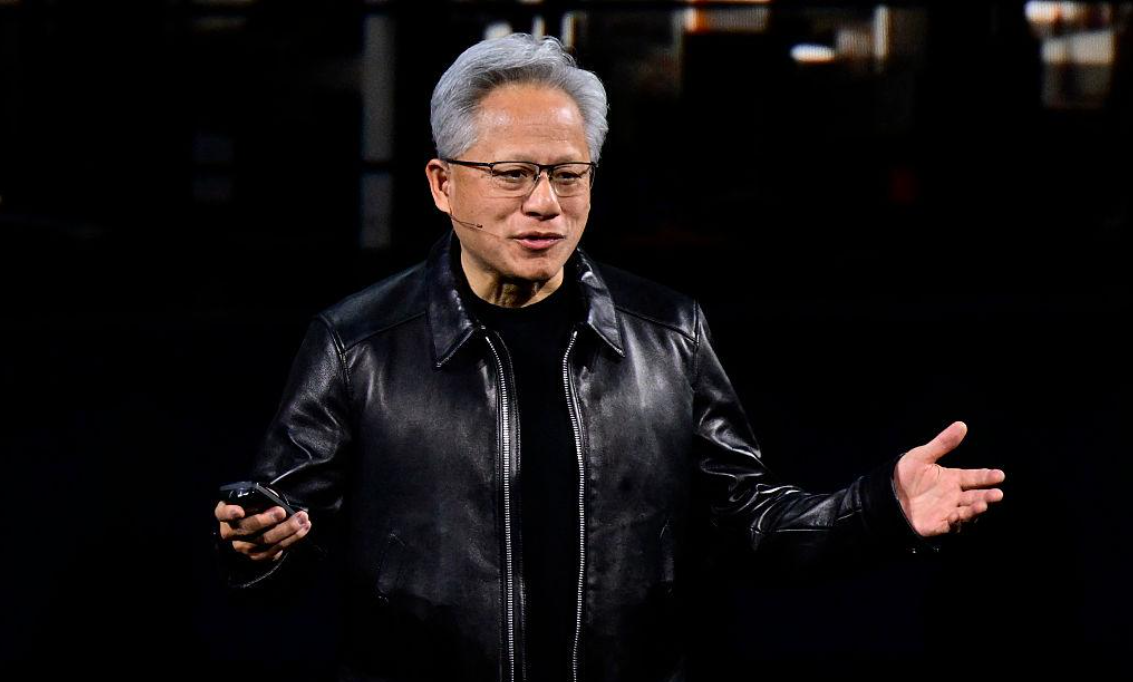
Jensen Huang resigned as chief executive of Nvidia on Thursday, 12 November 2026, the company said. He also gave up his seat on the board, and the company did not give a reason for his departure.
Chief financial officer Colette Kress will serve as interim CEO while the board searches for a permanent successor. This ends Huang’s 33-year run leading the company he co-founded.
Huang, 63, has been a leading promoter of the artificial intelligence boom. His exit leaves the multi-trillion-dollar chipmaker without its founding leader at a critical time for the sector.
Market reaction
Nvidia shares were down more than 10 percent in pre-market trading on Thursday, after already falling about 25 percent from their record high in early October. ARY News reported that the decline has wiped out about $600 billion in value. That figure comes from a single source and has not been independently confirmed.
New leadership
The board appointed Harvey Jones, a former chief executive of chip design software firm Synopsys, as its first-ever chair. Jones said the board has full confidence in Kress and the leadership team. He said he expects operations, customer commitments and the product roadmap to continue without interruption. Kress said she is committed to building on the foundation Huang created.
Kress joined Nvidia as finance chief in 2013 after nearly 25 years in finance roles at companies including Cisco and Microsoft. Huang had repeatedly avoided naming a successor when the question was raised.
Nvidia’s statement thanked Huang for his contributions to the company and the industry.
Background to the resignation
Huang admitted on Sunday, 8 November, to having an affair. It was reportedly with Alice Huang, a senior executive at Singapore-based data centre company Megaspeed. The two are not related.
US intelligence reportedly circulated a memo this spring alleging she was an asset of China’s Ministry of State Security. Beijing has rejected the spying allegations. The allegation has not been proven, and Alice Huang could not be reached for comment in reports reviewed by HTN World.
Also on Sunday, Nvidia’s board announced an investigation into reports that Huang had been the target of a “foreign intelligence effort,” while saying it retained confidence in him.
On Wednesday, The New York Times reported that Huang had a second extramarital relationship, with Nvidia vice president of healthcare Kimberly Powell, citing video evidence. Huang has not confirmed this second relationship. Neither Powell nor Nvidia had publicly commented on the claims at the time of reporting. Nvidia’s code of conduct tells employees to avoid conflicts of interest and cites “personal relationships” as an example.
Legal and political pressure
Shareholders have filed a class action lawsuit against Huang and the company. They allege a failure to disclose information about the relationship to investors. CNBC reported that US lawmakers had called for Huang’s resignation.
Nvidia said it will release its quarterly results as scheduled on 17 November.