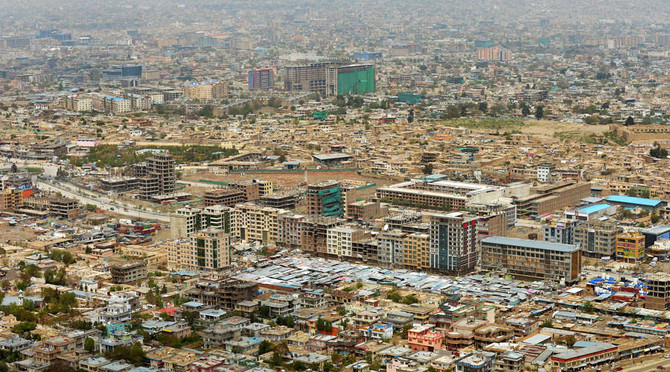
Kabul — On Wednesday, 10 December, a large assembly of religious scholars was convened in Kabul, bringing together 1,000 selected ulema and mashayikh from all 34 provinces of Afghanistan. The gathering took place at the main auditorium of Kabul University, where participants deliberated on the country’s political and security situation. The meeting concluded with the unanimous adoption of a five-point resolution, outlining the collective stance of the country’s senior clerical leadership.
BREAKING |
— HTN World (@htnworld) December 10, 2025
Kabul Clerics Gathering Declares Foreign Militancy ‘Impermissible’ in New Fatwa
Sources told HTN that a major gathering of roughly 1,000 Afghan religious scholars convened in Kabul recently, issuing a five-point fatwa as military tensions heighten along the borders.… pic.twitter.com/X1R2omzIVE
The gathering, HTN sources confirmed, was chaired by Sheikh Muhammad Ismail and Sheikh Habibullah Samanagani, and received the full backing of the Islamic Emirate.
According to reporting by Afghanistan International, shared on X by Abdulhaq Omeri, Senior Producer at AfIntl Pashto, the decree was issued under direct instruction from Taliban leader Mullah Hibatullah, marking the first time such guidance has been publicly framed in the context of recent Pakistan–Taliban tensions. Their report noted that the clerics explicitly ruled it obligatory for Muslims not to use Afghan soil to harm any other country,an interpretation widely viewed as signalling toward the Tehreek-e-Taliban Pakistan (TTP).
له پاکستان سره له وروستیو کړکېچونو وروسته په لومړي ځل د طالبانو د مشر ملا هبت الله په لارښوونه په کابل کې دیني عالمانو په یو پرېکړه لیک کې فتوا ورکړې چې پر مسلمانانو واجب ده چې د افغانستان خاوره د بل هېواد په ضرر و نه کاروي.
— Abdulhaq Omeri (@AbdulhaqOmeri) December 10, 2025
که څه هم طالبانو په دغه پرېکړه لیک کې د ټي ټي پي نوم… pic.twitter.com/ecdBTcvzO5
The resolution document, later reviewed by HTN, showed that the scholars reaffirmed the Taliban administration as a “legitimate Islamic and Sharia-based system” that emerged from decades of conflict, sacrifice, and jihad. The text declared that obedience to the Islamic Emirate, and the defense of it, is obligatory for all Muslims:
“We consider this Islamic system to be righteous and legitimate, and obedience to it obligatory upon ourselves and all the people of the country. Just as the establishment of an Islamic system is a religious duty, its defense and protection are also mandatory.”
The scholars stressed that any attack on Afghanistan or infringement on its sovereignty must be met with unified resistance, elevating such defense to the level of fard ‘ayn, an individual obligation:
“If anyone from outside commits aggression… defending one’s system, land, and values becomes an individual obligation (fard ‘ayn), and this defense is called sacred jihad.”
Cross-Border Militancy Declared Impermissible
The resolution’s third and fourth clauses addressed one of the region’s most sensitive issues: the use of Afghan territory for militant activities. The scholars stated that all citizens are bound by the Islamic Emirate’s pledge that Afghan soil will not be used to harm any foreign country. Violations, they warned, will carry consequences:
“Whoever does not observe this covenant is considered disobedient and a violator, and the Islamic Emirate has the right to take necessary measures against them.”
The clerics further clarified that no Afghan has been granted permission by the Sharia leadership to travel abroad for armed activity, declaring such participation religiously impermissible:
“No Afghan has been permitted by the Shari‘a leader to travel abroad for military activity… If anyone does so, it is not permissible, and the Islamic Emirate must take necessary measures to prevent such individuals.”
Call for Muslim Unity
The final clause urged Islamic countries to maintain constructive, brotherly relations and instructed Afghan clerics to promote this message through mosques and religious platforms:
“The honor and dignity of Muslims lie in unity and harmony… Religious scholars must raise public awareness regarding these points through their pulpits.”
Regional Implications
While the decree aligns with public commitments repeatedly made by the Taliban leadership, its sharper language, particularly the classification of foreign aggression as sacred jihad and the explicit ban on Afghans joining external conflicts, will be closely monitored by neighbouring states.
The gathering’s formal resolution, finalised on 19 Jumada al-Akhirah 1447 / 19 Qaws 1404 / 10 December 2025, positions the clerical establishment firmly behind the Islamic Emirate at a moment when regional capitals are demanding clearer guarantees on cross-border militancy.
Whether these commitments translate into enforcement on the ground now becomes the key question for Afghanistan’s neighbours.