The debate over creating new administrative units and provinces in the country’s politics has intensified once again, and with it the contradictions in political narratives have come into the open. Describing the creation of a new province in South Punjab as a democratic right, a popular aspiration and an administrative necessity is a position that is ostensibly presented in favour of representation and better governance.
However, when the same argument and the same administrative logic are applied to Sindh, the position appears to change suddenly. There, the idea of a new province is viewed through an emotional, historical and cultural lens and described in terms such as “division” or “the partition of Mother Sindh.” This difference has emerged as the central question of the entire debate: are democratic principles and constitutional logic the same for every region, or does the yardstick change according to political expediency?
Political analysts and commentators often point out that in sensitive matters such as the creation of provinces or the distribution of administrative powers, party interests, vote banks and the protection of power centres are an important factor. Where support for a new province in a region does not threaten to directly harm a party’s political position or the balance of power, the narrative of democratic rights and public will can be adopted more easily.
By contrast, where questions arise over the distribution of provincial powers, resources and political influence, references to history, culture, heritage and identity become more prominent. In the Sindh context, invoking great civilisational and literary symbols such as Moenjodaro and Shah Abdul Latif Bhittai does reflect the region’s historical depth. But the question arises whether respect for a region’s historical heritage and the administrative and civic needs of its people should be set against each other.
If the demand of the people of South Punjab for better governance, proximity to power and access to administrative facilities is considered legitimate, then the administrative needs of large cities such as Karachi, Hyderabad and Sukkur, and of other areas, should also be examined on the same principled basis. Issues such as pressure from urban populations, problems in the local government structure, and the provision of water, drainage, transport and basic facilities are not confined to one area but have become a wide administrative challenge.
Critics say that if there are complaints about basic services and governance under a leadership that has been in power for a long period, then open and impartial debate on new administrative structures, or on devolving powers to the grassroots level, should not be avoided.
On the other hand, it cannot be overlooked that the creation of new provinces in Pakistan cannot be settled by emotional slogans or political rhetoric alone. It requires a clear constitutional procedure, mutual consultation, economic and administrative feasibility, and the addressing of the concerns of all stakeholders.
Under the Constitution of Pakistan, any step concerning provincial boundaries or new provinces requires a serious legal and political process, in which including the voices of elected representatives, administrative experts and local populations is essential. When this process is reduced to mere political point-scoring or mutual blame, the real issue, which is providing the public with better service delivery and effective governance, is pushed into the background.
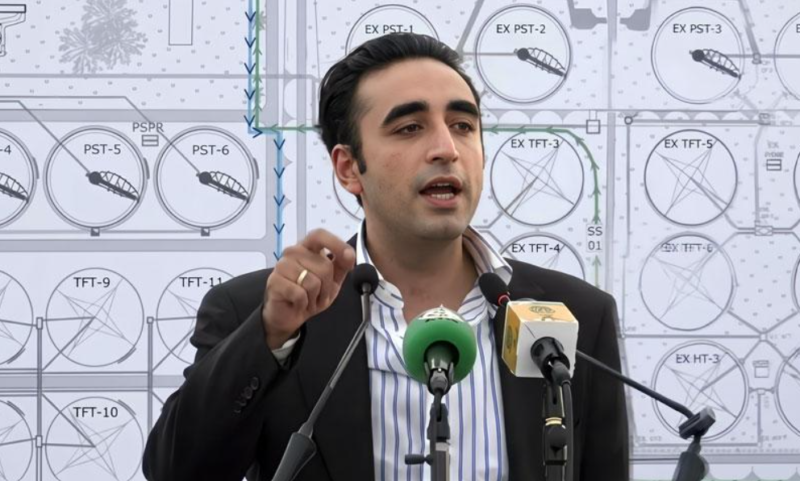
The questions being raised about Bilawal Bhutto Zardari and the leadership of the Pakistan Peoples Party draw attention to how important consistency of principle is in democratic politics. If the creation of new provinces is described as a public right in one place and as inappropriate or a sign of danger in another, public trust could be affected.
A more effective and credible course for political parties is to explain their positions through concrete administrative arguments, governance records and the constitutional framework, so that the focus of debate remains public welfare rather than personal or partisan taunts.
Ultimately, the purpose of new provinces or administrative reforms should not be the dominance or weakening of any political party, but empowering the people and ensuring the fair and effective use of state resources. Whether the matter concerns South Punjab or Karachi, Hyderabad and Sukkur, the basic test should be how, and under what structure, the people can most effectively receive better governance, a transparent system and basic rights. Until principles are applied in line with public interest and constitutional balance rather than political convenience, questions will continue to be raised about such contradictions.