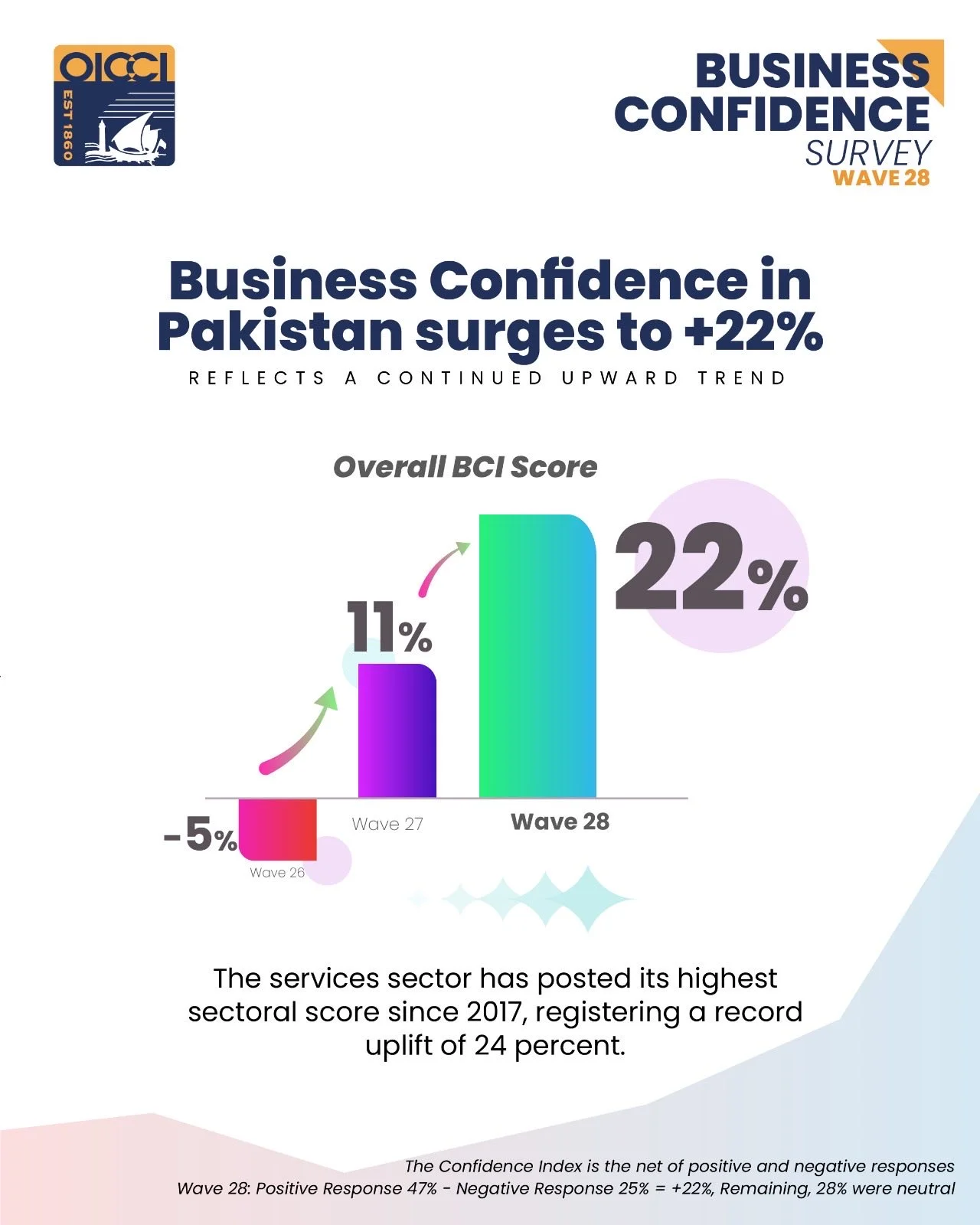
Pakistan_ Pakistan’s business sentiment has improved significantly according to latest OICCI Business Confidence Survey reporting an 11-point jump, taking overall confidence to +22%.
The Wave 28 report covered companies that represent approximately 80% of the country’s GDP, indicates that SEM’s and large corporations are becoming more optimistic about investment, and operational expansion.
Services Sector Leads Growth as AI Adoption Accelerates
According to the OICCI Business Confidence Survey, confidence rose across all major sectors. The services sector posted a strong 24-point increase recording its highest level since 2017, while retail improved by 15 points.
Manufacturing recorded a modest one-point gain. Sentiment strengthened across regions as well, with metro cities rising from +14% to +23% and non-metro areas rebounding from –3% to +19%.
A major highlight of Wave 28 is the rapid adoption of generative AI. OICCI reported that 43% of member companies have already integrated AI tools into their operations, while 81% expect AI to take over major business functions soon. This marks a significant shift in Pakistan’s digital transformation landscape.
Optimism Grows Despite Persistent Economic Challenges
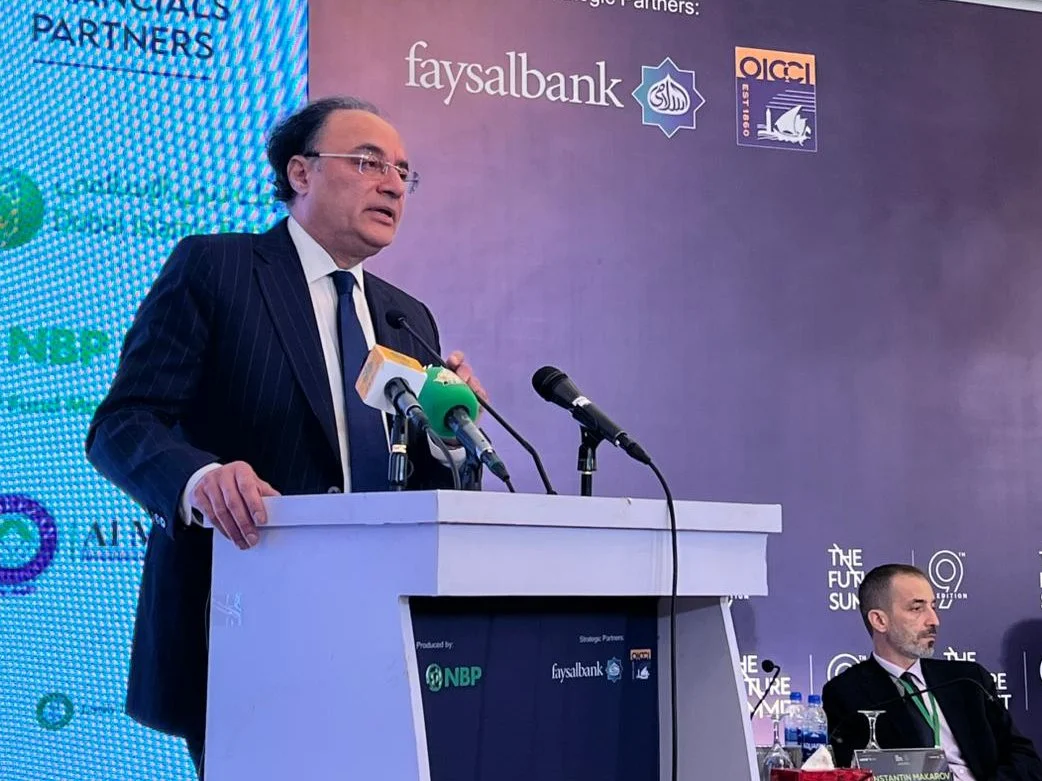
OICCI President Yousaf Hussain said the survey reflects “a cautiously improving business climate” and growing confidence in Pakistan’s economic direction. However, he acknowledged that inflation, taxation, rupee volatility, corruption and unstable government policies remain major risks.
OICCI Secretary General M. Abdul Aleem added that while services and retail show strong recovery, the limited growth in manufacturing highlights the need to support industrial competitiveness and reduce cost pressures.
Overall, the OICCI Business Confidence Survey signals renewed optimism across Pakistan’s growing economy, even as firms continue to navigate structural challenges.