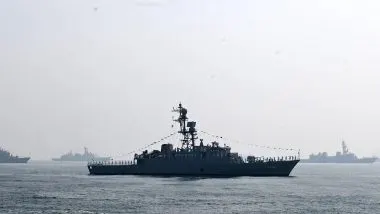
Pakistan bans Indian flag carriers in response to escalating tensions with New Delhi after a deadly attack on tourists in Indian-held Kashmir. The decision, announced by Pakistan’s Ministry of Maritime Affairs, comes shortly after India imposed a ban on goods from Pakistan and barred Pakistani ships from accessing Indian ports.
The maritime ministry stated that the move was made to “safeguard maritime sovereignty, economic interest and national security.” The official statement read: “Indian Flag Carriers shall not be allowed to visit any Pakistani port. Pakistani Flag Carriers shall not visit any Indian Port. Any exemption or dispensation shall be examined and decided on a case-to-case basis.”
This tit-for-tat escalation follows the April 22 attack in Indian-held Kashmir, where 26 tourists were killed by unidentified gunmen. India blamed Pakistan for the incident—a charge Islamabad strongly denied—urging for an impartial international investigation instead.
India justified its ban on Pakistani ships by citing public interest and the need to protect its maritime infrastructure. The Indian government said the move aimed to ensure the “safety of assets, cargo, and connected infrastructure.”
Since the attack, tensions have surged between the two nuclear-armed neighbors, with both countries exchanging fire along the Ceasefire Line in Kashmir for over 10 days, as reported by international media outlets.
Trade between India and Pakistan has already been minimal in recent years due to longstanding political and military friction. The latest maritime restrictions are likely to further deteriorate bilateral economic ties.
The international community—including the US, China, UK, Saudi Arabia, Turkiye, and Iran—has urged both sides to exercise restraint and de-escalate the situation to avoid a full-blown military confrontation.
Prime Minister Narendra Modi recently gave India’s military “operational freedom” to respond to the attack, while Pakistan has warned of a “strong” response to any military aggression from New Delhi.
As the fallout from the Kashmir incident unfolds, Pakistan bans Indian flag carriers, signaling a deepening rift and growing uncertainty in regional stability.