
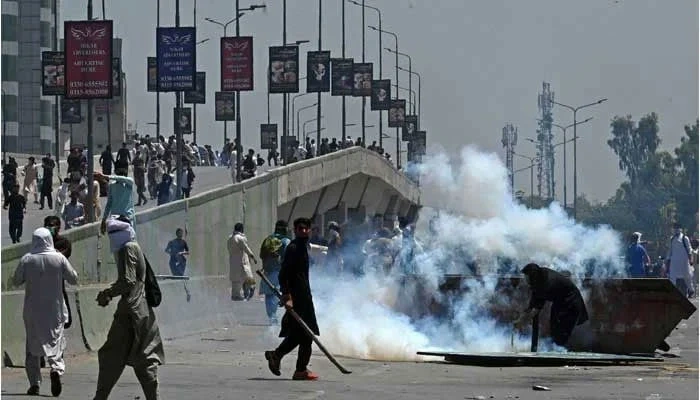
A local court in Peshawar has acquitted 74 workers of the Pakistan Tehreek-e-Insaf in connection with the violent incidents of May 2023.
The decision was made by Additional Sessions Judge Faraz under Section K-247 of the criminal procedure law. The court accepted the defense request and stated that there was no reasonable chance of conviction.
The judge also noted that continuing the trial would only waste time and cause unnecessary hardship for the accused. As a result, the case was closed at this stage.
This ruling highlights an important point. Courts are meant to decide cases based only on evidence and the law, not on political claims or pressure.
Debate Over Judicial Independence and Selective Political Reactions
The decision has also revived the wider debate about judicial independence in the country. Supporters of the verdict say it shows that the courts can act freely and fairly, even in politically sensitive cases.
They argue that if the justice system was under control, such large-scale acquittals would not be possible when evidence is not strong enough.
At the same time, critics point to what they call selective political reactions. When courts give convictions, some political groups call it bias or revenge. But when the same courts issue acquittals, they are praised as independent.
Because of this, concerns are raised that public trust in the justice system can be affected by political messaging.
In conclusion, the case sends a broader message. Court decisions should be judged on facts and law, not political convenience. A strong justice system depends on respect for its independence, regardless of who benefits from the outcome.











