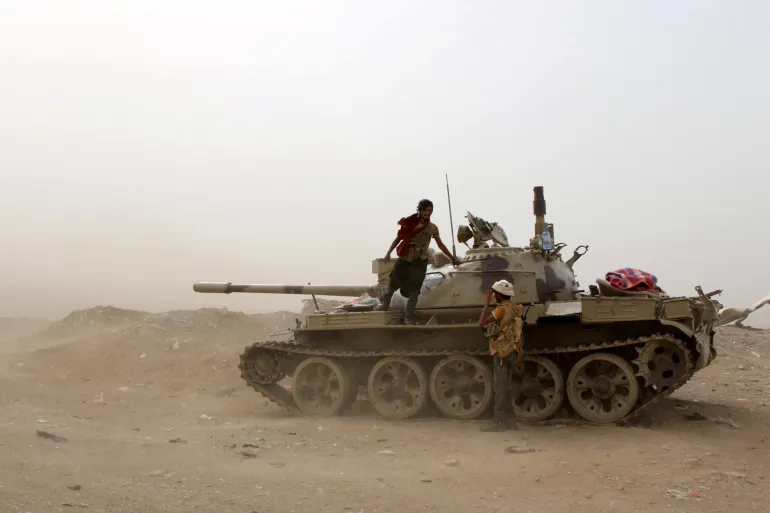
Fighting has erupted in Yemen’s Hadhramaut province near the Saudi border between forces loyal to the Saudi-backed governor and the UAE-backed Southern Transitional Council (STC).
The clashes come as the STC announced a two-year transitional period toward declaring an independent state in southern Yemen, raising fresh concerns over regional stability and border security.
Hadhramaut’s authorities say the operation aims to restore order and prevent armed militias from controlling sensitive areas bordering Saudi Arabia. The STC, however, accused Saudi Arabia of bombing its positions near the border, an allegation rejected by local officials.
Breaking |
— HTN World (@htnworld) January 2, 2026
Yemen’s Southern Transitional Council announces a two-year transition toward independence, aiming for a referendum by 2028. The move escalates tensions with the Saudi-backed government and reshapes Gulf alliances amid ongoing conflict. pic.twitter.com/2RgWHVw3GG
STC announces two-year path toward independence
In a televised address, STC leader Aidarus al-Zubaidi said the group was launching a two-year transitional phase toward restoring what he called the southern state.
He claimed the move reflected the will of southern Yemenis after STC forces seized large parts of the south.
The declaration has been widely seen as a unilateral step that challenges Yemen’s internationally recognized government and risks widening divisions inside the country.
Critics say the STC already holds substantial political power and cannot justify armed expansion.
#BREAKING Yemen separatists announce two-year transition towards independence in south pic.twitter.com/pllrfohV5n
— AFP News Agency (@AFP) January 2, 2026
Yemeni government calls STC an outlawed entity
Yemen’s deputy foreign minister, Mustapha Noman said the STC has become an outlawed group after leading a rebellion against the recognized government.
He said the group must be dismantled or disarmed and converted into a purely political entity.
“The [STC] is now an outlawed entity,” Noman said. “They have to surrender their arms. This is the only option to bring peace to the south again.”
Noman also rejected claims of political exclusion, noting the STC holds three of eight seats in the Presidential Leadership Council and controls a strong majority in the cabinet.
Exclusive: Yemeni Deputy Foreign Minister Mustapha Noman explains how the Saudi-led coalition supported government efforts to restore stability and order in eastern Yemen.#SaudiArabia #Yemen @MustaphaNoman pic.twitter.com/nehqaO75fk
— Al Arabiya English (@AlArabiya_Eng) January 2, 2026
Saudi-Backed governor advances in Hadhramaut
Hadhramaut’s Saudi-backed governor Salem al-Khanbashi said his forces retook al-Khashaa, the province’s largest military base, and are advancing toward Seiyun. He urged STC fighters to withdraw to avoid bloodshed.
“This is not a declaration of war,” he said on Yemen TV. He added that the goal was to peacefully and systematically reclaim bases and protect Hadhramaut from chaos.
The government also appointed him to command the Homeland Shield forces with full authority.
🇸🇦🇦🇪 UAE proxies on the run
— 5Pillars (@5Pillarsuk) January 2, 2026
Footage and reports released today show Emirati-backed militias in full retreat in Yemen and parts of Sudan as forces backed by Saudi Arabia make major gains.
In south Yemen, UAE-backed separatists have been forced out of key positions in Hadramout… pic.twitter.com/xMfhRENts6
Border security raises regional stakes
Officials warned that no country would accept militias controlling territory near its borders.
Noman said the STC made a grave mistake by moving close to Saudi Arabia, stressing the Kingdom’s security sensitivities.
Fighting has broken out in Yemen’s Hadramout province that borders Saudi Arabia, between forces loyal to the region’s Saudi-backed governor and the separatist Southern Transitional Council (STC).
— Al Jazeera English (@AJEnglish) January 2, 2026
🟠 Follow our LIVE coverage: https://t.co/oe7kXtyr8J pic.twitter.com/gg8dl1WlJm
He also said Abu Dhabi would eventually realize the damage caused by actions taken in its name, adding that Saudi Arabia and the UAE share deeper strategic interests than the STC.
Recent reports showed UAE-backed militias retreating in parts of Yemen as Saudi-backed forces made gains, underlining Riyadh’s growing role in stabilizing the south.
Read more: Taliban Demand Official UN Recognition While Maintaining Grave Human Rights Violations