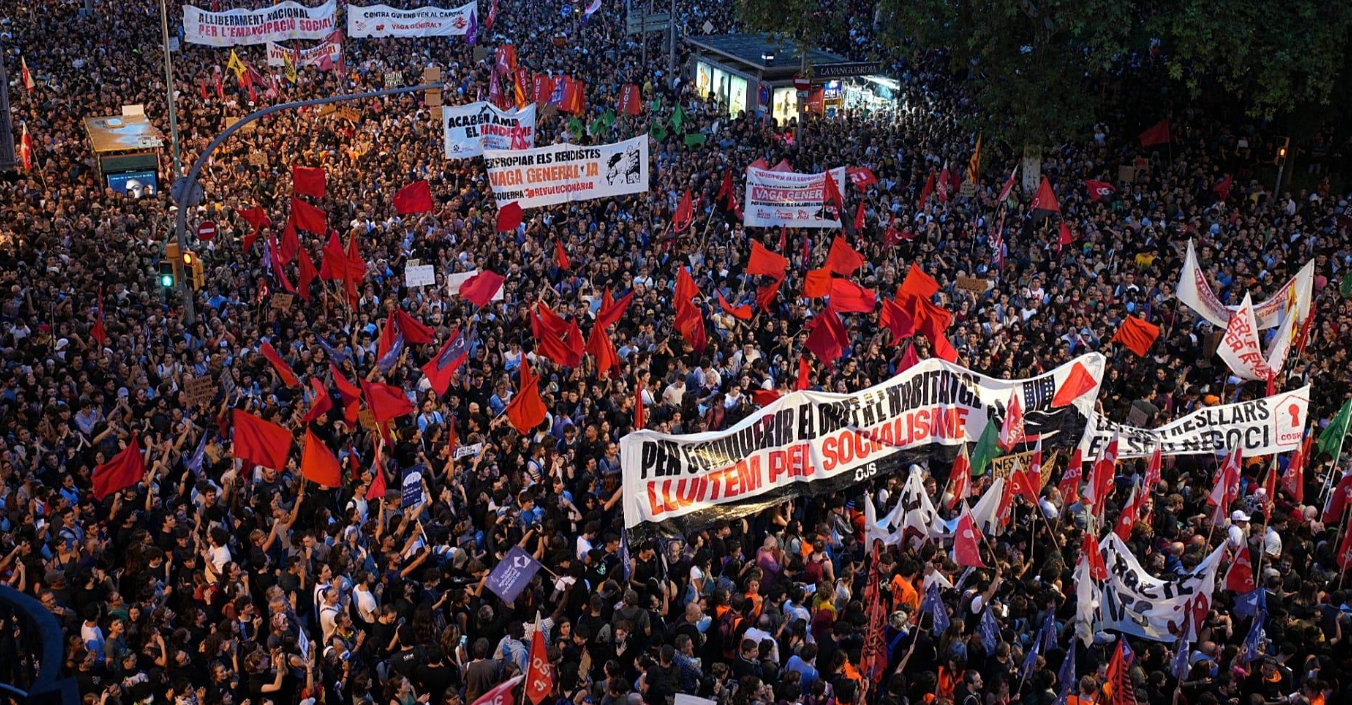
BARCELONA / MADRID – A general strike on Wednesday, November 11, was mostly peaceful, according to unions, but clashes broke out in parts of Barcelona and Madrid in the evening. Police forces reported at least 73 arrests nationwide by 21:00 GMT, from at least 1,044 incidents linked to the strike.
The incidents included blockades of offices and industrial estates and the burning of rubbish containers.
Unions said 4 million workers, around one-fifth of the workforce, took part. That figure comes from the organisers and has not been independently confirmed.
Unrest in Barcelona
Violence began shortly after 7.30 pm near Passeig de Gràcia and Plaça de Catalunya, when masked groups threw stones, bottles and fireworks at police. Rubbish bins were set alight, shop windows were smashed, and some stores were reportedly looted. Catalonia’s regional police, the Mossos d’Esquadra, moved in to disperse the groups.
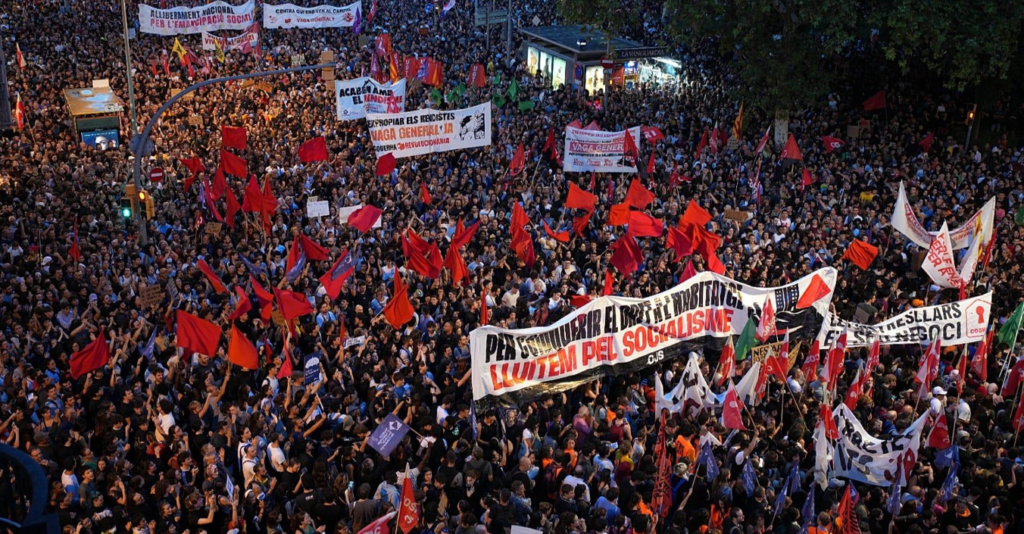
The trouble followed an otherwise peaceful mass march, after small groups of masked youths broke away from the main crowd. Municipal police estimated attendance at more than 55,000, while organisers put it closer to 400,000.
One report says 18 people were arrested during the evening unrest in Barcelona, bringing the city’s total for the day to 20. Other outlets did not give this figure, and it has yet to be confirmed by the Mossos d’Esquadra.
Tension in Madrid
A Reuters witness reported that riot police used foam bullets, tear gas and pepper spray to disperse protesters around Plaza de España in central Madrid.
Why Spain went on strike
The strike was called by Spain’s two largest unions, the General Union of Workers (UGT) and the Workers’ Commissions (CCOO), and is the first they have jointly backed in 14 years. Their stated aim was to increase pressure over housing and wages. Tenants’ associations angry about rising rents and evictions also backed the walkout.
Prime Minister Pedro Sánchez announced on October 5 that Spain would vote on November 29, bringing the election forward from 2027. This followed opposition parties voting down the government’s housing measures in parliament. The vote is now 17 days away.
The unions said participation reached 90% at ports and in the automotive sector, with total stoppages at factories including Volkswagen in Navarre and SEAT in Barcelona. Unions and employers gave opposing verdicts on the walkout, and participation was uneven across the country.
Spain had not seen a general strike since 2012, under the government of Mariano Rajoy.
Authorities have not yet released a full account of the damage or the injuries from the clashes.