Skip to content
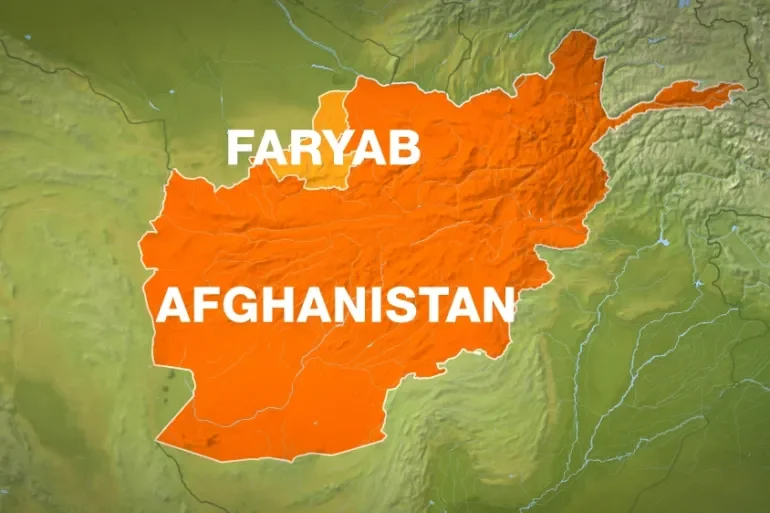
Kabul – The latest UN Security Council report S/2025/796 presents the Taliban’s rule in Afghanistan as a reality where order and control appear to be in place, but questions remain about reconciliation, sustainable peace, and regional stability. The report clearly states that Afghanistan is currently “governance without reconciliation”, meaning that statehood exists, but the fundamental pillars of political inclusion, social cohesion, and lasting peace are missing.
Changing Trends in Narcotics
According to the report, the Taliban have consolidated central authority across the country and largely suppressed open armed resistance. A reduction of more than 95% in poppy cultivation by 2022 has been declared a recognized fact by the United Nations. However, the report warns that the drug economy has not ended but has taken on a new form.
Opium is being replaced by methamphetamine and other synthetic drugs, with increased production and trafficking. According to the UNODC, the increase in meth seizures is evidence that Afghanistan’s narco-economy has entered a more clandestine but more dangerous phase. Although the Taliban claimed to have dismantled 1,400 drug labs and cracked down on 14,000 traffickers, the report says it has not fundamentally dismantled the drug structure in the economy.
Afghan Land Declared a Safe Haven for Terrorists
Regarding security, the United Nations has declared the Taliban’s claim that Afghan territory is not being used by any terrorist organization as unreliable. According to the report, more than twenty terrorist groups are currently active in Afghanistan, including Tehreek-e-Taliban Pakistan, Al-Qaeda, and Jamaat Ansarullah. The report states that the Taliban’s denial of the existence of these groups is not consistent with the ground realities.
TTP Is the Biggest Threat
Tehreek-e-Taliban Pakistan has been identified as the main source of cross-border instability in the report. According to the United Nations, about 6,000 TTP fighters are active in Afghanistan’s eastern provinces of Khost, Kunar, Nangarhar, Paktika and Paktia. According to the report, in 2025 alone, the TTP carried out more than 600 attacks in Pakistan and announced a new campaign called “Al Khandaq”, targeting military installations as well as Chinese interests.
The report also states that the TTP has logistical space and financial facilities on Afghan soil, while the family of its leader, Noor Wali Mehsud, is reported to receive three million Afghani a month.
The Presence of Al-Qaeda and ISIS
According to the United Nations, Al Qaeda continues to enjoy safe havens in Afghanistan, with senior commanders based in Kabul and 200 to 300 Al Qaeda fighters in the subcontinent focused on Pakistan.
About 2,000 ISIS fighters operate mostly in northern and eastern Afghanistan, using artificial intelligence, cryptocurrency, secret platforms, and 3D-printed weapon parts, while recruiting young children through madrassas, the report said.
Political Management
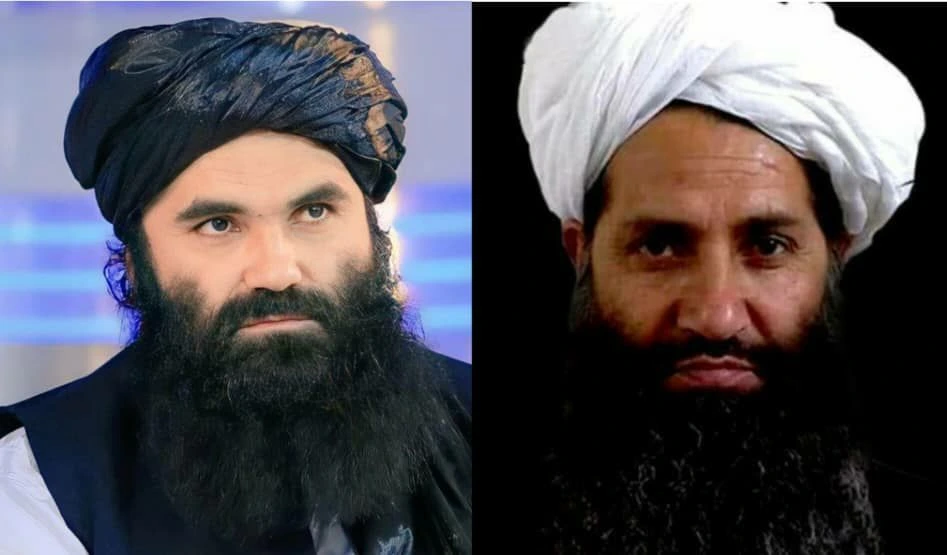
In the chapter on political governance, the report states that the government of the Taliban is completely centralized. Hibatullah Akhundzada is ruling with absolute authority from Kandahar, where there is no public debate, parliament, or transparent consultative process. According to the report, the Taliban has prioritized its internal unity over effective governance. 28 foreign missions and international organizations operate in Kabul, while 42 representative offices of the Taliban are active abroad; however, Russia is the only country that has officially recognized the Taliban government.
The report recalls that on July 8, 2025, the International Criminal Court issued arrest warrants against Haibatullah Akhundzada and the acting chief justice of the Taliban on charges of gender-based crimes against humanity.
Worst Human Rights Situation
Regarding human rights, the report presents a very grim picture. According to the United Nations, Afghan women and girls are the most affected, with eight out of ten women missing out on education, employment, and training. Afghanistan has the second-largest gender gap in the world, while the Taliban’s policies cost the economy more than a billion dollars a year.
Bans on girls’ education, restrictions on women’s employment, and restrictions on movement remain in place. The report also lists ethnic and sectarian discrimination, media blackouts, the shutdown of Shamshad TV and radio, arrests of journalists, and extrajudicial killings of former Afghan security personnel.
According to Islamabad-based analyst and expert on Afghan affairs Shahab Yousafzai, the report refutes the notion that control of the Taliban automatically guarantees peace. According to him, the United Nations has made it clear that control and reconciliation are two separate concepts.
Economic Situation
The report on the economic situation says that Afghanistan’s economy appears to be “resilient but weak”. A 6.5 percent drop in GDP in the first half of 2025, an unemployment rate of 75 percent, and more than 90 percent of the population below the poverty line reflect an economic crisis. The monthly per capita income is about $100, while more than 70 percent of the population is dependent on humanitarian aid.
The forced return of more than 4.5 million Afghan citizens after October 2023 has put severe pressure on resources and basic facilities. According to the report, due to border closures with Pakistan, the Afghan economy is losing about 1 million dollars per day.
Role of Pakistan
The report on Pakistan’s role makes it clear that Pakistan should not be seen as a party to the situation in Afghanistan, but as an affected stakeholder. Cross-border attacks, refugee returns, security concerns, and economic impacts have direct consequences for Pakistan.
Senior journalist Sabukh Syed says the most important aspect of the report is that it speaks purely UN language and evidence, rather than a regional or state narrative, which identifies Afghanistan as a source of regional instability.
The report concludes that stability imposed by force cannot substitute for the peace that comes from political inclusion, human rights, economic recovery, and regional cooperation. Unless the Taliban take verifiable steps instead of mere denial, lasting peace in Afghanistan will remain a distant reality.