Skip to content
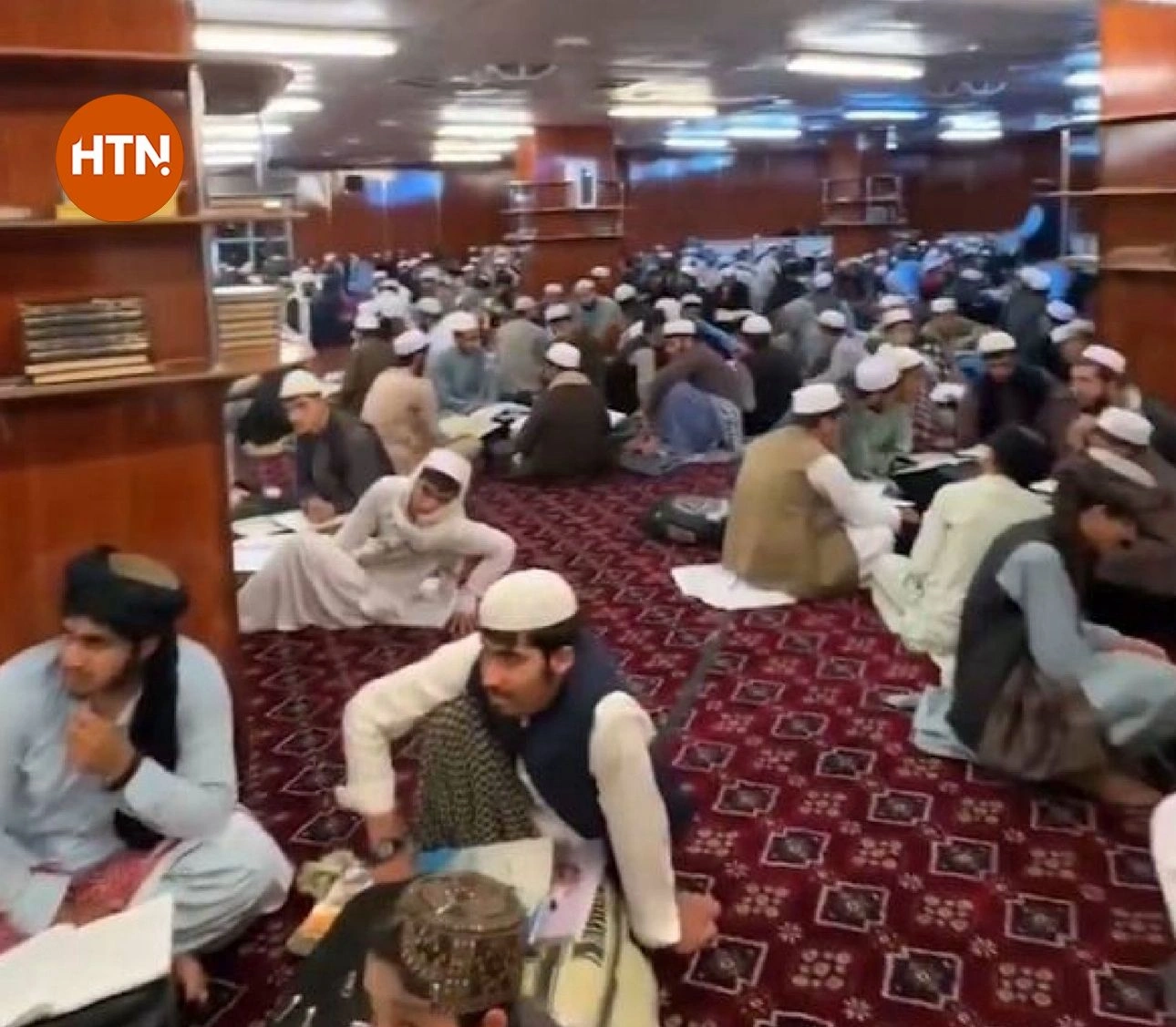
Kabul – The Taliban have reportedly transformed part of the closed US Embassy in Kabul into a religious school, reflecting a broader approach to governance where state and international facilities are repurposed for ideological objectives rather than public service or civic use.
Video footage circulating on social media shows children and adolescents receiving religious instruction within the former embassy compound. Experts note that this demonstrates a narrowing of education under Taliban rule, where modern subjects, critical thinking, and civic learning are sidelined in favor of religious instruction aligned with the group’s ideology. Schools and universities for girls remain closed, highlighting that the issue is less about access to education than about controlling the ideological content taught.
This move fits a wider pattern of the Taliban reshaping Afghanistan’s public and institutional landscape. Since returning to power in 2021, governance has emphasized ideological conformity over state functionality. Public buildings, administrative spaces, and educational institutions are increasingly subordinated to religious authority rather than serving as neutral institutions accessible to all citizens.
Over the past four years, the Taliban have overseen the expansion of more than 23,000 madrasas across Afghanistan, while formal schools, especially for girls, remain largely closed or heavily restricted. In many areas, access to food aid, employment, or social services is linked to participation in Taliban-approved religious education. Humanitarian observers warn that this coercive system channels children into environments shaped by extremist ideology, raising concerns about long-term radicalization and the social impact on future generations.
Observers attribute this transformation to the worldview of Taliban Supreme Leader Haibatullah Akhundzada, whose rigid interpretation of Islam rejects pluralism, debate, and inclusive learning. Experts say education has been weaponized under his leadership to shape future generations along a narrow ideological path. This occurs alongside the continued presence of more than 20 regional and international terrorist groups operating from Afghan territory, deepening fears that Afghanistan is being structured for ideological reproduction and long-term instability rather than development or peace.
Read more :War Against Persian-Taliban Remove Persian Language from Embassy Signboard in Russia