
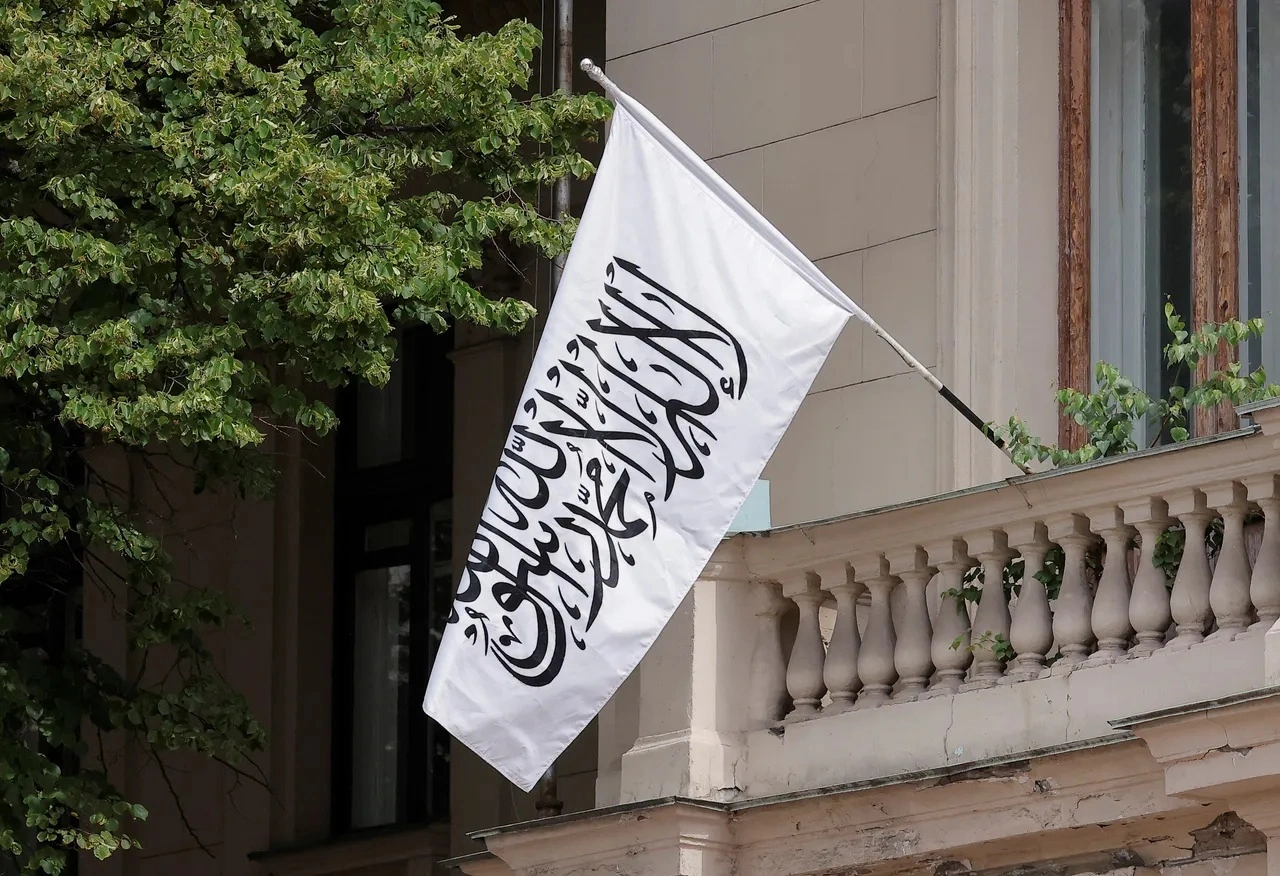
As part of their ongoing campaign to erase the Persian language in Afghanistan, the Taliban have now removed Persian from the signboard of their embassy in Moscow, according to informed sources.
Sources in Russia told Amaj News that the Taliban recently altered the guidance sign at their embassy in Moscow, eliminating the Persian language entirely. The signboard previously displayed multiple languages, including Persian, but has now been changed to exclude it.
This development comes amid an accelerated effort by the Taliban over recent months to systematically remove Persian from government institutions, schools, universities, official documents, and public signage across Afghanistan.
Observers view the removal of Persian from the Moscow embassy sign as part of a broader, deliberate policy aimed at marginalizing the cultural and linguistic identity of Persian-speaking communities in Afghanistan. Analysts note that the policy is no longer confined to domestic governance but is now being extended to Taliban diplomatic missions abroad.
Critics argue that eliminating Persian from official signage—even outside Afghanistan—reflects the Taliban’s attempt to impose a rigid, single-language ideological framework on the country’s national identity, a move that could carry serious cultural, social, and diplomatic consequences.
So far, Taliban authorities have not issued any official statement regarding the removal of the Persian language from their embassy signboard in Moscow.
Read more :Russia Highlights Growing Cooperation with Afghanistan Amid Diplomatic Developments











