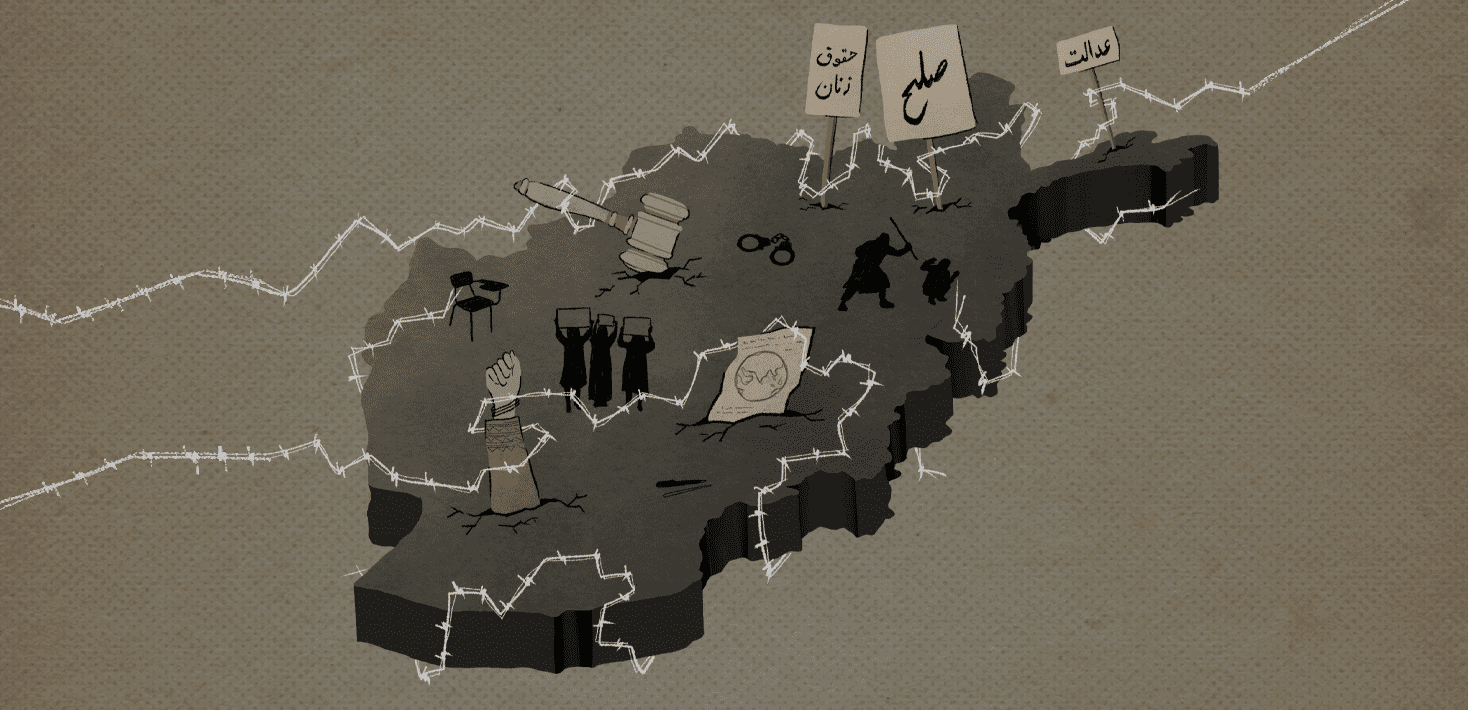
The Taliban offered a ‘general amnesty,’ but for Afghanistan’s former soldiers, that ink was barely dry before the arrest warrants began. The recent detention of five former Afghan army personnel in Parwan province starkly reveals how the Taliban violated their own proclaimed general amnesty. Thousands of military officers, ordinary citizens, and professionals are still imprisoned, tortured, and vanished by the Taliban despite promises of forgiveness. Such a crackdown in Panjshir is an example of the wider repression in which suspected links with anti-Taliban groups, including the National Resistance Front (NRF), are used as a justification for arbitrary arrests. The growing pattern indicates the ugly truth behind the Taliban promises and points towards the ongoing siege on the remnants of the former government and society of Afghanistan.
As the Taliban took back Afghanistan, they promised a blanket amnesty to adversaries and peace and reconciliation. However, the recent arrest of Colonel Sheram Ullah, Gul Badin, Aleem, Jan Muhammad, and Suleiman, members of the same family from Panjshir who served in the former government’s military (ANDSF), illustrates that these promises remain fundamentally unfulfilled. These men were arrested while traveling to Panjshir after forced deportation from Iran, exposing their extreme vulnerability. Their imprisonment on suspicion of association with anti-Taliban operations seems to be buried in local politics, such as the attempt at extortion by commanders who require bribes, which the family supposedly was unable to afford. It is reported that former members of ANDSF who come back to the country (abroad) are detained in particular. Such a violation underlines how Taliban rhetoric on amnesty conceals a systematic oppression of any perceived dissent or non-cooperation, with its seeds planted in organizational strongholds of resistance such as Panjshir.
The five individuals were not arrested by coincidence but as a result of an increased, systematic crackdown. Data on human rights monitoring shows the extent of repression: In the first half of 2024 alone, the UN Assistance Mission in Afghanistan (UNAMA) recorded 98 arbitrary arrests and detention cases, as well as 20 cases of torture and ill-treatment of former government officials or security personnel, contrary to the amnesty. In Panjshir, the center of resistance, at least 138 politically motivated arrests have been documented by monitoring groups between January 2024 and January 2025, indicating ongoing retaliatory violence against communities suspected of having links with NRF.
The arrested are frequently professionals and representatives of civil society, including a doctor working with the humanitarian assistance group Emergency, which demonstrates the desire of the Taliban to eliminate non-conformity in every social layer. In October 2024, to further indicate the likely increasing detentions, the Taliban began the construction of a new central prison in the Bazarak district. The facility, which was reportedly planned to be built at almost AFN 13 million (approximately 140,000 USD) and can hold at least 500 inmates, has brought great psychological trauma to residents who consider the entire province to be turned into one huge prison.
These arrests are not always top-down policy, but also a decentralized power abuse by local commanders. Declining to pay bribes or resolve local conflicts might attract instant charges of disloyalty or terrorism, as an excuse to be detained by the General Directorate of Intelligence (GDI). The GDI, the main intelligence organ of the Taliban, employs their centers in the region to unify political authority and deny opposition. This weaponization of justice brings in multiple levels of injustice, such as political, sectarian, and economic, and adds to the alienation of populations, particularly the Tajik majority in Panjshir, which has long been a center of resistance and opposition to Taliban rule.
The mass arrests and extrajudicial killings of ex-officials and civilians destroy the social structure of Panjshir and endanger the stability of the region. Professionals, community leaders, and military veterans are lost, which reduces capacity to govern and social confidence. The oppression by the Taliban creates resentment and despair among families who believe their loved ones are being held without due process, and some of them have turned towards underground struggle or even persecution abroad. The resultant effect negates any chances of political reconciliation or national unity. Rather, the Taliban are using strategies of violence and division to fuel cycles of violence, a move that risks losing the fragile peace and provoking international outrage.
The international community needs to pressure the Taliban to respect human rights and their own amnesty promise. It is critical to document abuses and pressure the Taliban leadership, particularly through diplomatic lines and aid conditionality. To protect the lives of the detainees, humanitarian agencies and human rights groups must have unhindered access to the detention facilities to report on conditions and guarantee the safe release of the detainees. The future of Afghanistan remains in peril if silence and indifference prevail. In the absence of accountability, the Taliban would face the risk of isolating not only local communities but also the regional allies that share security concerns about the stability of Afghanistan.
The detention of ex-military leaders, some of whom have been deported recently, is a tremendous violation of what the Taliban has guaranteed about amnesty. This exposes a regime that pursued control via fear and systematic repression over actual reconciliation. The assassination of former military personnel and civilians reveals a disturbing trend of injustice and further cracks in Afghan society under Taliban rule. For any hope of durable peace, the cycle of arbitrary arrests, torture, and disappearances must end, replaced by genuine justice and inclusion. The Taliban must be made answerable to the world so that Afghanistan does not sink deeper into violence and oppression.