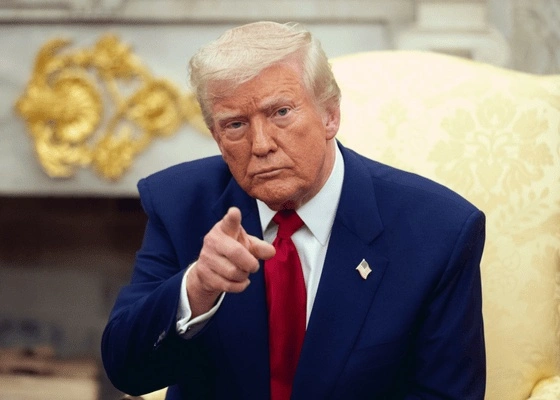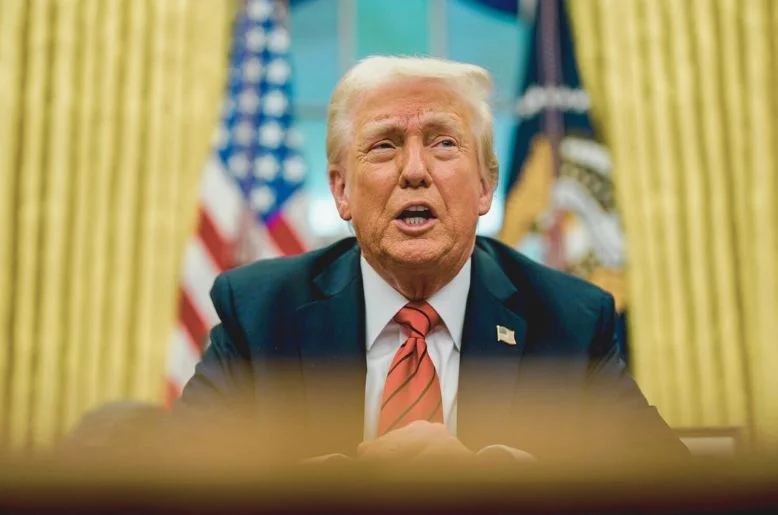
US President Donald Trump has warned that Washington could sharply raise tariffs on India if New Delhi fails to curb its purchases of Russian oil, escalating pressure as trade negotiations between the two countries remain deadlocked.
Speaking to reporters aboard Air Force One, Trump said Indian Prime Minister Narendra Modi was aware of Washington’s concerns.
“Modi is a good guy. He knew I was not happy,” Trump said, adding that the United States could “raise tariffs very quickly” if India continues buying Russian crude.
The comments come months after the US doubled import tariffs on Indian goods to 50 percent, citing India’s heavy purchases of Russian oil.
Those tariffs have weighed on Indian markets, with the IT index falling sharply as investors fear prolonged trade friction could derail a potential trade deal.
Republican Senator Lindsey Graham, a close Trump ally, said sanctions on Russian oil companies and higher US tariffs had already reduced India’s imports.
Graham is backing legislation that could impose tariffs of up to 500 percent on countries that continue to buy Russian oil. He argued that cheap Russian energy helps sustain Moscow’s war effort.
Trade experts, however, warn that India’s cautious approach carries risks.
Economic experts say Indian exports already face steep tariffs, with a significant portion linked directly to Russian oil purchases.
While refiners have cut some imports, he said India remains in a “strategic grey zone” that no longer satisfies Washington.
Trump has also signaled possible new tariffs on Indian agricultural products, particularly rice accusing exporters of hurting US farmers. He said his administration would act against what he described as dumping.
Despite tensions, India continues to seek a trade deal.
New Delhi has asked refiners to submit weekly data on Russian and US oil purchases, while senior officials from both sides have held several rounds of talks.
However, with US pressure mounting and India’s Russian oil imports still rising, analysts warn that trade relations could face further strain in the months ahead.
Read more: From Terrorism to CPEC 2.0, Pakistan–China Ties Enter a New Phase of Cooperation in 2026