
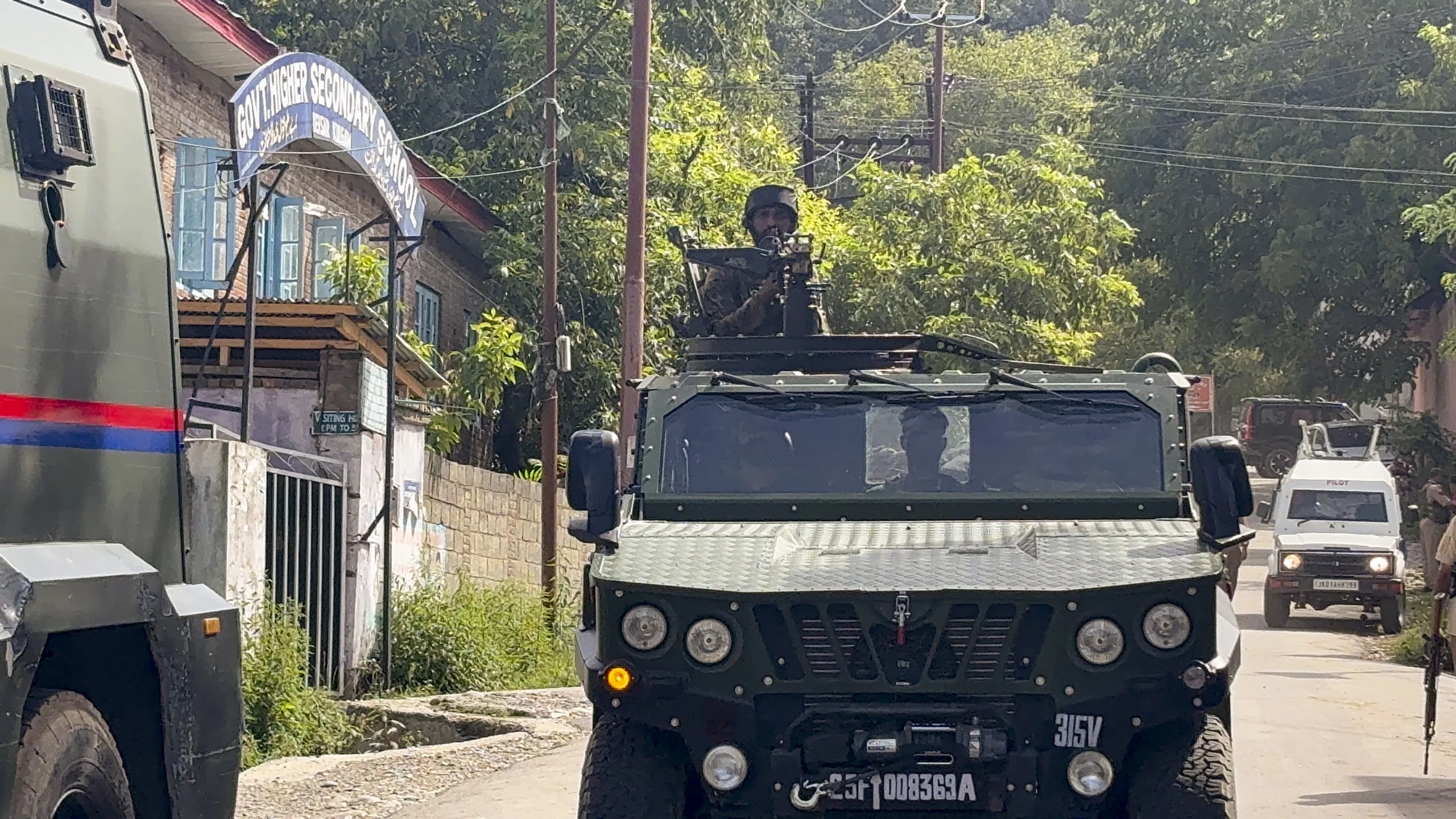
In Indian-held Kashmir’s Kulgam district, an ongoing Indian military operation has entered its tenth consecutive day, with Indian security forces attempting to surround and capture Kashmiri militants hiding in dense forest areas. Official sources report that the militants are highly trained and skilled in jungle warfare, which has prolonged the operation.
So far, two Indian soldiers have been killed, a fact confirmed by government authorities. Several others have been injured and shifted to nearby hospitals. However, the number of militants killed has not yet been disclosed.
According to reports, the operation began on July 1 in the forested area of Aakhil after security forces received intelligence about the presence of a group of militants. Police, Indian Army units, and CRPF personnel jointly entered the area. Local media sources state that explosions and heavy gunfire were heard during nighttime in the region.
Sources further reveal that Indian forces are deploying drones, unmanned aerial helicopters, manned helicopters, and advanced surveillance equipment to track militant movements. In some suspected hideouts, explosives have been dropped from the air. This marks the first time that hideouts in Kulgam have been targeted using drones.
The operation also involves special para-commandos equipped with modern weapons and gear, providing guidance to ground troops. A security official stated that the forces are advancing cautiously rather than rushing, aiming to avoid unnecessary casualties among their personnel while cutting off the militants’ supplies and ammunition.
Regional analysts view this operation as evidence that militant networks remain active in Indian-held Kashmir and that Indian security forces continue to face significant challenges in dismantling them. Militants are reportedly using dense forests and natural caves as safe havens, making it difficult to locate them.
This operation is being observed in the context of worsening human rights conditions in the valley. Residents of Kashmir have long been subjected to military sieges, curfews, and strict security measures. Human rights organizations have repeatedly highlighted that such operations disrupt civilian life and sometimes harm innocent individuals.
Experts emphasize that the current situation reflects the unresolved nature of the Kashmir dispute, which remains a major obstacle to peace and stability in the region. They stress that a lasting solution is only possible through comprehensive political dialogue, in line with the aspirations of the Kashmiri people and United Nations resolutions.











