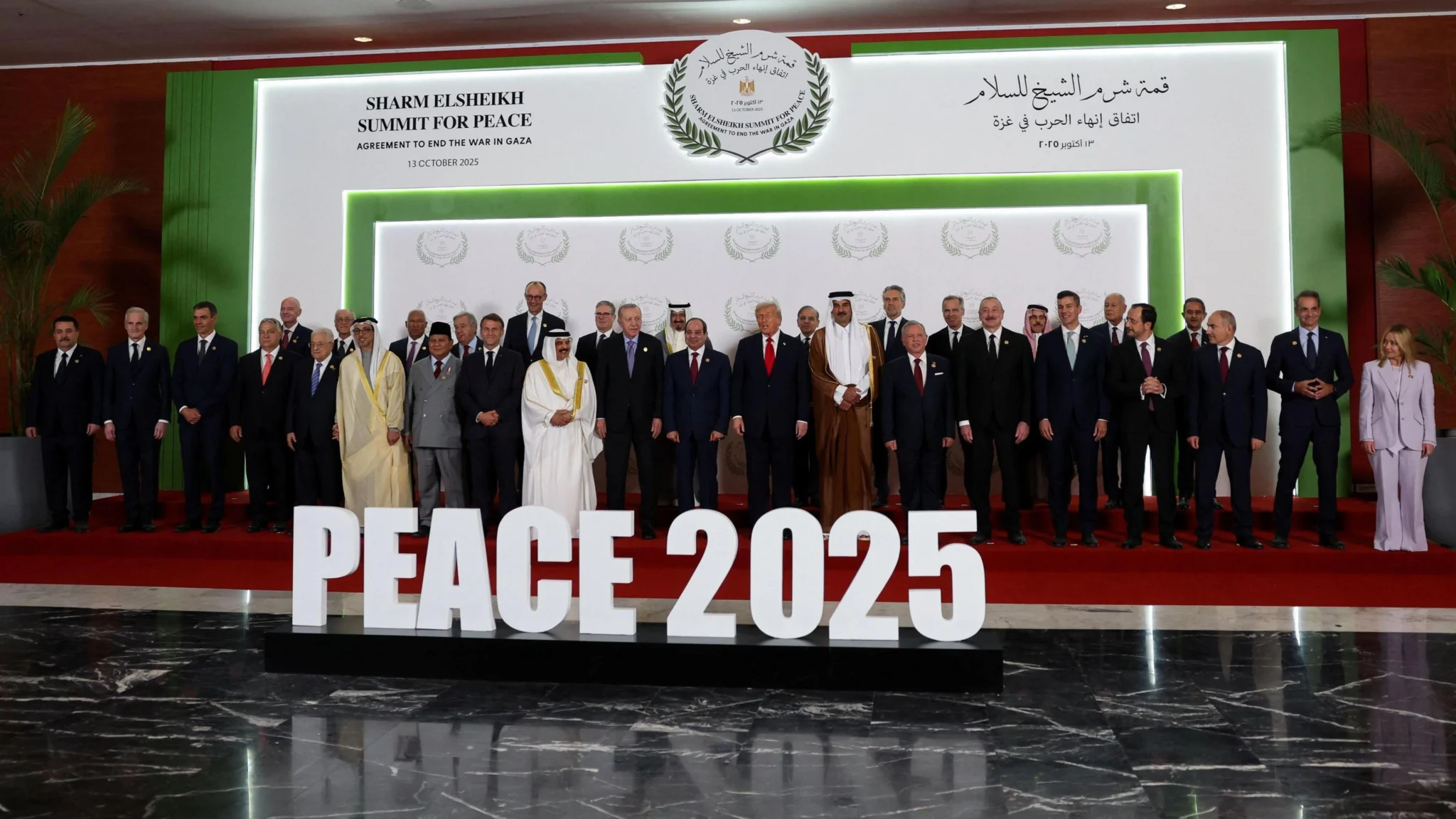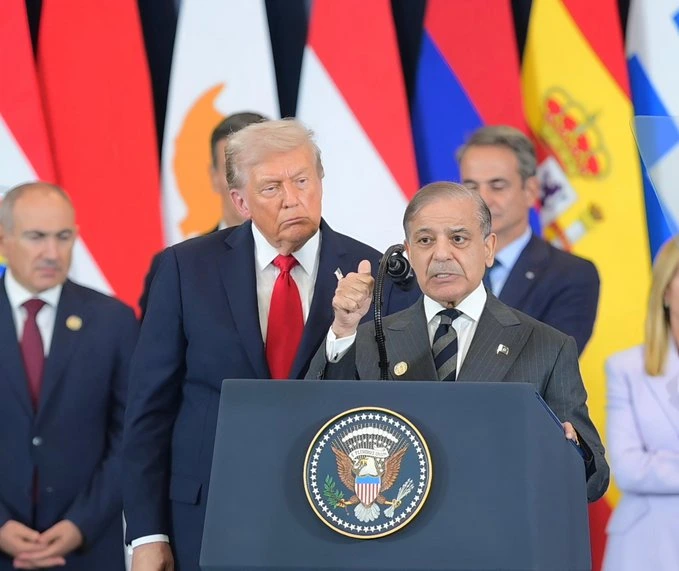
Sharm el-Sheikh, Egypt – Prime Minister Shehbaz Sharif on Monday joined world leaders at the Sharm el-Sheikh Peace Summit, where the signing of a landmark peace agreement brought an end to months of conflict in Gaza.
The summit, co-chaired by the United States President Donald Trump and Egyptian President Abdel Fattah El-Sisi, gathered leaders from over twenty countries in a rare show of unity for regional stability. Prime Minister Sharif was received by President El-Sisi upon arrival at the Congress Centre, where he attended the formal signing ceremony of the Gaza ceasefire agreement.
At the summit, the prime minister reaffirmed Pakistan’s unwavering support for the Palestinian cause and emphasized the need for a comprehensive ceasefire, humanitarian relief, and the establishment of an independent Palestinian state.
Pakistan’s participation alongside major Arab and Islamic countries underlined its enduring commitment to the Palestinian cause and collective humanitarian responsibility. The invitation to Pakistan reinforced its image as a credible and constructive partner in promoting regional peace and stability.
Pakistan’s inclusion among key Arab-Islamic states and its direct engagement with Egypt and the United States enhanced its diplomatic visibility, underscoring its central role in shaping consensus on critical regional issues. The summit elevated Pakistan’s position as a bridge-builder and peace facilitator within the Muslim world.
By reiterating support for the Palestinians’ right to self-determination and adherence to international law and United Nations resolutions, Pakistan projected policy consistency rooted in principles of justice and humanitarian concern.
The summit, which followed deliberations at the United Nations General Assembly, allowed Pakistan to align its diplomatic messaging with the collective voice of Arab and Islamic countries, reinforcing solidarity and shared purpose in addressing the Gaza crisis.
Taking the stage, Prime Minister Shehbaz praised both President Trump and President El-Sisi for their tireless diplomatic efforts. He commended the US president for his “outstanding and extraordinary contributions to stop war between Pakistan and India and seven other conflicts in the world,” even nominating him for the Nobel Peace Prize.
“Today is one of the greatest days in contemporary history because peace has been achieved after untiring efforts led by President Trump, who has relentlessly worked throughout these months to make this world a place of peace and prosperity,” the prime minister said.
The summit’s outcome, focused on ceasefire, humanitarian access, and reconstruction, supported Pakistan’s long-standing narrative of promoting stability, conflict resolution, and cooperation across the Muslim world.