
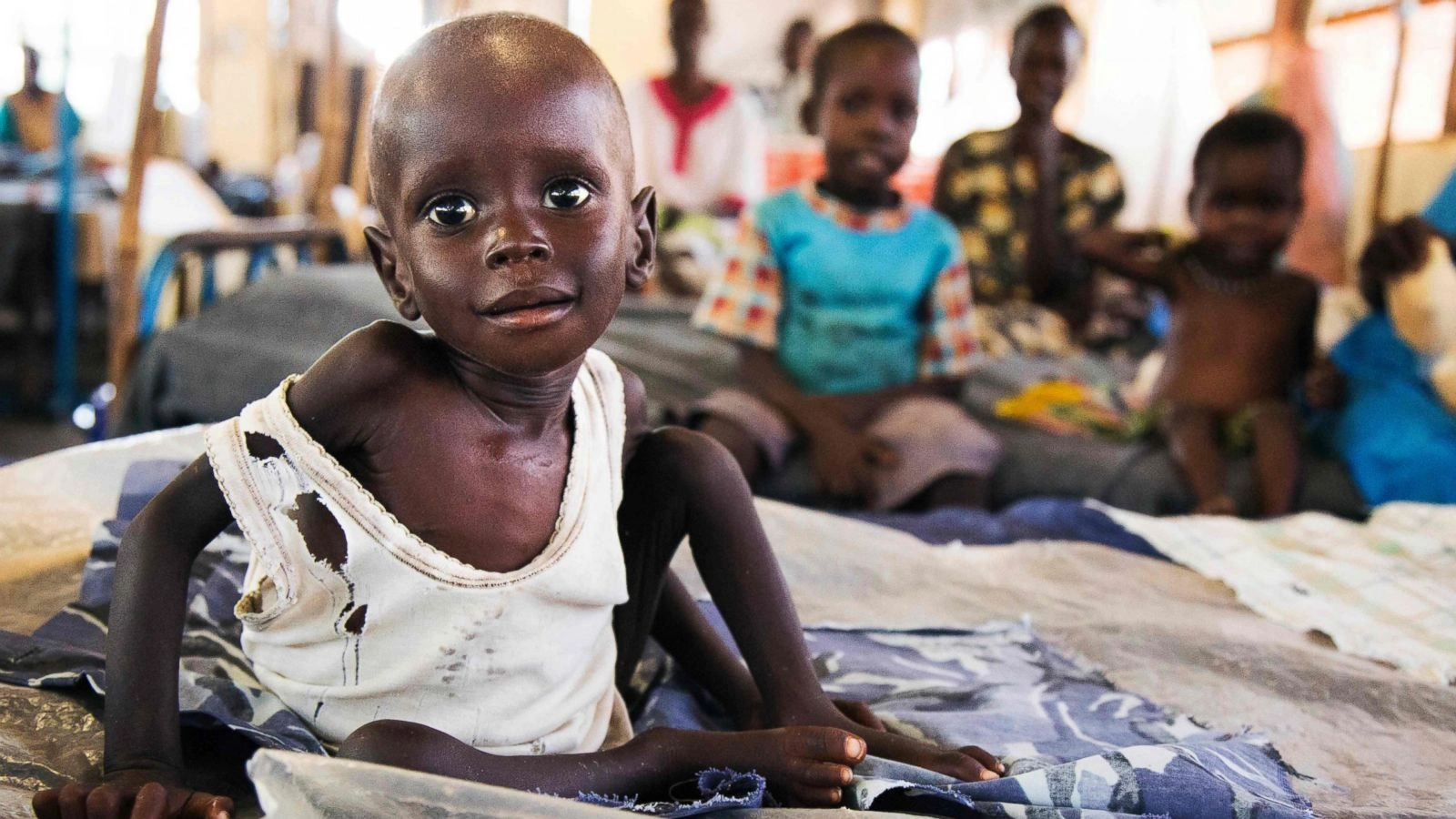
JUBA: More than 7.55 million people in South Sudan are projected to suffer from malnutrition during the April-to-July 2026 lean season, when food supplies typically run low, according to the latest assessment by the Integrated Food Security Phase Classification (IPC), a United Nations-backed global hunger monitoring system. The IPC’s report, released on Tuesday, paints a grim picture of a nation slipping deeper into crisis as renewed fighting, displacement, and global aid shortfalls converge to threaten millions of lives.
Conflict and Political Instability Exacerbate Crisis
The worsening food insecurity comes amid intensifying clashes between rival political factions following President Salva Kiir’s suspension of First Vice President Riek Machar, who now faces treason charges. The fragile peace deal signed in 2018 has effectively unraveled, reviving fears of another civil war.
According to the IPC, 5.97 million South Sudanese, roughly 42% of the population, are already facing acute food insecurity, while 28,000 people in the counties of Luakpiny Nasir and Fangak are enduring “catastrophic” hunger, the highest alert level in the classification system.
Floods, Disease, and Displacement Compound Suffering
The IPC report warns that six countries are likely to hit critical malnutrition levels by 2026, driven by conflict, restricted access to food, and the spread of cholera. Widespread flooding has isolated entire communities, worsening the humanitarian situation. An estimated 2.1 million children under five and 1.15 million pregnant or breastfeeding women are at risk of acute malnutrition by June 2026, highlighting the scale of the unfolding emergency.
Humanitarian Access Severely Restricted
Humanitarian operations face mounting challenges due to insecurity, looting, and restricted access. In several parts of the country, aid convoys have been unable to reach remote communities for months, leaving thousands without food or medical assistance. “This is an alarming trajectory,” said Mary-Ellen McGroarty, the World Food Programme (WFP) Country Director for South Sudan. “Persistent hunger levels remain deeply troubling. Where peace and consistent access exist, communities have shown signs of recovery, but sustaining that progress requires urgent, continued support.”
A Nation Trapped in Cycles of Conflict and Hunger
Since gaining independence in 2011, South Sudan has been trapped in a cycle of civil wars, failed peace deals, and political turmoil, resulting in one of the world’s most prolonged humanitarian crises. Within two years of independence, ethnic divisions between Kiir’s Dinka community and Machar’s Nuer group ignited a devastating civil war that claimed over 400,000 lives. The 2018 peace deal provided brief stability but has since faltered, with new violence killing nearly 2,000 people and displacing more than 445,000 in the past year alone, according to the International Committee of the Red Cross (ICRC).
Urgent Call for Global Action
The IPC report urges immediate large-scale humanitarian intervention to prevent mass starvation. With donor fatigue and global crises diverting attention, aid agencies warn that South Sudan risks becoming a “forgotten famine” unless the international community renews its focus. “The severity of this food crisis demands urgent action,” the report concluded. “Without decisive humanitarian support and a return to political stability, millions will face starvation in the world’s youngest nation.”











