
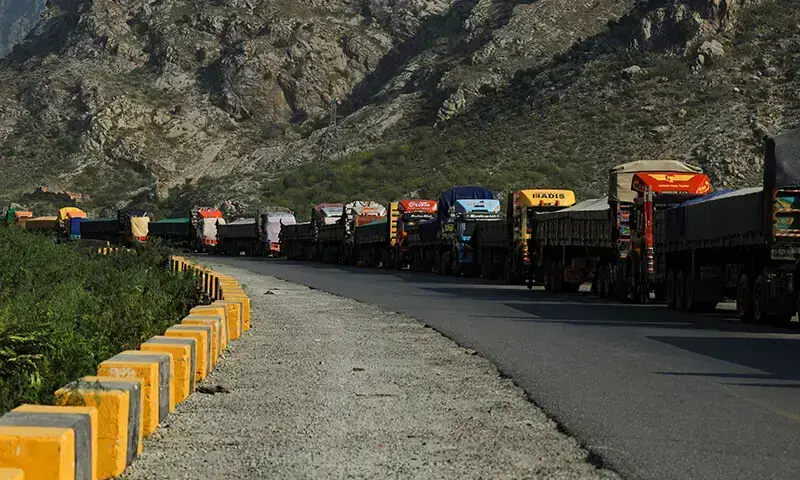
ISLAMABAD — Pakistan’s Ministry of Commerce has reported a significant decline in bilateral trade with Afghanistan, attributing the fall to Kabul’s continued restrictions on border crossings. According to official data, Pakistan–Afghanistan trade dropped by 54% in October 2025 compared to the same month last year.
The @PAJCCI has issued a statement about closure of all crossing points between Pakistan and Afghanistan.
— HTN World (@htnworld) November 18, 2025
Pakistan-Afghanistan Joint Chamber of Commerce & Industry (PAJCCI) has issued a formal appeal urging urgent government action amid the prolonged shutdown of… pic.twitter.com/jYTwOx4CYl
The Ministry’s breakdown shows that Pakistan’s exports to Afghanistan fell by 28% in October (compared to September), while year-on-year figures reflect a sharper 55% decline. Officials say the decline is directly linked to restrictions imposed by Afghan authorities on key trade routes, particularly the Torkham border.
Border Closures Impacting Local Economies
Videos circulating on social media show widespread disruption in the areas surrounding Torkham, where local workers and transporters say their livelihoods have been “severely damaged.” Pakistani traders dealing in fruit and vegetable supply chains have also raised concerns over losses.
Traders and transport workers were seen protesting along the border, calling on both governments to resolve the issue urgently. Many emphasize that daily-wage earners are the hardest hit.
Experts Warn Afghanistan Is Losing Economic Opportunities
Economic analysts argue that Afghanistan’s decision to restrict border trade is counterproductive. They note that the Afghan economy could have benefited substantially by keeping routes open, especially at a time when the country faces shortages, inflation, and reduced foreign aid. Experts warn that prolonged restrictions will weaken Afghanistan’s access to essential goods, raise prices for Afghan consumers, and damage long-term confidence between the two markets.
A Strained Bilateral Economic Relationship
Tensions over border management, transit rules, and security concerns have strained trade relations between the two neighboring countries for months. Analysts say that unless both sides pursue a coordinated and predictable border policy, the trade environment will continue to deteriorate, harming local economies and regional stability.











