
India— Afghanistan’s Taliban administration is accelerating healthcare and pharmaceutical cooperation with India. A move increasingly mirrored by a public narrative portraying Pakistani medicines as “counterfeit,” despite the absence of independent evidence.
The timing, sequence, and beneficiaries strongly indicate that the Taliban’s claims are driven less by public health concerns and more by a strategic realignment toward India as relations with Pakistan deteriorate.
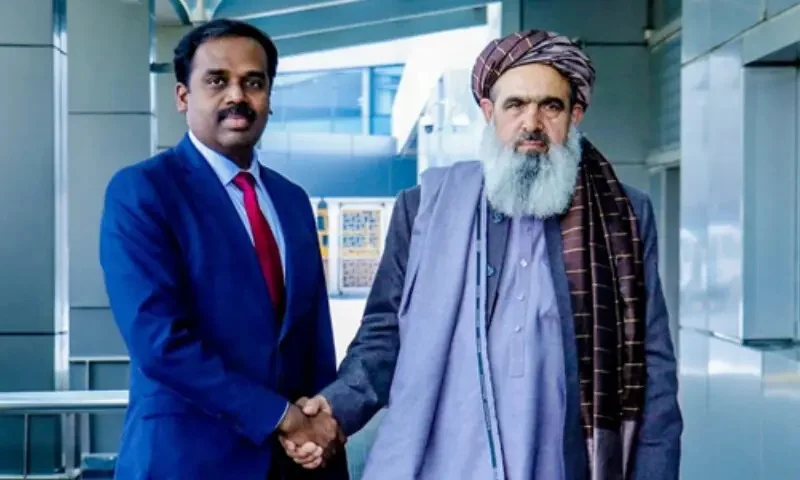
The latest development is the visit of Afghanistan’s Minister of Public Health, Mawlawi Noor Jalal Jalali, who arrived in New Delhi on December 16 for a multi-day official trip.
“The multi-day visit aims to strengthen bilateral health cooperation, promote the exchange of experience, and coordinate joint efforts,” the Afghan health ministry said. The delegation will discuss “capacity-building opportunities for Afghan health workers, the import of quality medicines into Afghanistan, medical equipment, and other related issues.”
This is the third senior Taliban visit to India in three months, part of a rapid diplomatic and commercial pivot.
Afghanistan’s Minister of Public Health, Mawlawi Noor Jalal Jalali, has travelled to India, heading a delegation on an official invitation.
— MoPH/د عامې روغتیا وزارت/وزارت صحت عامه (@MoPH_afg) December 16, 2025
1/3 pic.twitter.com/maKYc2SvG1
Indian officials welcomed the delegation warmly. Ministry of External Affairs spokesperson Randhir Jaiswal said, “The visit reflects India’s enduring support for Afghanistan’s healthcare system.”
A political ban, not a pharma reform
The Taliban barred Afghan traders from importing Pakistani medicines in November 2025. Before any third-party lab testing, pharmacological review, or regulatory assessments were made public.
Soon after a Taliban-linked military health commander, not a qualified chemist, appeared in a video alleging that Pakistani medicines were “counterfeit.”
A warm welcome to Afghan Minister of Public Health, H.E. Mawlawi Noor Jalal Jalali, on his first official visit to India.
— Randhir Jaiswal (@MEAIndia) December 16, 2025
The visit reflects India’s enduring support for Afghanistan’s healthcare system, and we look forward to productive discussions. pic.twitter.com/vtQiGURbnG
These claims remain unverified, and Afghan regulators have not published a single batch report, laboratory result, or official testing document.
Meanwhile, Afghan markets continue to witness shortages and steep price hikes, with Pakistani medicines reportedly selling at nearly AFN 600 per bottle, reflecting demand rather than distrust.
The Commander of Health Affairs at the Ministry of Defense's Chief of General Staff, Dr. Tahir Ahrar, shows to the media 22 types of Pakistani fake medicines that were found to be counterfeit.
— Qari Saeed Khosty (@SaeedKhosty) December 16, 2025
ڈاکٹر طاہر احرار نے میڈیا کو وہ 22 قسم پاکستانی ادویات دکھائیں جن کی پیکنگ جعلی تھی۔۔ pic.twitter.com/4qG6XTh1ev
The political timing is unmistakable:
- Border clashes with Pakistan in October
- Failure of security talks in Istanbul
- Taliban suspending trade with Islamabad
- India simultaneously expanding its commercial footprint, including a $100 million pharma MoU with Zydus Lifesciences
Health diplomacy becomes geopolitical signaling
By replacing Pakistan in the Afghan medicine market without scientific justification, the Taliban are effectively transforming public health policy into a tool of diplomatic alignment.
Afghan patients are already paying the price through reduced access and inflated costs.
The campaign against Pakistani medicines emerged precisely when Kabul sought deeper health-sector agreements with India.
Without transparent laboratory verification, the Taliban’s narrative looks political not clinical. A strategic messaging shift designed to support its new alignment rather than Afghanistan’s public health needs.
Read more: Unverified Taliban Claims on Pakistani Medicines Raise Questions Over Timing and Motives











