
Kabul – A recent United Nations Security Council report (S/2025/796) indicates that though Afghanistan may seem stable on the surface, it is still a central location to an increased Global Terror Threat.
According to the sixteenth report by the Analytical Support and Sanctions Monitoring Team, the centralized authority of the Taliban is concealing structural weaknesses and an escalating humanitarian catastrophe.
The UN findings showed that there are still several extremist groups operating in the country. In the report, it is explicitly stated that there are ISIL-K, Al-Qaida, and Tehrik-e Taliban Pakistan (TTP). Besides, organizations like ETIM/TIP and Jamaat Ansarullah are also active, and they are a major threat to the security of the region and the whole world.
A Human Rights Crisis
The social situation in Afghanistan is said to be pathetic, especially among women and girls.
According to the UN, 8 out of 10 Afghan women have now been left out of education, employment, and training.
#Afghanistan: As we mark 100 days since Afghan women colleagues were barred from entering @UN premises in the country, we call on de facto authorities to lift all such restrictions to allow their critical support to reach all those in need.
— UN Human Rights (@UNHumanRights) December 16, 2025
The systematic discrimination against… pic.twitter.com/oxklQddr8E
This organized marginalization has resulted in the nation having the second-largest gender gap in the world.
These oppressive policies are not only a social problem; they are also an economic problem.
The UN estimates that the annual cost to the Afghan economy as a result of women not being allowed to work is more than $1 billion annually.
Moreover, the report identifies the increasing ethnic discrimination where the leadership of the Taliban turns out to be controlled by a particular group, leaving out the rest of the factions.
Economic Collapse and Migration
The economic scenario is classified as resilient but weak, with the GDP decreasing by 6.5% during the first half of 2025. This decline leads to an increasing Global Terror Threat because poverty is a radicalizing instrument.
The crisis in Afghanistan is worsening as humanitarian funding declines.
— United Nations (@UN) December 11, 2025
The UN warns that nearly half the population will need assistance in 2026, while women and girls continue to face grave violations of their rights.https://t.co/7rlmz9ufaW pic.twitter.com/DOC4dVy0J4
Presently, over 90 percent of the population is below the poverty line, with 75 percent of the working population jobless.
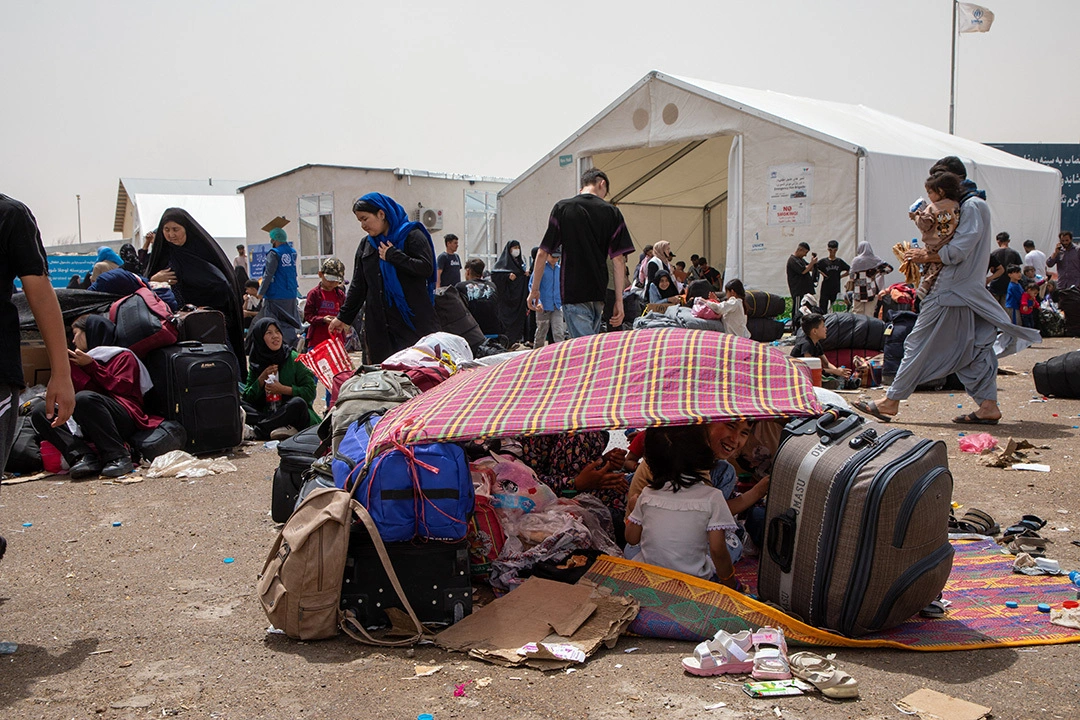
Since late 2023, the forced return of more than 4.5 million Afghans has aggravated the pressure on the country.
🆘 #Afghanistan is bracing for a harsh and unforgiving winter as multiple crises converge.
— World Food Programme (@WFP) December 16, 2025
While the crisis deepens, humanitarian aid is shrinking.
Millions are going without the support needed to curb severe hunger and malnutrition. https://t.co/ZtYDfNnUsg pic.twitter.com/areLvCecBd
In 2025 alone, 2.2 million individuals returned, representing a 10 percent increase in the total population. This huge influx of people has overwhelmed domestic services and has caused a serious loss of foreign-sent money back home.
Humanitarian Dependency
Over 70 percent of Afghans are now totally dependent on international aid to survive. The border closures have contributed to the sufferings at about $1 million a day to the local economy.
The UN cautions that without encompassing governance and a turnaround of the human rights violations, the superficial peace will tend to collapse, contributing further to the Global Terror Threat surfacing out of the area.











