
Islamabad_ India has once again triggered a “water war” in peak winter by abruptly releasing tens of thousands of cusecs into the Chenab River before sharply cutting the flow to dangerously low levels. Which prompted serious concerns in Islamabad over deliberate violations of the Indus Waters Treaty (IWT).
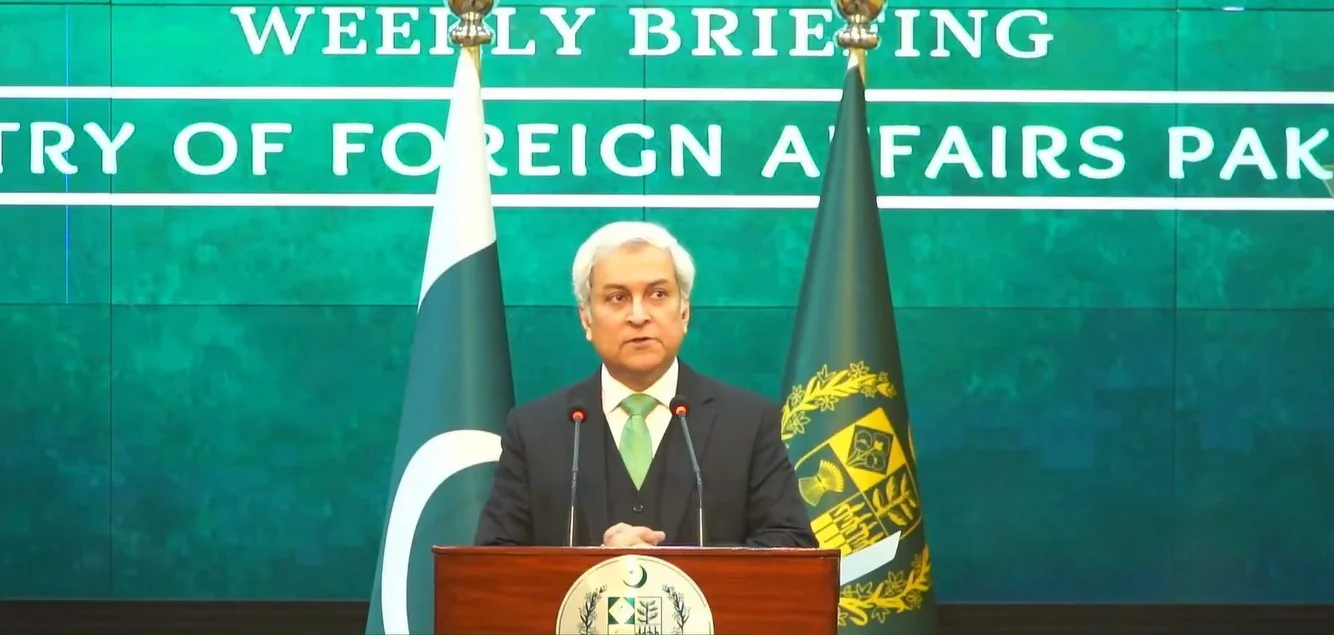
Foreign Office spokesperson Tahir Hussain Andrabi said in his weekly briefing that Pakistan had recorded extreme fluctuations in Chenab flows since December 7, changes that could not occur naturally.
“Pakistan views these variations with extreme concern and seriousness. They suggest unilateral release of water into the Chenab River by India without prior notification or data sharing,” he said.
He added that Pakistan had approached India through the Indus Water Commissioner, demanding an explanation under the terms of the IWT.
Weekly Press Briefing by the Spokesperson @TahirAndrabi
— Ministry of Foreign Affairs – Pakistan (@ForeignOfficePk) December 18, 2025
On the Violation of Indus Waters Treaty by India pic.twitter.com/PAS0l5XxTz
Abrupt release and sudden cuts raise alarm
According to officials, India released 58,000 cusecs of water during midnight on December 7–8 2025, only to slash the flow to between 870 and 1,000 cusecs from December 13 to 17.
Historical records show that seasonal Chenab flows for this period have ranged between 4,000 and 10,000 cusecs over the past decade.
“This manipulation directly threatens the lives, livelihoods, food security and economic well-being of our citizens,” Andrabi warned.
Authorities say India first emptied the Baglihar Hydropower Project reservoir and later refilled it. Which is an explicit violation of IWT rules governing run-of-the-river projects.
The Court of Arbitration had already ruled on August 8, 2025 that India’s practice of dam emptying and refilling on rivers reserved for Pakistan amounts to “water weaponization.”
Pakistan’s Commissioner for Indus Waters, Syed Mehr Ali Shah, confirmed that a formal letter had been sent to India under Article VI and Article VIII of the treaty.
Moreover, the letter is supported by scientific evidence showing these actions were driven by deliberate control not natural hydrological conditions.
Treaty remains binding despite India’s suspension attempt
India unilaterally announced suspension of the treaty on April 23, 2024 but the Court of Arbitration ruled that India has no authority to do so, reaffirming that the treaty remains fully in force.
Earlier, Pakistan’s National Security Committee strongly rejected India’s attempt, declaring that any stoppage of water would be considered an act of war.
History of the Indus waters treaty and India’s violations
The Indus Waters Treaty signed in 1960 with World Bank mediation, allocates the three western rivers Indus, Jhelum and Chenab to Pakistan while giving India rights over the eastern rivers.
For decades, it has been considered one of the world’s most successful water-sharing frameworks.
However, India has repeatedly attempted to undermine the treaty by constructing disputed dams, withholding data, delaying design changes and manipulating water flows.
These recurring violations have raised longstanding concerns in Pakistan that India is politicizing water to gain strategic leverage. Turning a historic water-sharing agreement into a pressure tool rather than a peace instrument.
Read more: ISIS-K Spokesman, Sultan Aziz Azam Arrested in Major Security Operation











