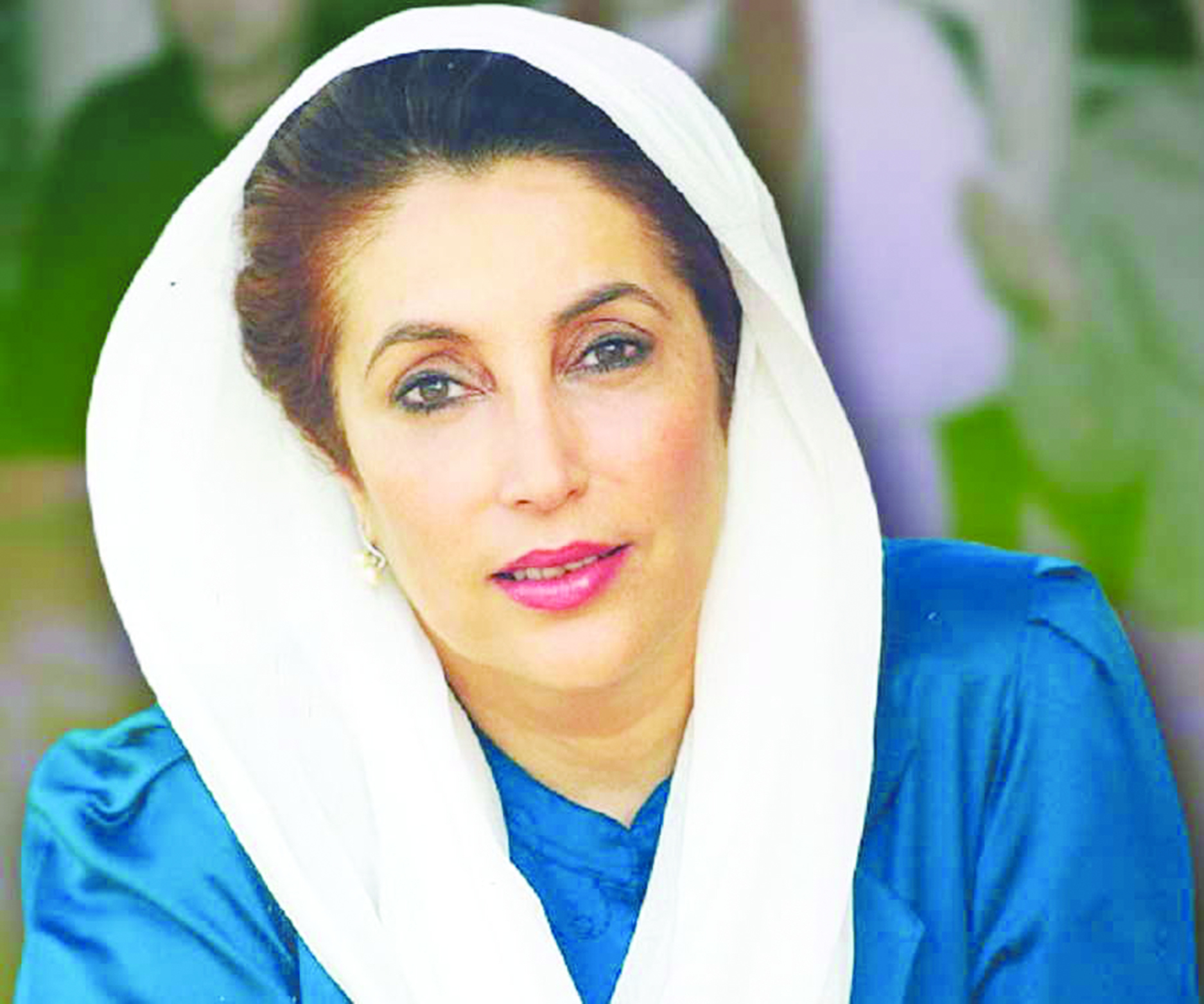
Introduction: When History Chose a Daughter
History rarely grants leadership through inheritance, and even more rarely does it allow inheritance to mature into independent authority. Shaheed Mohtarma Benazir Bhutto was born into power, but she earned leadership through sacrifice. In a country repeatedly interrupted by authoritarian rule, she emerged not merely as a Prime Minister, but as the democratic conscience of Pakistan and a defining political voice of the Muslim world.
An Unconventional Leader in an Islamic Republic
Benazir Bhutto’s leadership disrupted two deeply entrenched assumptions: that political authority in Muslim societies must be male, and that Islam resists democratic governance. She rejected both notions—not through rhetoric, but through lived leadership. She framed Islam as a moral compass supporting justice, consultation, and equality—values intrinsic to democratic governance.
Democracy as Destiny, Not Strategy
For Benazir Bhutto, democracy was not a tool of convenience; it was destiny shaped by loss. The judicial execution of her father under military rule transformed democracy from theory into personal obligation. Her resistance to dictatorship was uncompromising: She rejected military legitimacy, endured imprisonment and exile, and returned despite assassination threats.
The Burden of Inheritance and the Trust of a Father
Zulfikar Ali Bhutto did not merely bequeath a party to his daughter; he entrusted her with an unfinished democratic struggle. Benazir Bhutto transformed the Pakistan Peoples Party from a personality-driven movement into a vehicle of democratic continuity.
Education as Power: The Making of a Political Mind
Educated at Harvard and Oxford, Benazir Bhutto was among the most intellectually equipped leaders Pakistan has produced. Her education shaped her ability to navigate global diplomacy, articulate Islamic democracy to Western audiences, and understand constitutional governance and statecraft.
Governance and Contribution: Change Under Constraint
Benazir Bhutto’s terms in office were constrained by fragile institutions, hostile power centers, and political instability. Yet, her contributions were enduring: restoration of civilian rule, expansion of women’s political participation, support for press freedom and civil society, and strengthening Pakistan’s international standing.
Anti-Dictatorship Struggle: Leadership as Endurance
Benazir Bhutto’s political life was defined less by tenure and more by endurance. She survived years of solitary confinement, political demonization, and repeated exile. Her decision to return to Pakistan in 2007 was not political miscalculation but democratic defiance.
Books, Thought, and Global Voice
Benazir Bhutto’s intellectual legacy is preserved in her writings: “Daughter of the East” and “Reconciliation: Islam, Democracy, and the West”. These works position her not just as a politician, but as a political thinker attempting to harmonize faith, freedom, and modern governance.
Marriage and the Politics of Personal Life
Benazir Bhutto maintained a clear boundary between personal relationships and institutional authority, refusing to allow personal narratives to eclipse democratic process.
A Global Democratic Icon
Internationally, Benazir Bhutto was a respected voice for moderate Islam, a bridge between the Muslim world and the West, and an advocate of peace, nuclear responsibility, and global cooperation.
Martyrdom: The Price of Defiance
On 27 December 2007, Benazir Bhutto was assassinated in Rawalpindi while addressing supporters. Her death was not merely an act of terror; it was a direct assault on Pakistan’s democratic aspiration.
Conclusion: The Measure of Her Legacy
Shaheed Mohtarma Benazir Bhutto did not promise utopia. She promised struggle—and honored that promise until her final breath. Her legacy endures not because she held office, but because she refused to surrender principle to power.
References:
- Bhutto, B. (1988). Daughter of the East. Simon & Schuster.
- Bhutto, B. (2008). Reconciliation: Islam, Democracy, and the West. HarperCollins.
- Talbot, I. (2009). Pakistan: A Modern History. Hurst & Company.
- Jalal, A. (1995). Democracy and Authoritarianism in South Asia. Cambridge University Press.
- United Nations Archives – Statements and addresses by Benazir Bhutto.