
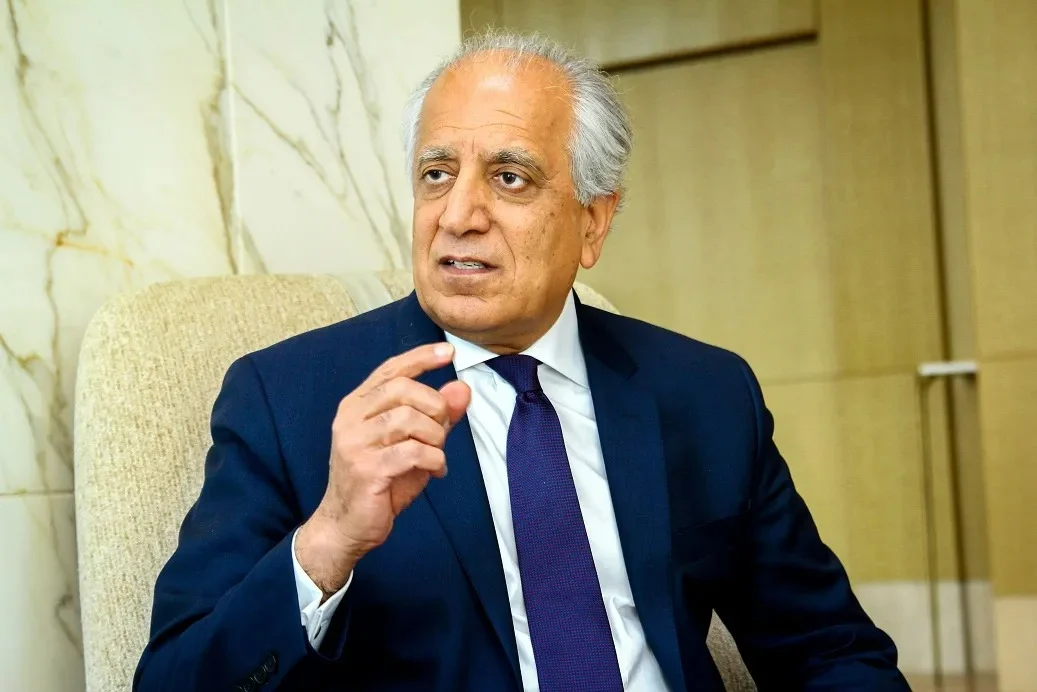
In an interview with Zalmay Khalilzad during his recent visit to Kabul, the former US special representative defended American drone operations in Afghanistan as “pre-emptive self-defence.”
While indirectly acknowledging that the Taliban have failed to prevent security threats emanating from Afghan territory.
Khalilzad argued that US drone strikes were justified to prevent future attacks against the United States. However, in the same interview, he questioned Pakistan’s right to take defensive measures against terrorist attacks originating from Afghan soil.
Analysts say this position reflects a clear double standard, where self-defence is deemed acceptable for one country but objectionable for another.
Observers have also noted that Khalilzad currently holds no official position in US foreign policy, yet continues to present his personal views in a manner that suggests policy authority.
Critics argue that this approach risks creating a misleading political legitimacy for the Taliban while downplaying their failures.
During the interview, Khalilzad described the Taliban as a “flexible negotiating partner,” despite reports by the United Nations and other international bodies highlighting their inability to curb cross-border militancy or uphold security commitments.
Pakistan and other neighboring countries have repeatedly pointed out that groups such as the TTP and ISIS-K continue to use Afghan territory as a safe haven.
Khalilzad emphasized dialogue as the solution to all disputes, but analysts recalled his role in the Doha Agreement, which prioritized a rapid US withdrawal and ultimately facilitated the Taliban’s return to power.
Critics say the agreement strengthened the Taliban and contributed to renewed regional instability.
Analysts further argue that Khalilzad’s remarks overlook governance failures, human rights abuses, and the continued presence of militant groups in Afghanistan, while placing disproportionate criticism on Pakistan’s defensive actions.
They warn that such a narrative risk shielding the Taliban from accountability and could prolong instability across the region.
Read more: Reports Reveal Taliban Targeted Former Afghan Military Personnel Across 29 Provinces in 2025











