
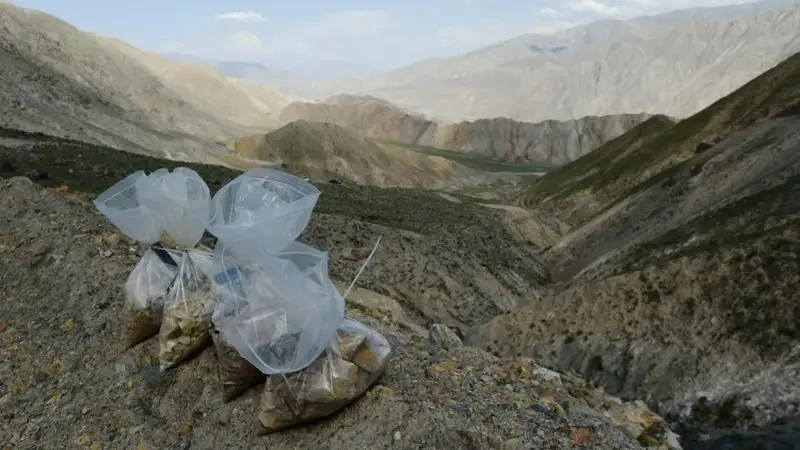
The deadly protests in Badakhshan and Takhar are not isolated law-and-order incidents. They reveal a deeper crisis in how Afghanistan’s resources are being seized and used.
In Avizhai Pan Mur in central Badakhshan and in Chah Ab in Takhar, communities protested against the takeover of local gold mines. Gunmen linked to Haji Bashir Noorzi opened fire.
Protests that expose a system, not a dispute
Casualties followed. Homes and property were damaged. This was not a negotiation over development, it was enforcement at gunpoint. The pattern shows that mining has become a tool of coercion, not a path to local consent or shared growth.
From regulation to organized plunder
Afghan media report a consistent method. Taliban units evict mine owners, deny permits to locals, and hand control to loyalists in return for a fixed share. Furthermore, this has been reported in Badakhshan, Takhar, and Farah.
Revenues from gold alone are estimated to exceed $25 million per month. Furthermore, in Badakhshan, gold is believed to generate around $500 million a year. At least 25 percent is taken directly by Taliban structures.
None of this flows into public services or local development. Whereas, it goes to weapons, salaries, and coercive systems. Analytical reports also point to transfers that benefit transnational terrorist networks, including al-Qaeda.
What is being built is a war economy, not a public one.
چپاول معادن بدخشان؛ تفنگداران بشر نورزی به سوی مردم محل شلیک کردند
— Aamaj News (@aamajnews_24) January 3, 2026
منابع به آماجنیوز میگویند در نتیجه اعتراض مردم منطقه اویزهای پان مور، ولسوالی شهر بزرگ ولایت بدخشان در برابر چپاول معدن طلا این ولسوالی، تفنگداران مربوط به بشر نورزی به سوی مردم شلیک نمودهاند.#آماج_نیوز pic.twitter.com/O7HPsaqtBo
The Noorzi network and the return of criminal governance
At the center of Badakhshan’s mining system stands Haji Bashir Noorzi, a former major drug trafficker who spent years in a US prison and was released in a 2022 prisoner exchange.
Since then, he has used his experience in illicit networks to organize Taliban mining operations. Armed enforcers now secure extraction sites. Moreover, protests are suppressed. In January 2024, several local leaders opposing a gold mine were executed.
In July 2025, shootings at protesters left at least eight dead.
This is not governance. It is criminalized administration, backed by force.
Environmental ruin and the human cost
The damage is not only political. It is also environmental and medical. Most mines operate without safety standards or oversight. Mercury and cyanide are used widely. In addition, these toxins enter rivers like the Kokcha and Shiwa.
Mercury turns into methylmercury and moves through the food chain. It causes neurological damage, kidney disease, memory loss, and birth complications. Similarly, children and pregnant women face the highest risk.
Heavy metals, including lead and even uranium traces, add to the danger. Tunnel collapses and landslides are frequent. Dozens have died in recent years, including at least 30 in a single collapse in 2019.
Locals take the risk. However, others take the profit.
A legitimacy crisis, not a revenue plan
The Taliban claim hundreds of thousands of security operations, new border posts, and rising revenues. Yet the reality in Badakhshan and Takhar is more coercion, more shootings, and deeper anger.
Community elders now question the right of the authorities to extract resources without legal mandate or public consent.
As opposition figures argue, the lack of legitimacy explains why reserves remain frozen and why citizens see mining as illegal appropriation, not national development.
Afghanistan’s mineral wealth could have been a foundation for recovery. Instead, it is becoming a driver of violence, poverty, and long-term instability.
In Badakhshan, gold has turned into a symbol of a broken promise.
The mines are no longer building a state. In contrast, they are tearing what remains of it apart.











