
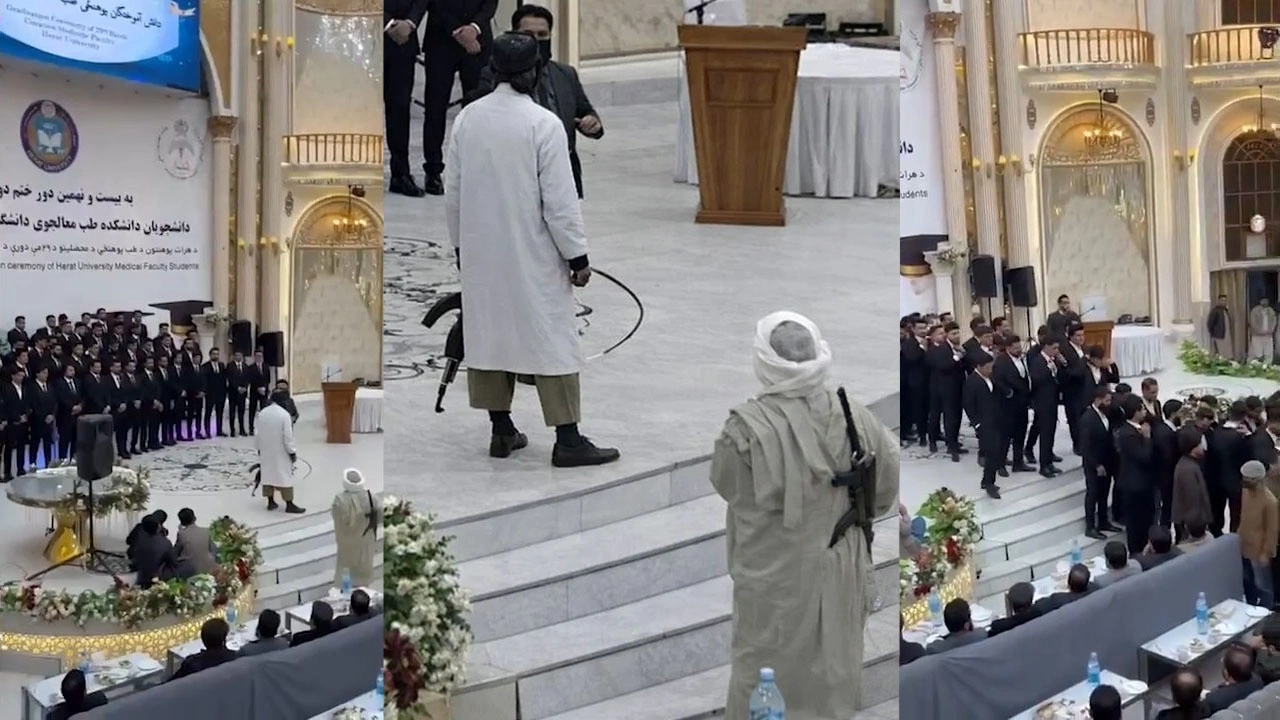
Herat, Afghanistan – Religious scholar Waliullah Labib has publicly criticized the actions of Taliban morality enforcers for forcibly removing students’ neckties during a graduation ceremony in Herat, calling the act humiliating.
The incident took place during the graduation ceremony at one of Herat’s higher education institutions, where students were unexpectedly confronted by Taliban enforcers. According to Labib, such measures undermine personal freedoms and educational dignity, reflecting broader concerns over the Taliban’s strict enforcement of their moral codes in academic settings.
Labib emphasized that while education should celebrate achievement, the Taliban’s actions instead humiliate students and disrupt the celebratory environment, sparking outrage among families and educators in the region.
Labib’s Criticism of Taliban Conduct
Waliullah Labib stated that imposing religious appearances through force and humiliation has no legitimate basis in Islamic law and harms the credibility of religion. He emphasized that “Islam is not advanced through coercion or disrespect, and such behavior produces the opposite effect.”
Labib added that the Taliban’s conduct during an official educational event highlights the group’s rigid and uncompromising approach toward youth and academic institutions—a stance that risks deepening the divide between the younger generation and the governing authorities.
Escalating Cultural Restrictions under Taliban Rule
Since regaining power, the Taliban have increasingly imposed restrictions on dress, personal freedoms, and academic environments. The group reportedly views neckties as a symbol of “Western culture,” but critics argue that focusing on such superficial issues reflects extreme cultural control and social enforcement.
Experts warn that continuation of these policies will not only weaken Afghanistan’s educational sector but also fuel social discontent and further isolate the country internationally.
Read more: Trump Responds to Ariana Saeed, Reiterates ‘Peace Through Strength’ on Afghan Women’s Rights











