
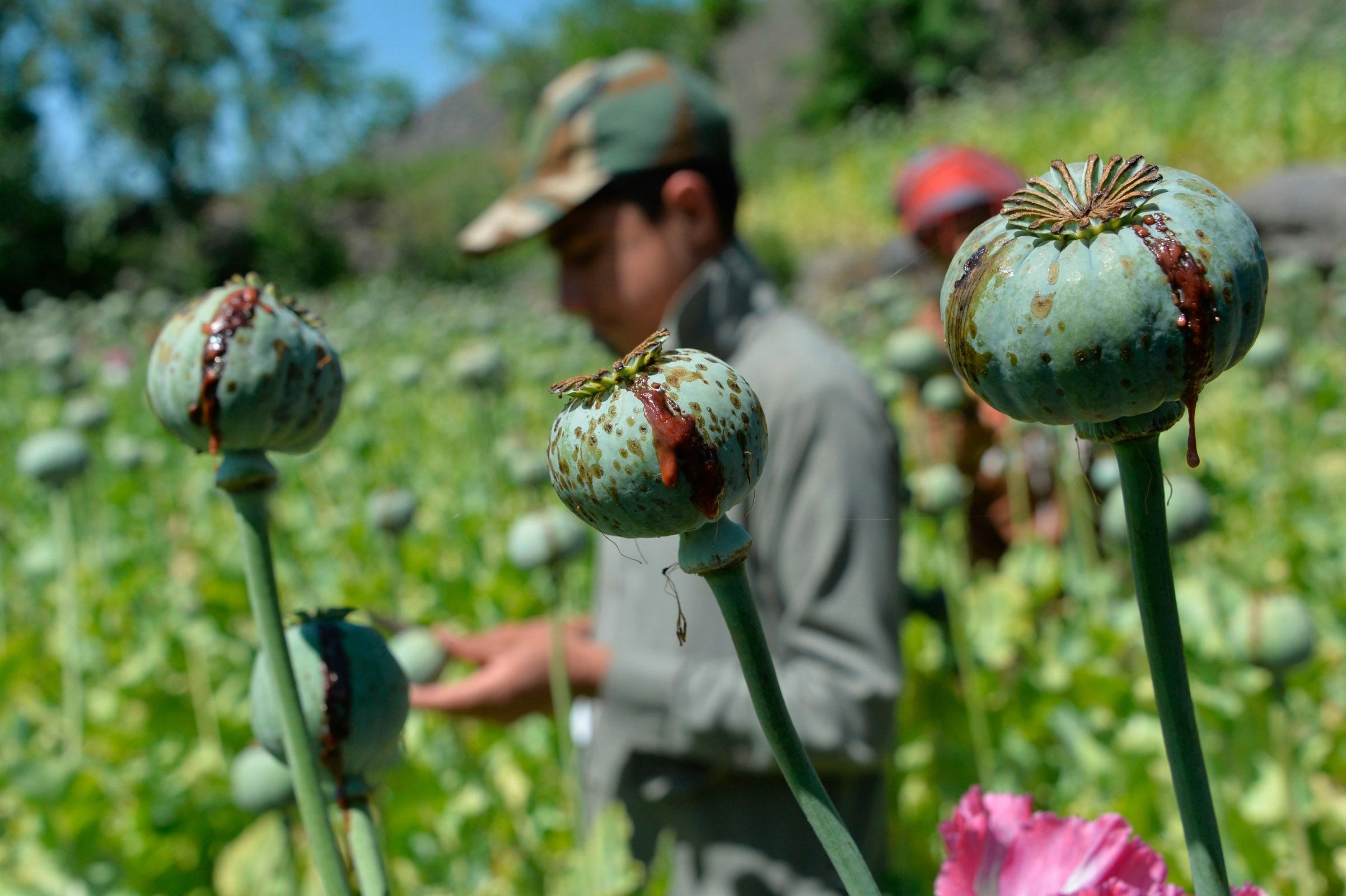
Taliban Ban and Poppy Cultivation Trends
A new 2025 Turkish Drug Report finds that Afghanistan continues to play a central role in the global narcotics trade, despite the Taliban’s declared ban on poppy cultivation. Although opium production fell by nearly 95% in 2023 following the 2022 ban, the impact has been uneven. In 2024, poppy cultivation rebounded by 19%, rising from 10,800 hectares to approximately 12,800 hectares, signaling a controlled return of production rather than a collapse of the drug economy.
Afghanistan still possesses extensive narcotics infrastructure built over decades, including cultivation systems, processing facilities, trafficking routes, storage hubs, and cross-border logistics networks stretching across West Asia, Central Asia, Europe, and Africa. These networks remained largely intact even after the ban, allowing traffickers to absorb production shocks.
Shift Toward Synthetic Drugs and Global Impact
The report highlights a sharp rise in methamphetamine production, with traffickers increasingly using the ephedra plant to extract ephedrine for large-scale synthetic drug manufacturing. Synthetic drugs are easier to conceal, independent of agricultural cycles, and more resilient to enforcement, allowing continued revenue streams under Taliban control.
Türkiye is identified as a key transit hub along the Balkan Route, while also serving as a corridor for Afghan-sourced methamphetamine and cocaine heading to European markets. Rising seizures across Europe and East Africa indicate a growing influx of Afghan-origin synthetics.
The Turkish report concludes that Afghanistan under Taliban governance has restructured rather than dismantled its drug economy. Through managed scarcity, stockpile control, and diversification into synthetic drugs, narcotics remain a strategic economic asset, reinforcing Afghanistan’s role as a central node in the international drug trade and exporting instability far beyond its borders.
Read more :FIFA President Gianni Infantino Announces Upcoming Visit to Pakistan











