
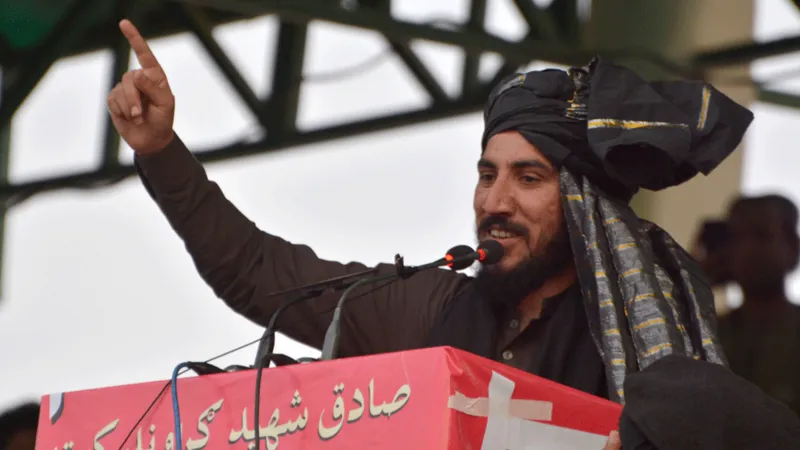
Speaking at the sixth anniversary of Arman Loni, Manzoor Pashteen alleged that ongoing military operations in Tirah Valley and other parts of Khyber Pakhtunkhwa are severely affecting civilians. In remarks shared by PTM UK, Pashteen claimed that despite official assertions of intelligence-based operations, remote villages and mountainous areas are witnessing destruction, disruption of daily life and heightened risks to children and youth.
He argued that such conditions undermine education, safety and social stability calling on state institutions to ensure restraint, precision and protection of civilians.
The PTM leader urged political, military, and administrative authorities, including Parliament and local jirgas, to play a stronger role in safeguarding citizens’ rights and ensuring transparency and community participation in development planning.
Framing his message around unity and collective responsibility, Pashteen reiterated PTM’s stance that long-term peace requires trust between the state and local communities.
Intelligence-based operations and the militancy context
Pakistan’s security officials rejects the characterization of current actions as indiscriminate. Officials maintain that operations across KP, including Tirah, are intelligence-based operations (IBOs) conducted against militant hideouts linked to cross-border attacks and persistent insecurity.
According to security officials civilian protection protocols are a core part of operational planning, with actions designed to be targeted rather than broad or punitive.
They argue that focusing solely on the visible disruption caused by security measures ignores the underlying threat posed by armed militant networks operating in difficult terrain and along porous borders.
In 2025 alone, security forces carried out tens of thousands of IBOs across the province, neutralizing thousands of militants as part of what authorities describe as a sustained effort to dismantle entrenched sanctuaries.
Rehabilitation, development and the path to stability
Authorities also point to parallel civilian-focused measures underway in merged districts and conflict-affected areas. These include rehabilitation and compensation program, along with investments in road infrastructure, schools and healthcare facilities aimed at restoring normalcy and supporting long-term development.
Officials acknowledge that displacement and hardship are real challenges but stress that they are often the consequence of prolonged militant presence rather than state intent.
The official position is that lasting peace in Tirah and wider KP will depend on eliminating militant sanctuaries, strengthening governance and ensuring meaningful local participation in development processes.
While constructive engagement from political movements and civil society is seen as important, security officials caution that narratives which overlook militancy risk obscuring the root causes of instability and delaying sustainable peace.
Read more: Alleged Audio Leak of Sheikh Waqas Akram Exposes PTI’s Internal Rifts Over Sit-in Planning











