Newsflash:

Australia Suspends Afghan Embassy Operations, Refuses Taliban Diplomats

Australia will not accept Taliban-appointed diplomats as Afghan embassy operations in Canberra are suspended from 30 June 2026.

[read-estimate]

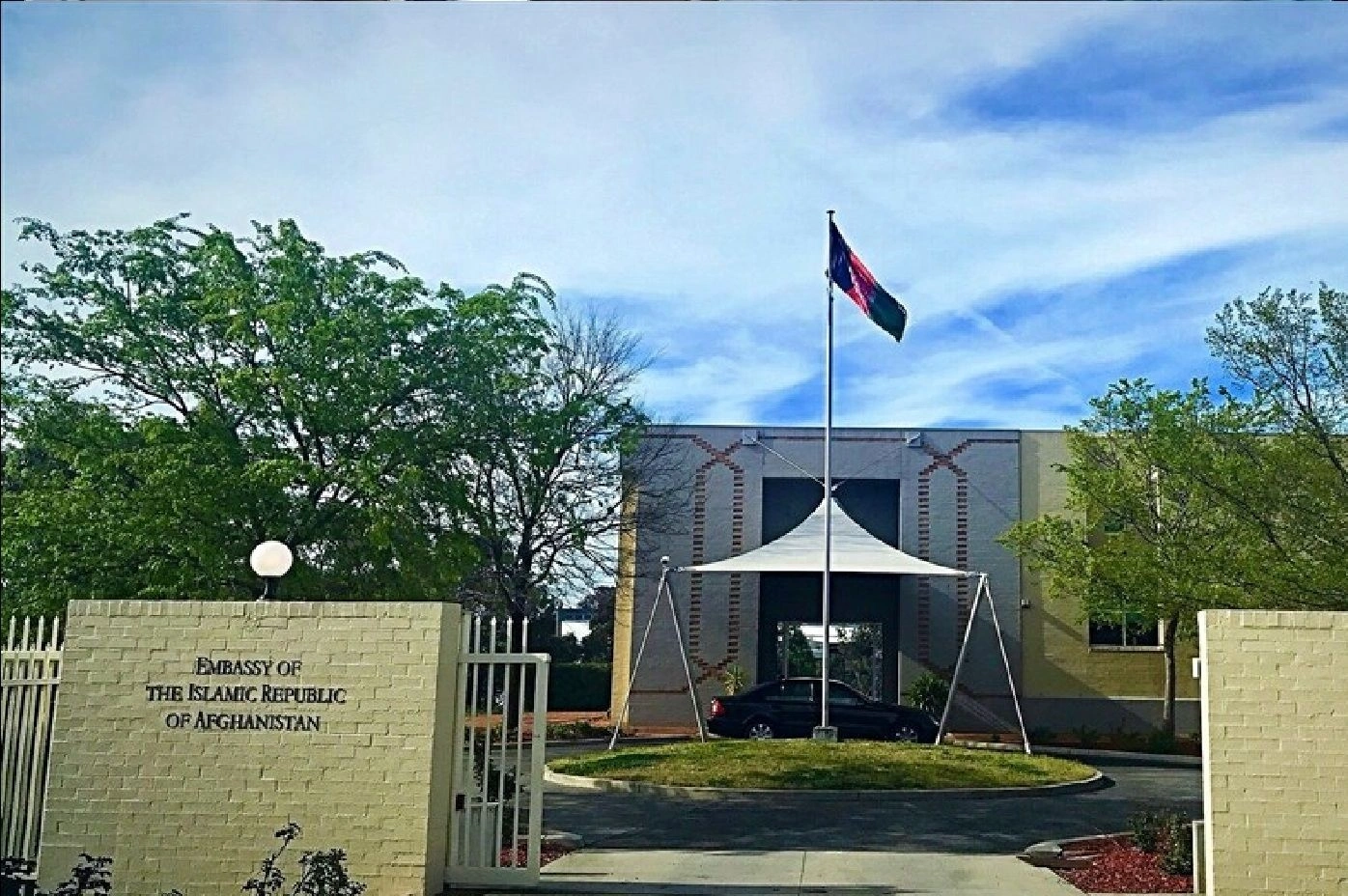
Australian flag with Afghan embassy in background

Australia suspends Afghan embassy operations and refuses recognition of Taliban-appointed diplomats.[IC : by AFP]

January 31, 2026

Canberra, Australia — The Australian government has announced that it will not recognize diplomats, consuls, or other representatives appointed by the Taliban. This follows a joint statement by the Australian Foreign Ministry and the Afghan Embassy in Canberra, confirming that the embassy’s operations will be suspended starting 30 June 2026.

The decision underscores Australia’s stance on the Taliban regime, emphasizing that no intention exists to accept official representatives of the group, including honorary consuls or other diplomatic staff.

Officials noted that while the embassy will continue to provide limited consular services until the suspension date, all interactions with Taliban-appointed personnel will be strictly halted.

This move aligns with similar international responses, as many countries refuse formal diplomatic recognition of the Taliban government, citing concerns over human rights, especially the rights of women and girls, and the lack of a broad-based, inclusive political framework in Afghanistan.


Related Articles

In a recent video of Shahbaz Gill, he is being accused of promoting the Indian narrative by falsely citing a British newspaper for the sake of dollars and views.
A special rap track going viral on social media has exposed Fitna al-Kharij leader Noor Wali Mehsud and his RAW-funded terror network.
The anti-Pakistan narrative of the Indian representative at the UN has exposed the New Delhi-Kabul Nexus where terrorism originating from Afghan soil is being ignored.
Dawn, BBC, CNN and Al Jazeera covered the same Iran-US conflict and produced entirely different realities. A critical look at how headline language, verb choices and editorial silences reveal whose violence gets named and whose gets naturalized in international conflict journalism.

Post a comment

Leave a Reply

Your email address will not be published. Required fields are marked *









