
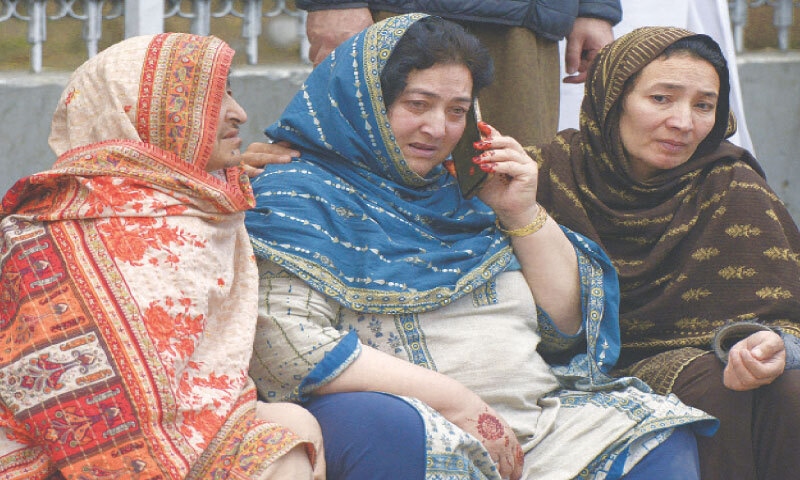
The suicide bombing at an imambargah on the outskirts of Islamabad, which killed at least 31 worshippers and injured nearly 170 others, has once again drawn attention to the regional dimensions of terrorism confronting Pakistan.
While no group has formally claimed responsibility, investigators have confirmed that the attacker repeatedly travelled to Afghanistan, reinforcing long-standing concerns about the role of Taliban-controlled territory in enabling extremist violence beyond its borders.
According to sources involved in the investigation, the bomber identified as a resident of Peshawar had links with the so-called Islamic State group and had crossed into Afghanistan multiple times.
These travel patterns point to established cross-border corridors that extremists continue to exploit for movement, coordination, and operational planning. Despite claims of improved security under Taliban rule, such networks appear largely intact.
Afghanistan, under Taliban control, has increasingly consolidated into a permissive environment where multiple extremist groups operate with relative freedom.
The absence of effective counterterror mechanisms in Afghanistan has allowed militant actors to regroup, reorganize, and expand. This environment facilitates recruitment, training, logistical support, and transit, all critical elements for sustaining regional terrorist operations.
The Islamabad attack underscores that the spillover from Afghan-based militancy is no longer a theoretical concern. Violence linked to these networks has repeatedly manifested in Pakistan and threatens broader regional stability.
Terrorist groups operating across borders now draw from a shared ideological and logistical ecosystem rooted inside Afghan territory.
Repeated geographic linkages between attacks in Pakistan and militant movement through Afghanistan erode the credibility of denials that Afghan soil is not being used for terrorism.











