
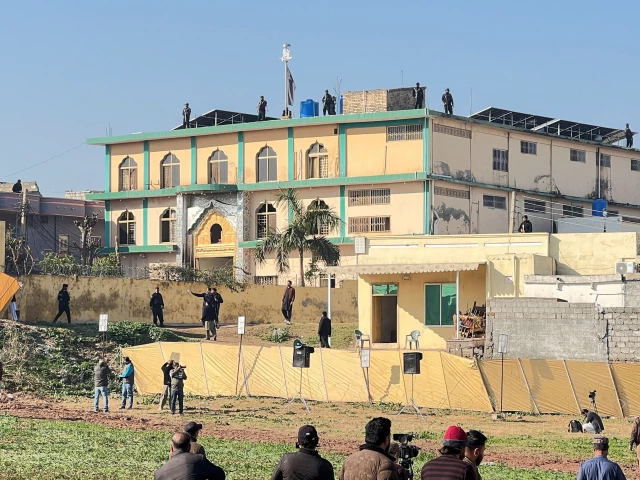
Pakistan’s security agencies have made a major breakthrough in the investigation into the suicide attack at an imambargah in Islamabad’s Tarlai Kalan area, arresting multiple facilitators and an Afghan mastermind linked to Islamic State.
As investigators pieced together how the attacker was trained, moved and carried out reconnaissance, a different debate surfaced on social media: if he was a suicide bomber, why did he carry an identity card?
This question, raised by some journalists and political social media accounts, reflects a deeper misunderstanding of suicide terrorism. It applies the logic of ordinary crime to an act driven by ideology, indoctrination and a very different psychology.
Suicide terrorism is not ordinary crime
A suicide bomber is not a criminal planning an escape. A thief, robber, or kidnapper hides his identity because he wants to survive, avoid arrest and enjoy the proceeds of crime. A suicide attacker, by contrast, leaves home having already decided not to return alive. In that mental state, fear of exposure is meaningless.
Viewing suicide terrorism through the lens of routine criminal behavior leads to flawed conclusions.
The attacker is not calculating risk in the conventional sense. His end point is death, not freedom. That is why questions about why he did not destroy documents or conceal his identity miss the core reality of how such attacks work.
Brainwashing turns identity into a tool
Most suicide attackers undergo intense ideological conditioning. During training, they are taught that their act will give them status, recognition and honor.
Their names will be known. Their images will circulate. Their deaths will be framed as sacrifice rather than crime.
In this mindset, identity becomes a source of pride, not shame. Carrying documents is neither accidental nor careless. It fits into a belief system where being identified is part of the reward. Terrorist organizations actively cultivate this psychology because it helps create symbols and role models for future recruits.
This pattern is not unique to Pakistan. After the 2010 suicide bombing in Stockholm, authorities recovered identity documents belonging to the attacker, Timur Abdulwahab.
Similar cases have been documented elsewhere, reinforcing that the presence of identification does not contradict the nature of suicide attacks.
Calm behavior helps attackers blend in
There is also a practical dimension. Because a suicide bomber has no escape plan, he is often calmer than an ordinary criminal. He does not rush. He does not panic. He behaves like a normal citizen because, psychologically, there is nothing left to lose.
This calmness allows him to pass checkpoints, move through public spaces and avoid drawing attention.
Carrying everyday items, including identity documents helps him blend in. Security systems are designed to react to nervous or unusual behavior. An attacker who looks routine and composed is less likely to raise suspicion.
This is why suicide bombers often travel, observe targets, and even revisit locations days before an attack. Investigators say the Tarlai Kalan attacker conducted reconnaissance and moved like an ordinary worshipper, a pattern seen in many previous cases.
Moving beyond misleading narratives
When terrorism is analyzed using simplistic or sensational logic, the discussion becomes shallow and dangerous. It weakens public understanding and distracts from the real challenge: dismantling the ideological, logistical, and cross-border networks that enable such attacks.
Security officials have said the planning and indoctrination in this case took place in Afghanistan, warning that groups operating there pose a serious regional threat.
Instead of amplifying conspiracy-driven talking points, society needs a clearer grasp of how suicide terrorism actually functions. Only by understanding its psychology and methods can Pakistan build informed public resilience and sustain a unified response against this threat.
Read more: Moeed Pirzada Exploits Islamabad Terror Attack to Spread Baseless Lies











