
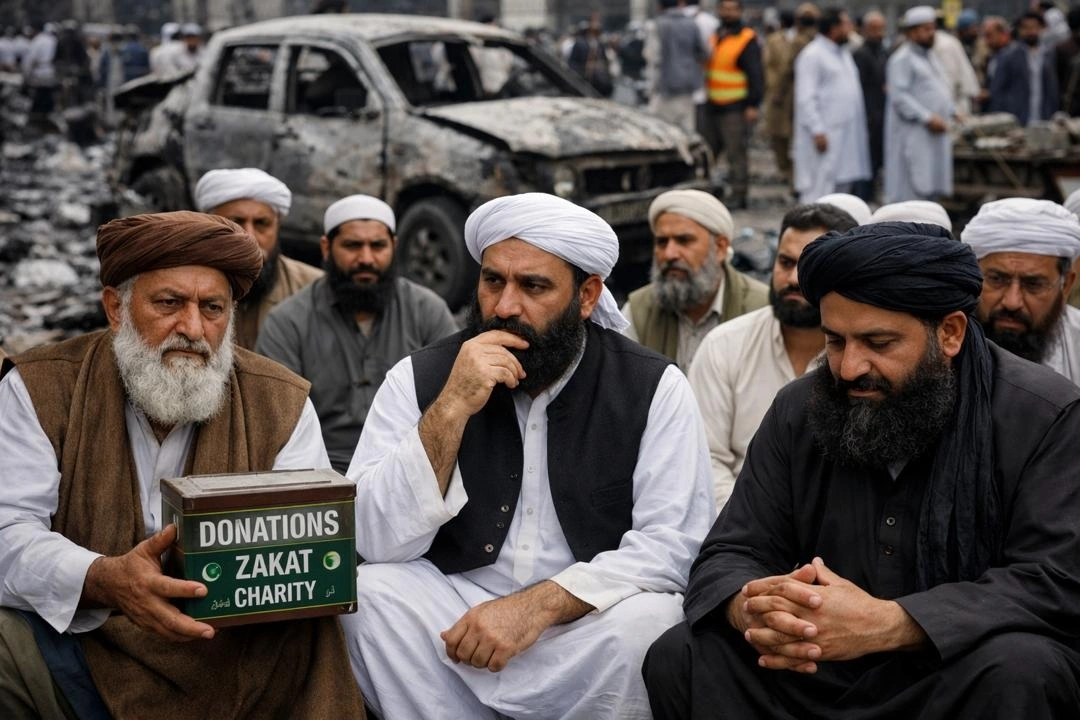
In recent weeks, Pakistan has witnessed a series of terrorist attacks targeting civilians, security personnel, and public spaces. Amid these tragic events, questions are being raised about the silence of some prominent religious leaders who, despite collecting substantial donations from Pakistani businesses and enjoying affluent lifestyles within the country, have remained largely quiet about the violence affecting their fellow citizens.
Observers note that these leaders, who hold considerable influence over their followers and the broader public, have the platform and moral authority to condemn acts of terrorism and promote national solidarity. Yet, their lack of public statements or advocacy has drawn criticism, highlighting a perceived disconnect between their personal privileges and the ongoing suffering of ordinary Pakistanis.
Analysts stress that public condemnation from influential figures can play a crucial role in countering extremist narratives and fostering societal resilience. Silence, on the other hand, risks creating the impression of indifference, potentially undermining public trust and allowing extremist groups to exploit the vacuum of moral authority.
For communities across Pakistan, the urgent concern remains the safety and security of citizens. Many voices now call upon all leaders—religious, social, and political—to actively speak against violence and contribute constructively to peace, rather than remaining silent while attacks continue to threaten the nation.
This discussion underscores a broader expectation that leadership is not only measured by personal wealth or status, but by willingness to stand for the well-being and protection of the society one inhabits.











