
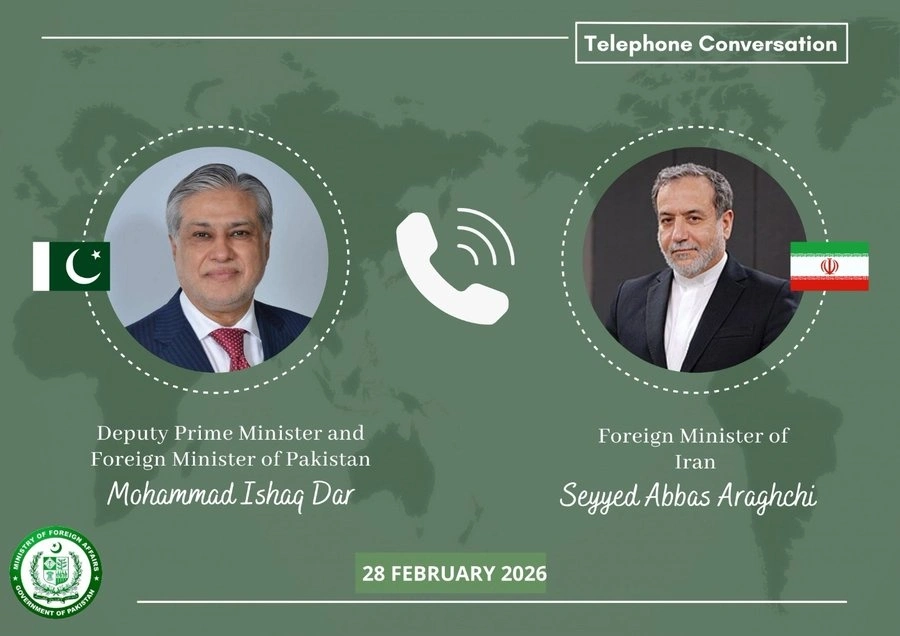
Islamabad – 28 February 2026 – Deputy Prime Minister and Finance Minister Senator Mohammad Ishaq Dar engaged in a detailed discussion with Iranian Foreign Minister Seyed Abbas Araghchi to review the rapidly evolving security situation in Iran and the broader Middle East. The conversation, conducted via a direct phone call, focused on the recent military escalations that have heightened regional tensions and created concern among neighboring countries.
During the call, Senator Ishaq Dar strongly condemned the recent attacks against Iran, describing them as unwarranted and destabilizing. He emphasized Pakistan’s position that the continuation of military hostilities could have far-reaching consequences for regional peace and security, not only affecting Iran and its neighbors but also impacting international diplomatic efforts in the region.
DPM/FM Senator Mohammad Ishaq Dar @MIshaqDar50 received a call from FM of Iran, Seyed Abbas Araghchi. They reviewed the evolving situation in Iran and the wider region.
— Ministry of Foreign Affairs – Pakistan (@ForeignOfficePk) February 28, 2026
DPM/FM strongly condemned the unwarranted attacks against Iran and called for an immediate halt to escalation… pic.twitter.com/G4eKNfzeRg
Both leaders underscored the urgent need to prevent further escalation. Senator Ishaq Dar highlighted the importance of diplomacy as the primary tool to resolve the crisis, advocating for an immediate resumption of negotiations aimed at achieving a peaceful and sustainable resolution. He noted that dialogue, restraint, and cooperation among regional powers are essential to avoid further civilian casualties, infrastructure damage, and broader conflict.
The discussion also touched on the wider implications for regional stability, including economic, humanitarian, and security concerns. Both officials expressed hope that continued communication and engagement would help de-escalate tensions and create a framework for constructive engagement, underscoring Pakistan’s commitment to supporting peace efforts in the region.
This high-level exchange reflects Islamabad’s proactive approach in addressing regional crises through diplomacy and measured responses, reinforcing the country’s stance that military confrontations are not a viable solution. Analysts note that Pakistan’s call for restraint aligns with international efforts to prevent further escalation and maintain stability in a region facing multiple geopolitical pressures.
Read more :Explosion Reports Across Multiple Iranian Cities; Civilian Casualties Confirmed











