
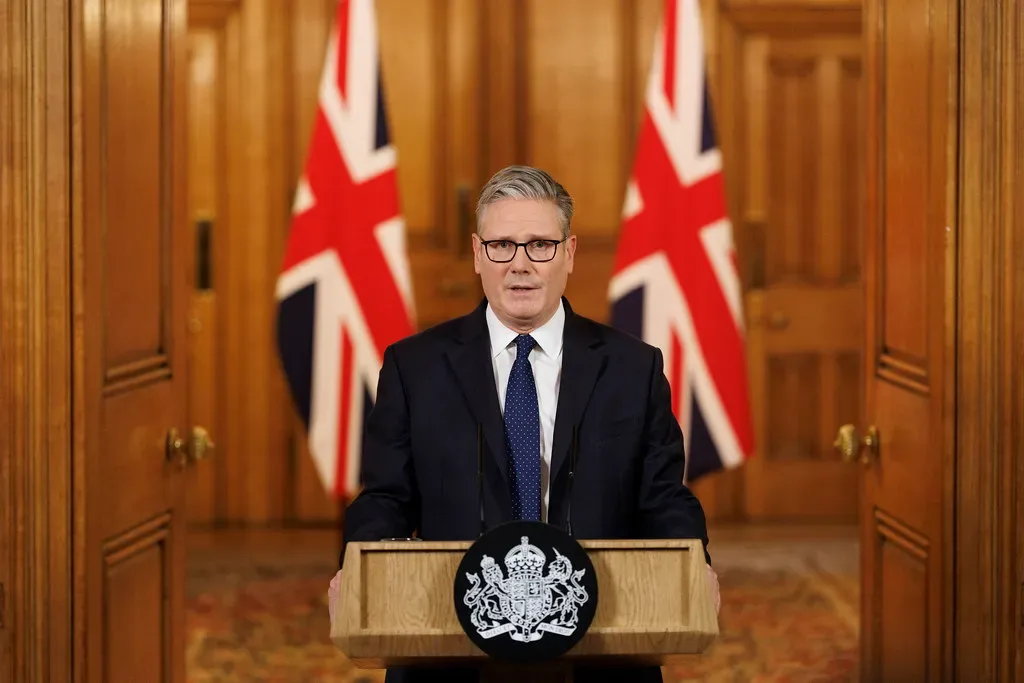
The United Kingdom will not participate in offensive military strikes on Iran carried out by the United States and Israel, Prime Minister Keir Starmer confirmed on Monday. He said British bases would only be used for defensive purposes to protect UK personnel and citizens in the region.
“We’re not joining the US and Israeli strikes,” Starmer told Parliament. He described the US-Israeli attacks on Iran as “regime change from the skies,” a strategy the UK does not support. He stressed that the UK’s role is limited to defensive action, and any decision to engage offensively would require a lawful basis and a well-planned strategy.
BREAKING 🚨 UK PM Keir Starmer has confirmed the UK will not join the U.S-Israeli strikes on Iran, and use of British bases will only be used for defence purposes.
— Insider Paper (@TheInsiderPaper) March 2, 2026
"We're not joining the U.S and Israeli strikes." pic.twitter.com/inQ5EFw7zs
Defensive Actions to Protect British Lives
Starmer explained that the UK is taking defensive measures to protect its citizens and military personnel. RAF jets intercepted Iranian drones targeting bases in Iraq and Cyprus where British forces are stationed. Families at RAF Akrotiri in Cyprus were temporarily moved as a precaution.
He highlighted that there are around 300,000 British citizens in the Gulf region, including travelers and residents. “Our priority is to safeguard British lives and ensure they can return home safely,” he said. The Prime Minister also emphasized that the UK’s defensive actions are in line with international law and focused on protecting longstanding allies.
Caution and Lessons from the Past
Starmer referred to past conflicts, including Iraq, to underline the need for careful planning. He said the UK supports a negotiated settlement in the region, asking both parties to settle their disputes through diplomatic forums rather than offensive behaviour.
While US President Donald Trump publicly expressed disappointment at Britain’s stance, Starmer said he acted in the national interest. He reiterated that the UK will not be drawn into offensive strikes, even as Iran continues retaliatory attacks across the Middle East.
Starmer’s position drew criticism from some opposition leaders, but he maintained that limiting Britain’s role to defensive action was the responsible approach. The Prime Minister stressed that the UK will continue to monitor the situation closely, protect its citizens, and uphold the rule of law in the region.











