
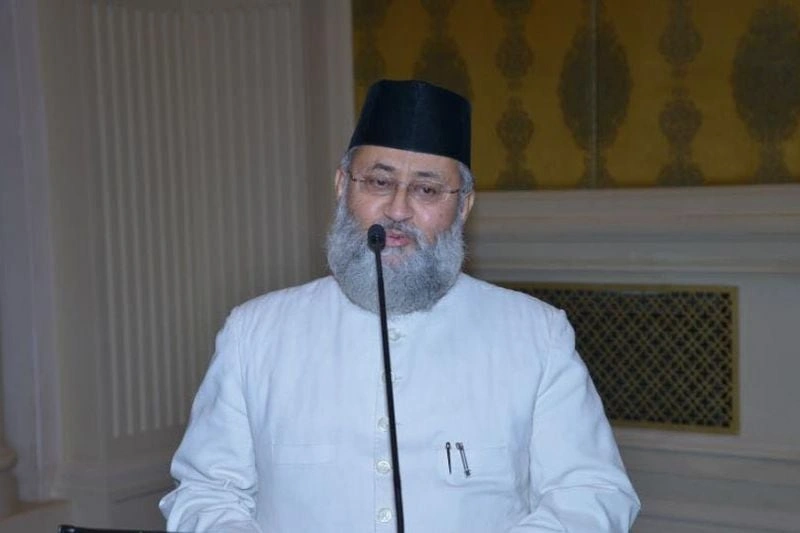
Islamabad – March 2026- Salman Nadwi’s recent statements questioning Pakistan’s legitimacy and accusing the country of serving foreign interests have sparked widespread criticism. Analysts argue that these remarks are not simply rhetorical or emotional outbursts but part of a larger narrative aimed at undermining Pakistan’s sovereignty and its constitutional and defensive prerogatives.
Observers note that Nadwi, a cleric based in India with historical ties to successive Indian governments, has repeatedly used religious discourse to advance political agendas. His commentary not only casts Pakistan as un-Islamic but also attempts to obscure the responsibility of militant networks operating from Afghan soil, often under Taliban protection.
“This is a clear case of ideological manipulation,” said a senior analyst. “Pakistan’s Ulema have historically taught generations of scholars from India and Afghanistan, yet Nadwi attempts to delegitimize them while remaining silent on the plight of Muslims in India. This reveals his bias and his political alignment with external interests rather than any genuine religious concern.”
Experts also highlight the apparent nexus between India’s intelligence agency RAW, pseudo-ulema based in India, and certain madrasas. Historical evidence and previous statements by regional strategists suggest that these networks have long been used to influence Taliban-aligned groups, particularly to foment unrest along Pakistan’s borders. Analysts point to the recent visit of Afghan Taliban official Amir Khan Muttaqi to India and Deoband Madrassah as further indication of coordination intended to manipulate religious authority for geopolitical purposes.
From Pakistan’s perspective, defensive and counterterrorism measures against cross-border attacks are necessary and legitimate. Since the Taliban’s resurgence in Afghanistan in 2021, Pakistan has balanced humanitarian aid, economic connectivity projects, and diplomatic engagement while simultaneously confronting the persistent threat posed by groups such as Tehreek-e-Taliban Pakistan (TTP). Criticism labeling these defensive actions as “aggression” is widely regarded as a rhetorical inversion that ignores the operational reality of repeated cross-border terrorist attacks.
Commentators underscore that when criticism of Pakistan flows from voices aligned with Indian strategic interests, it cannot be viewed in isolation. “These statements conveniently shift attention away from India’s own interventions in the region,” noted a policy analyst. “The narrative amplifies Pakistan–Afghanistan tensions while absolving external actors who are in fact driving instability.”
Pakistan’s leadership, religious scholars, and civil society have consistently emphasized the importance of national unity, the rule of law, and regional stability. Experts argue that counterterror operations and robust border management are indispensable components of state responsibility and are consistent with both international norms and the protection of civilians.
As Nadwi’s statements continue to circulate, regional analysts warn that ideological rhetoric from external actors risks exacerbating tensions and providing cover for extremist elements operating under Taliban protection. In contrast, Pakistan’s narrative highlights its efforts to maintain peace, support human rights in Afghanistan, and defend its territorial integrity against groups attempting to exploit regional instability.











